
Backflow Testing in Troy, MI: Local Requirements, Costs, and Who to Call
The City of Troy requires annual backflow testing for commercial properties and testing every 3 years for residential properties, based on your specific water billing district. Every test must be performed by an ASSE-certified licensed plumber, with results filed through the city’s Swift Comply program. Missing your deadline isn’t just a compliance issue — it can affect your water service. Here’s exactly what Troy requires, what it costs, and how the process works.
Troy’s Specific Backflow Testing Requirements
Troy’s requirements differ meaningfully between commercial and residential properties, and the reporting process is specific to the city.
| Commercial | Residential | |
| Testing frequency | Annually | Every 3 years, by water billing district |
| Who can test | ASSE-certified licensed plumber | ASSE-certified licensed plumber |
| Reporting | Filed via City of Troy Swift Comply | Filed via City of Troy Swift Comply |
| Reminder process | Property owner responsibility | City mails a reminder based on billing district |
A detail worth knowing: Troy’s residential testing schedule is tied to your water billing district, not a universal citywide date. The city mails a reminder when your district’s year comes up, but if you’ve moved recently or aren’t sure of your district’s schedule, contacting the Water & Sewer Department directly confirms your specific deadline.
Who Needs Backflow Testing in Troy
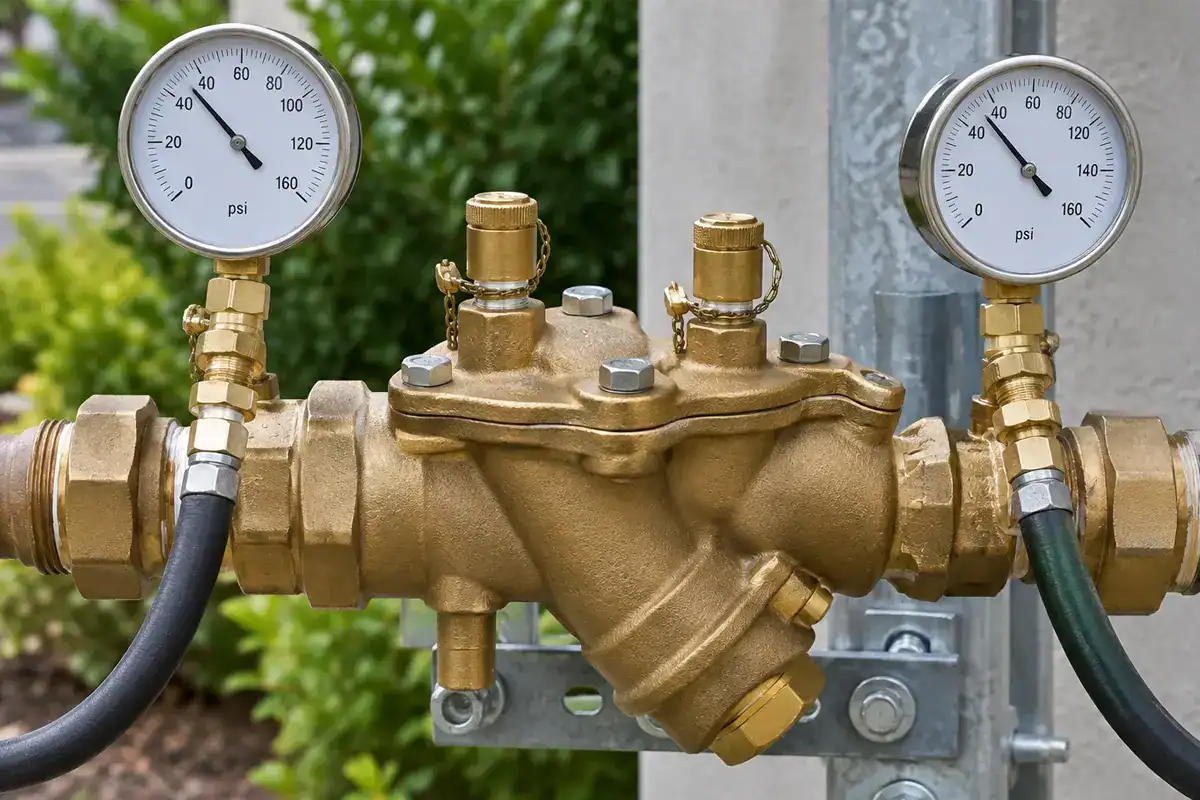
Any property with a backflow prevention assembly — a cross-connection point on the municipal water supply — needs testing. This covers residential irrigation systems, and across Troy’s Big Beaver commercial corridor, it applies broadly to office buildings, restaurants and food service along the Somerset dining area, corporate campuses, medical and dental offices, gas stations, and manufacturing facilities. Many commercial properties have separate domestic, fire protection, and irrigation lines, each of which may carry its own backflow assembly requiring separate testing.
What Backflow Testing Costs
Costs vary based on the number of assemblies and property type, but commercial testing typically runs $100 to $300 per assembly, while residential testing is generally a flat fee around $150 to $200. Properties with multiple assemblies — common on larger commercial sites with separate domestic, fire, and irrigation lines — should expect the total to scale with assembly count, since each device requires its own individual test and report.
What Happens During a Backflow Test
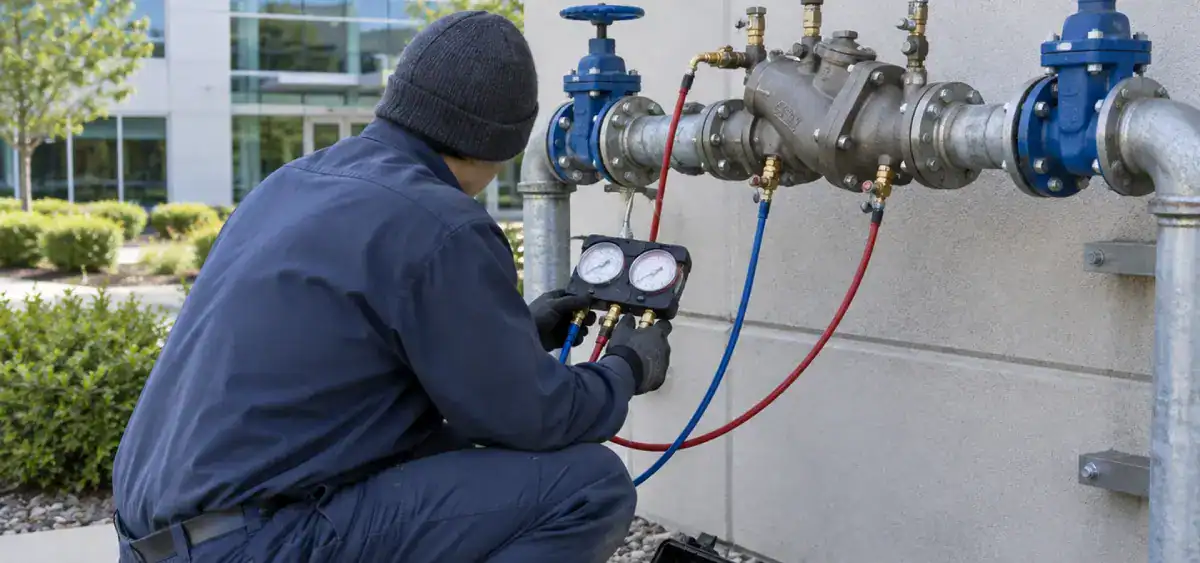
A certified tester connects calibrated gauges to the assembly and checks that each internal check valve holds the required pressure differential, confirming the device would actually stop contaminated water from flowing backward into the potable supply if pressure ever dropped on the municipal side. The test typically takes 30 minutes to an hour depending on the assembly type and number of devices on the property, and results are documented and filed directly with the city.
What If My Assembly Fails Testing?
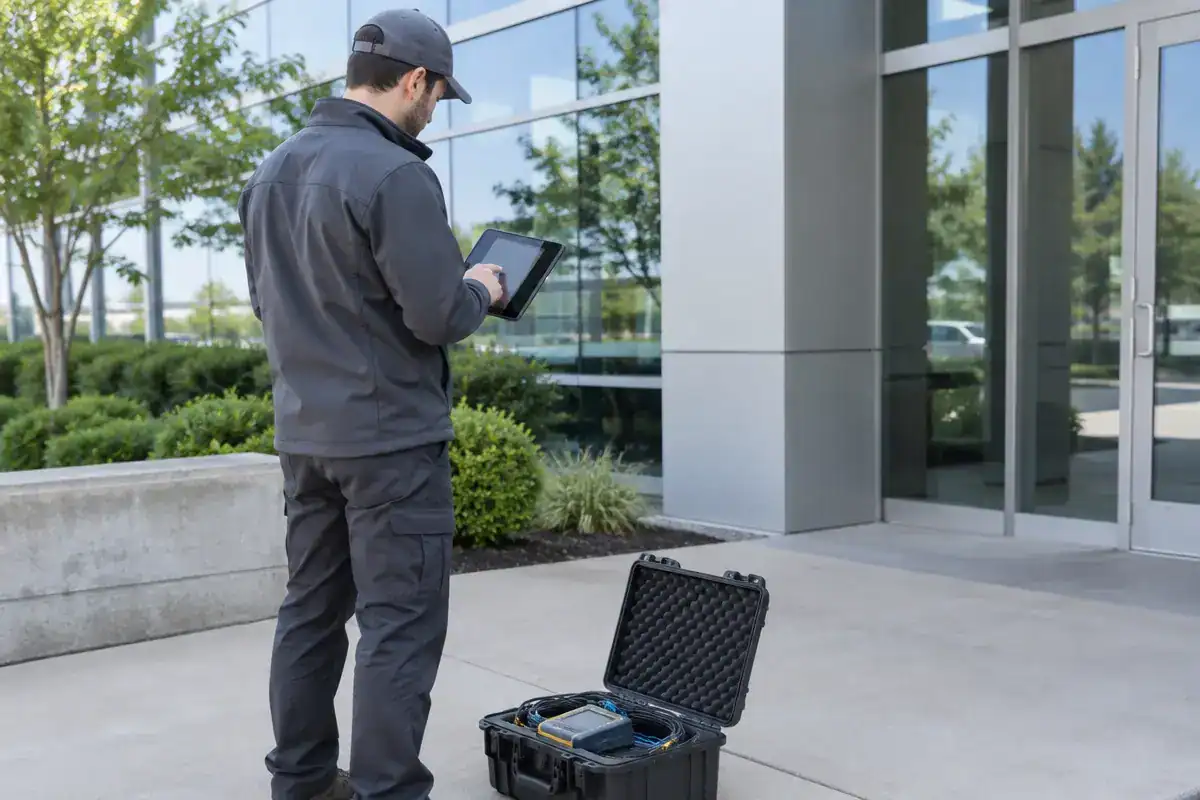
A failed test isn’t unusual — backflow assemblies are mechanical devices subject to wear, corrosion, freezing, and general wear over time. A licensed technician can typically repair or rebuild a failed assembly on the spot in many cases, then retest to confirm it passes before filing the final report. Assemblies that can’t be repaired are replaced, tested, and then filed the same way as any other passing device.
Frequently Asked Questions
How do I know which water billing district I’m in for residential testing?
Contact the City of Troy Water & Sewer Department directly, or check your water bill, which typically indicates your billing district. The city also mails a reminder in advance of your district’s testing year.
What happens if I miss my backflow testing deadline in Troy?
Non-compliance can affect your property’s water service standing with the city. If you’ve missed a deadline or aren’t sure of your status, scheduling a test as soon as possible and confirming with the city directly is the best next step.
Does every commercial property in Troy need backflow testing?
Any commercial property with a backflow prevention assembly on a cross-connection point needs annual testing, which covers the vast majority of commercial properties given standard domestic, fire, and irrigation line configurations.
Can I test my own backflow assembly?
No. Testing must be performed by an ASSE-certified licensed plumber, per City of Troy requirements — this isn’t a DIY-eligible task.
Backflow testing in Troy comes down to knowing your specific schedule — annual for commercial, every 3 years by district for residential — and using a certified tester who files correctly with the city’s system. Getting both right the first time avoids the compliance headache of a missed or improperly filed test.
Choose Bison Plumbing for Backflow Testing in Troy, MI
Bison Plumbing is LARA-licensed and ASSE-certified, testing backflow assemblies across Troy’s residential neighborhoods and Big Beaver commercial corridor, then filing directly with the City of Troy’s Swift Comply program.
Contact us today to schedule your required test before your district’s deadline.
Due for backflow testing in Troy?
Bison Plumbing’s ASSE-certified technicians test, certify, and file your report directly with the City of Troy.
(586) 754-4281