

Whole-Home Repiping in Oakland County, MI
Birmingham · Bloomfield Hills · Royal Oak · Troy · Rochester Hills
When the supply pipe itself has reached the end of its life, patching one leak at a time stops making sense. Here is how to tell which situation you are actually in.
Warren, Michigan
licensed
assessment
reviews
Most homes that need a whole-home repipe show more than one warning sign at once. The five that matter are pinhole leaks that keep returning in different places, rust-coloured or cloudy water that clears after the tap runs a while, water pressure falling across every fixture rather than at one sink, galvanised steel or polybutylene supply pipe, and plumbing old enough that the original material has reached the end of its service life. One sign on its own usually points to a repair. Three or four together point to the pipe itself.
Bison Plumbing diagnoses before quoting. A technician traces the supply runs, checks pressure at several fixtures, and identifies the pipe material actually in place. What follows is a written scope listing every run and fixture covered, and a fixed price agreed before any wall is opened.
Signs Your Home Needs Repiping
Supply pipe rarely fails all at once. It gives you a run of small, separate-looking problems first — and they are easy to treat as unrelated until someone lines them up.
Repeat pinhole leaks
One pinhole leak is a repair. Three in two years, in different rooms, is the pipe telling you the wall thickness is gone throughout. Copper thins from the inside, so leaks appear wherever the wall gives out first — not where the pipe was damaged.
Discoloured water
Rust-coloured or yellowish water first thing in the morning, clearing after the tap runs, is corrosion sitting in the pipe overnight. If it shows at more than one fixture, the source is the supply line rather than a single fitting or the water heater.
House-wide pressure loss
Pressure that has dropped at every fixture, gradually, over years, usually means the internal diameter has narrowed with corrosion or scale. Pressure loss at one fixture is an aerator, a cartridge, or a valve — a far smaller job.
Galvanised or polybutylene
Both materials fail predictably. Galvanised steel corrodes from the inside out, so it can look sound while the bore closes up. Polybutylene tends to fail at the fittings regardless of how carefully the home has been maintained.
The age of the plumbing
Age on its own is not a reason to repipe. Age combined with the original material still being in place is the useful signal — it tells you roughly how much service life is left, and whether repairs are buying years or months.
Repairs stacking up
Keep the invoices. When the running total of small repairs starts approaching what a repipe would cost, the decision has usually already been made by the pipe — it is only the accounting that has not caught up.
Repiping vs. Spot Repairs
A whole-home repipe is the larger job, and it is not always the right one. The question is not how bad the leak looks — it is whether the failure has a cause you can point at, or whether the material itself has run out.
A spot repair is the right call when
- There has been one leak, in one location, with no history behind it
- The rest of the supply lines are copper and in sound condition
- The failure has an identifiable cause — a freeze, an impact during a renovation, a single bad joint
- Pressure and water quality are normal everywhere else in the house
If that describes your situation, repair it and leave the rest alone. Replacing sound pipe because it is old is spending money on a problem you do not have.
A repipe is the right call when
- Leaks are recurring and turning up in new places rather than the same one
- The pipe material itself is the failure mode — galvanised steel or polybutylene
- Pressure loss is house-wide and is not explained by a fixture, valve, or regulator
- Repairs are frequent enough that the cumulative spend is approaching the replacement cost
Here, each repair buys time on a system that is failing as a whole. The repipe is not urgent, but it is the cheaper answer over any reasonable horizon.
The honest middle case is a house with sound copper and one problem area — a single branch, a stretch of pipe in an unheated crawlspace, a run that was replaced badly during a past renovation. That is a partial repipe, and it is worth asking about before agreeing to a whole-home job. A technician who has traced your supply runs can tell you which of the three you are looking at.
Pipe Materials in Oakland County Homes
Oakland County housing spans more than a century of construction, and the supply material in a house follows closely from when it was built. Knowing your home's era narrows the question considerably before anyone opens a wall.

| Build era | Typical supply material | What that means today |
|---|---|---|
| Pre-1950 | Galvanised steel | Past its service life almost everywhere it survives. Corrodes from the inside, so the bore narrows before anything leaks. |
| 1950s–60s | Galvanised, early copper | Mixed systems are common — copper added during later renovations while original galvanised branches stayed in the walls. |
| 1970s–80s | Copper, some polybutylene | Copper of this age is often still sound. Polybutylene is the one to identify early, because it fails at the fittings. |
| 1990s–now | Copper, PEX | Generally within service life. Isolated failures here are usually installation-related rather than material fatigue. |
Birmingham and Royal Oak carry a large share of the county's pre-war and immediately post-war housing, which is where galvanised supply pipe still turns up most often — frequently in homes renovated above the walls but never below them. Bloomfield Hills mixes older estate housing with later infill, so the material varies house by house rather than street by street. Troy and Rochester Hills grew mainly through the 1970s and 1980s, which puts much of their housing stock in the copper-and-polybutylene window — sound copper in many cases, and polybutylene worth identifying in the rest.
Two details are worth knowing before you inspect anything yourself. Galvanised pipe fails from the inside out, which is why a house can pass a visual check and still have half its original diameter left. And polybutylene — usually grey or blue flexible pipe — fails at the fitting rather than along the run, so it can look perfect right up until it does not.
Related work across the county: drain and sewer work across Oakland County.
The Whole-Home Repiping Process
Most of what homeowners want to know about a repipe is not technical. It is how much of the house gets opened, whether there is running water while it happens, and who puts the walls back.

Inspection and mapping
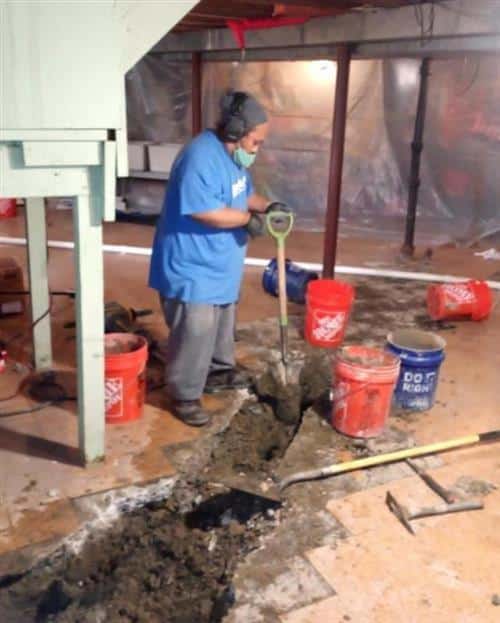
A technician traces the supply runs, identifies the material in place, and checks pressure at multiple fixtures. You are shown what was found — including the parts of the system that are fine and do not need replacing.
Written scope
Every run and fixture covered by the work is listed, along with the material specified and anything explicitly excluded. The price is fixed in writing before the job starts, not adjusted at the end.
Access
Drywall is opened only where the runs and fixture groups require it — typically ceilings below upstairs bathrooms, wall cavities at fixture groups, and existing access points. The scope names these locations before any cut is made.
Installation and pressure test
New supply lines are run and joined, then the system is pressure-tested before anything is closed up. Nothing gets covered over until the test has passed. The pipe material used on your home is specified in your written scope, chosen for the routing and access your house actually has.
Restoration
What gets opened and what is closed back up is listed in the written scope before work starts. That means the line between the plumbing work and the finish work is agreed in writing at the outset, rather than discovered at the end — which is where most repipe disputes come from.
Water service during the work
A typical single-family repipe runs across several working days, depending on fixture count, routing, and access. Before work begins you are told how service is staged and which hours the supply is off, so you can plan around it rather than find out on the day.
What Repiping Costs — and How We Quote It
Repiping is priced per house, not per foot, because two homes of the same size can differ by several days of labour depending on how the existing pipe was routed.
The sequence is the same every time: inspection first, then a written scope listing what is covered, then a fixed price agreed before work begins. You are not asked to commit to a number before anyone has looked at the system.
What moves the number
- Number of fixtures and bathrooms
- Number of storeys, and whether runs are reachable from a basement or crawlspace
- Slab construction versus basement or crawlspace
- The existing material and how it was routed
- How much restoration is included in the scope
- Inspection — the supply runs are traced and the existing material identified.
- Written scope — every run, fixture and exclusion listed, in writing.
- Fixed price — agreed before the first wall is opened.
The figure does not move once the scope is signed. If something is found behind a wall that changes the job, you are told before the work continues — not billed for it afterwards.
Not a Supply-Line Problem?
Repiping covers the lines that bring water in. If the trouble is on the way out, or it is a single fixture, these are the pages you want.
Sewer line replacement
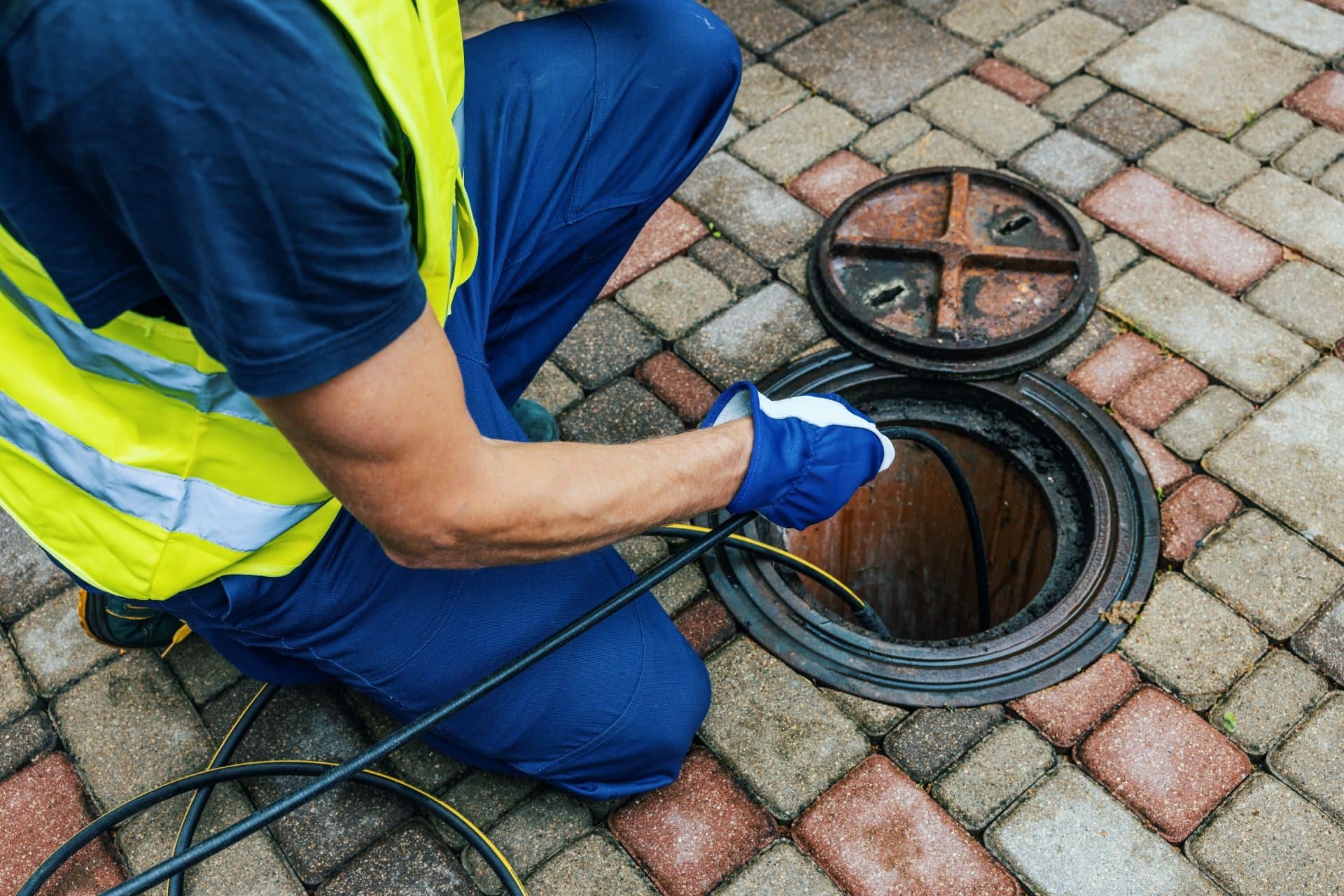
If the problem is the line carrying waste out rather than the pipe bringing water in, see when the sewer lateral itself has failed.

Plumbing repairs
For one leak with an identifiable cause, a single leak repaired on its own is usually the right and cheaper answer.
Oakland County drain & sewer
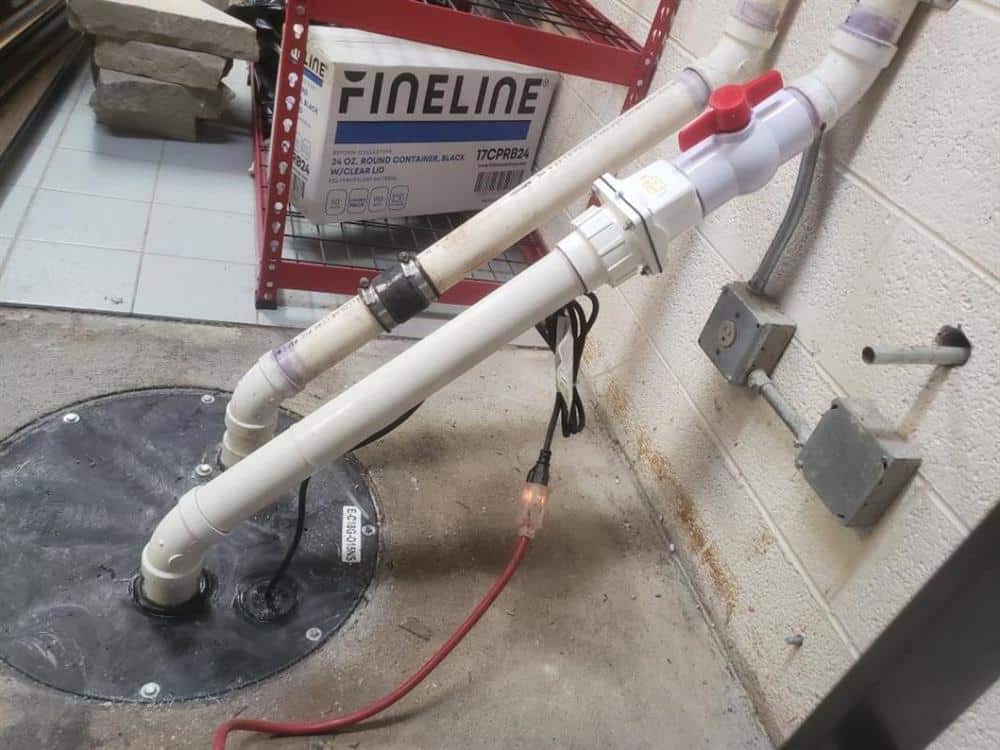
Camera inspection, drain cleaning and trenchless repair across the county — drain and sewer work across Oakland County.
Frequently Asked Questions
What are the signs a house needs whole-home repiping?
A house needs whole-home repiping when several signs appear together: pinhole leaks recurring in different locations, discoloured water at more than one fixture, water pressure falling across the whole house, galvanised steel or polybutylene supply pipe, and plumbing that has reached the end of its service life. A single sign on its own usually indicates a repair rather than a replacement.
How long does it take to repipe a house?
A typical single-family repipe runs across several working days. The variables are fixture count, the number of storeys, how the existing pipe was routed, and how accessible the runs are from a basement or crawlspace. The written scope gives a duration for your specific house before work begins, so the timeline is agreed rather than estimated on the day.
Do you have to open the walls to repipe a house?
Repiping requires opening drywall at specific points, not throughout the house. Access is usually needed at ceilings below upstairs bathrooms, at wall cavities where fixture groups sit, and at existing access panels. The written scope names every location before any cutting starts, so there are no surprises once work is underway.
Is repiping worth it, or should I just fix the leaks?
Fixing the leaks is worth it when the failures have an identifiable cause and the rest of the supply pipe is sound. Repiping becomes the better value when the pipe material itself is failing — galvanised or polybutylene — or when repairs are recurring in new locations. If repairs are buying months rather than years, replacement is the cheaper answer over time.
What pipe material do you use for a repipe?
Modern residential repipes are run in either copper or PEX. Copper is rigid and long-established; PEX is flexible, which means fewer joints and often less drywall opened to route it. Neither is the right answer in every house — the choice follows the routing, the access, and how your home is built. The material for your repipe is specified in your written scope after the inspection, so you know what is going in before work starts.
How much does whole-home repiping cost in Michigan?
Whole-home repiping is priced per house rather than per foot, because routing and access vary more than square footage does. Bison inspects the system, issues a written scope listing everything covered, and fixes the price before work begins. Fixture count, number of storeys, foundation type, existing material and restoration scope are what move the figure. The inspection comes first, so the number you are given is for your house rather than an average.
Will I have water while the repipe is happening?
Water is shut off only while lines are actually being connected, not for the whole job. Because a repipe runs across several working days, the work is staged so the house is not left without supply any longer than the connections require. Before work begins you are told how service is staged and which hours the supply is off on each day, so you can plan around it.
Not Sure If You Need a Repipe? Let's Find Out First.
An inspection tells you which of the three situations you are in — a repair, a partial repipe, or a whole-home job. Plenty of Oakland County homeowners find out they need the smallest of the three.
Birmingham · Bloomfield Hills · Royal Oak · Troy · Rochester Hills · Oakland County, MI