

The safest way to thaw a frozen pipe is with a hair dryer, heating pad, or hot towels applied gradually — never an open flame. Water expands roughly 9% as it freezes, and that expansion is what actually cracks the pipe; the crack often doesn’t leak until the ice thaws and water starts flowing through the damaged section again. Before you touch anything, open the nearest faucet to relieve pressure as the ice melts, and know when it’s time to call a Michigan plumber instead of continuing on your own.
Safe Thawing Methods vs. What to Avoid
The difference between a safe method and a dangerous one usually comes down to heat intensity and fire risk, not effectiveness.
| Method | Safe? | Notes |
| Hair dryer on low-medium heat | Yes | The most common and accessible safe method for exposed, accessible pipe |
| Heating pad wrapped around the pipe | Yes | Good for a sustained, even, lower-intensity heat source |
| Towels soaked in hot water, re-applied regularly | Yes | Works well for smaller, easily accessible outdoor or exposed pipe |
| Space heater aimed at the general area (not touching the pipe) | Yes, with caution | Keep it a safe distance from any flammable material and never leave unattended |
| Propane torch or other open flame | No — never | Can ignite nearby insulation, wood framing, or siding; a documented cause of house fires |
| Electric heat gun on high setting held close to the pipe | No | Can generate enough heat to cause rapid steam pressure or damage the pipe material |
Why open flame is never worth the risk: house fires have been directly caused by propane torches and kerosene heaters used to thaw pipes in crawl spaces and near exterior walls — often igniting nearby wood framing or siding before anyone realizes what’s happening. A slower, safer method costs you a little more time; an open flame can cost you your home.
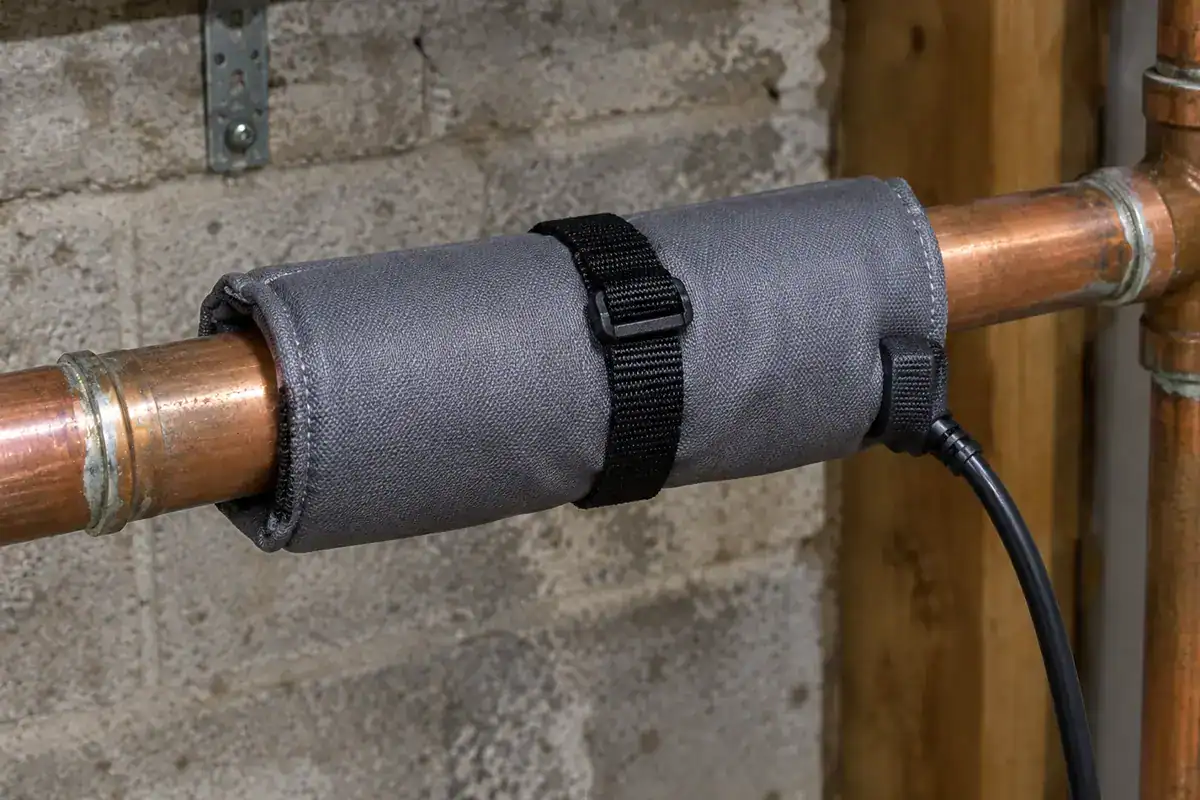
This isn’t a minor concern — the National Fire Protection Association (NFPA) specifically highlights winter as a period of elevated home fire risk and warns against exactly this kind of improvised heat source near combustible building materials.
How to Thaw a Pipe Step by Step
- Open the nearest faucet first: this relieves pressure as the ice begins to melt and gives you an early sign that water is flowing again.
- Start thawing at the end closest to the faucet: working from the open end toward the blockage lets melting water and steam escape rather than building pressure behind the ice.
- Apply heat gradually and keep moving it along the pipe: don’t concentrate heat on one spot for an extended period.
- Check for cracks before assuming success: if water starts leaking as the ice melts, the pipe was already damaged and needs a repair, not just a thaw.
When to Call a Plumber Instead
Call a professional if you can’t locate the frozen section, if it’s inside a wall or otherwise inaccessible, if you notice any cracking or leaking once thawing begins, or if the pipe simply won’t thaw with safe methods after a reasonable amount of time. A licensed plumber has tools — including specialized electric thawing equipment — that can safely reach frozen sections behind walls without any of the fire risk of DIY methods.
Preventing Frozen Pipes Before They Happen
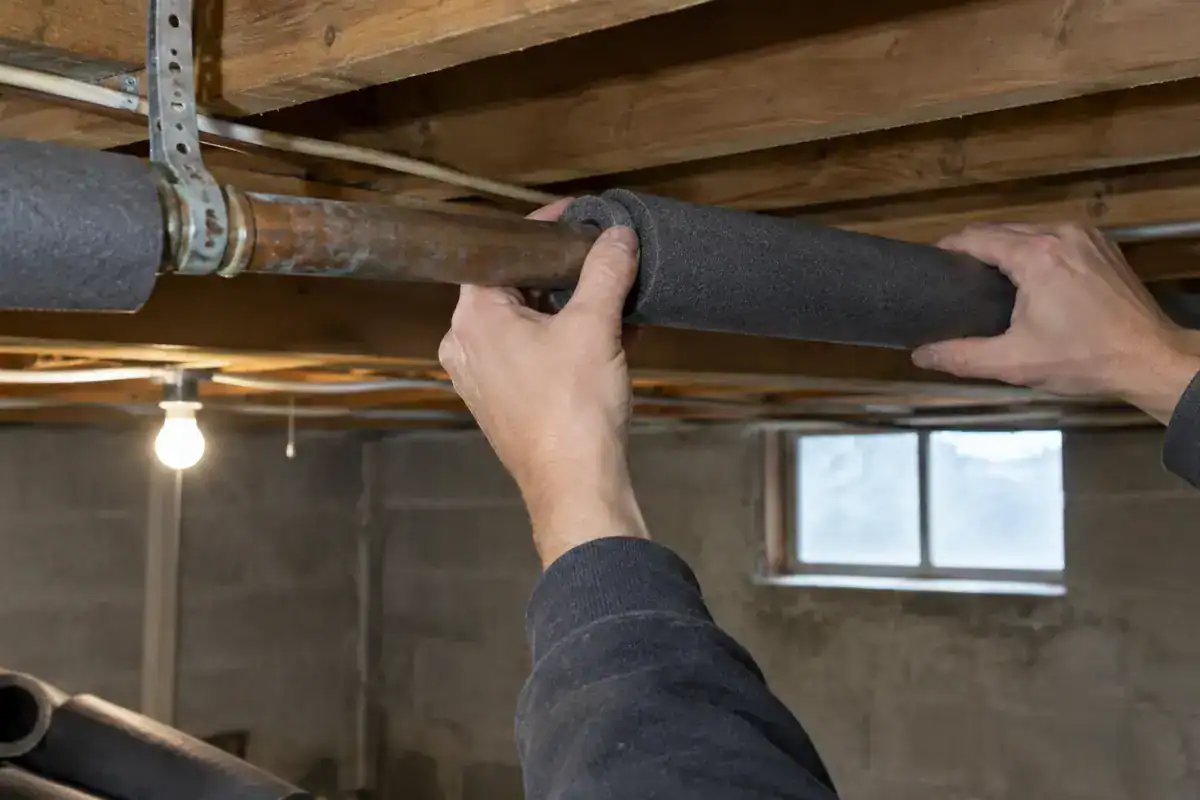
Prevention is far cheaper and less stressful than thawing. Keep your thermostat at 55°F or higher even when you’re away from home, insulate pipes in unheated spaces like attics, crawl spaces, and garages, open cabinet doors under sinks on especially cold nights to let warm air reach the pipes, and let faucets drip slightly during extreme cold to keep water moving. These are the same basic principles insurance-industry safety researchers recommend nationally, and they apply directly to Michigan’s freeze-thaw winters.
Frequently Asked Questions
How long does it typically take to thaw a frozen pipe safely?
It varies by pipe location and how severe the freeze is, but safe methods like a hair dryer or heating pad typically take anywhere from 30 minutes to a few hours. Patience is part of doing it safely — rushing with more intense heat is what causes damage.
Is it normal for no water to come out even after the ice seems melted?
Not necessarily a problem — check that the faucet is fully open and that there isn’t a second frozen section further along the line. If water still doesn’t flow, the blockage may be more extensive than the section you thawed.
Can a frozen pipe that didn’t crack still be a problem later?
Possibly. A pipe that survived one freeze without visible damage can still have developed small stress fractures that don’t leak immediately but weaken the pipe over time. If a section has frozen once, it’s worth having it inspected or better insulated to prevent a repeat.
Does homeowners insurance cover damage from a frozen pipe?
Many standard policies cover sudden damage from a frozen pipe, though coverage can depend on whether reasonable preventive steps, like maintaining adequate heat in the home, were taken. Check your specific policy or contact your insurer to confirm.
A frozen pipe doesn’t have to become a burst pipe if you thaw it the right way — gradually, safely, and starting from the open end. And a little prevention now, before the next deep freeze, is a lot cheaper than any thawing method at all.
Bison Plumbing: Your Michigan Frozen Pipe Experts
Bison Plumbing has safely thawed and repaired frozen pipes across Macomb and Oakland County since 1998, with the training and equipment to handle what a hair dryer alone can’t reach.
Call now or visit our plumbing repairs page for more on how we handle winter pipe damage.
Can’t locate or safely thaw a frozen pipe yourself?
Bison Plumbing safely thaws frozen lines and repairs any damage found — before a small freeze becomes a flooded basement.
Call a Bison Plumber | (248) 247-7707