
The sewer line under a house is the one major system you can’t see, and in older Michigan neighborhoods it is often among the oldest. A pre-purchase sewer inspection runs a camera through the line between the house and the sewer connection before you close, so you learn about cracks, roots, and collapses while you can still negotiate. This guide covers what the inspection finds, when to schedule it, how to read the report, and how to use the results.
The short version: A standard home inspection and the seller’s disclosure statement don’t tell you what’s inside the buried sewer lateral. Schedule a camera inspection early in your inspection period, keep the video and written report, and use the findings to negotiate a repair, a credit, a price change, or an exit.
What a Pre-Purchase Sewer Inspection Is
It is a camera inspection of the sewer lateral, the pipe that carries waste from the house to the municipal sewer connection. A technician pushes a waterproof camera through an existing cleanout, watches a live feed, and records the run. Bison Plumbing’s pre-purchase sewer inspection uses a Picote Solutions HD camera and delivers the footage and a written report. It is part of Bison’s broader sewer camera inspection service, which also covers diagnostic inspections for homes with symptoms. For more on the basics, see Bison’s shorter guide to a sewer scope inspection for a Michigan home purchase.
Why Your Home Inspection and the Seller’s Disclosure Don’t Cover It
Michigan’s Seller Disclosure Act requires sellers to give buyers a Seller’s Disclosure Statement, but the form is limited by its own wording. The text of MCL 565.957 says the statement is not a warranty and is not a substitute for inspections the buyer may wish to obtain. It also says that, unless otherwise advised, the seller has not inspected generally inaccessible areas such as the foundation or roof. A buried sewer line is just as inaccessible.
| What You Have | What It Tells You About the Sewer Lateral |
| Seller’s Disclosure Statement | Asks whether the plumbing system and the city sewer system are in working order and whether there are known problems. It does not ask about the condition of the buried lateral |
| A general home inspection | Covers visible and accessible systems. Bison says the buried sewer lateral is outside a standard inspection’s scope, so confirm what your inspector’s agreement includes |
| A sewer camera inspection | The only option that looks inside the pipe, with video of cracks, roots, offsets, bellies, buildup, or collapse and where each one sits |
The form does ask whether the plumbing system and the city sewer system are in working order, and the seller must report known problems. But a seller who has never put a camera in the line usually has nothing to report. The form itself tells buyers to obtain professional advice and inspections.
What You Inherit When You Buy
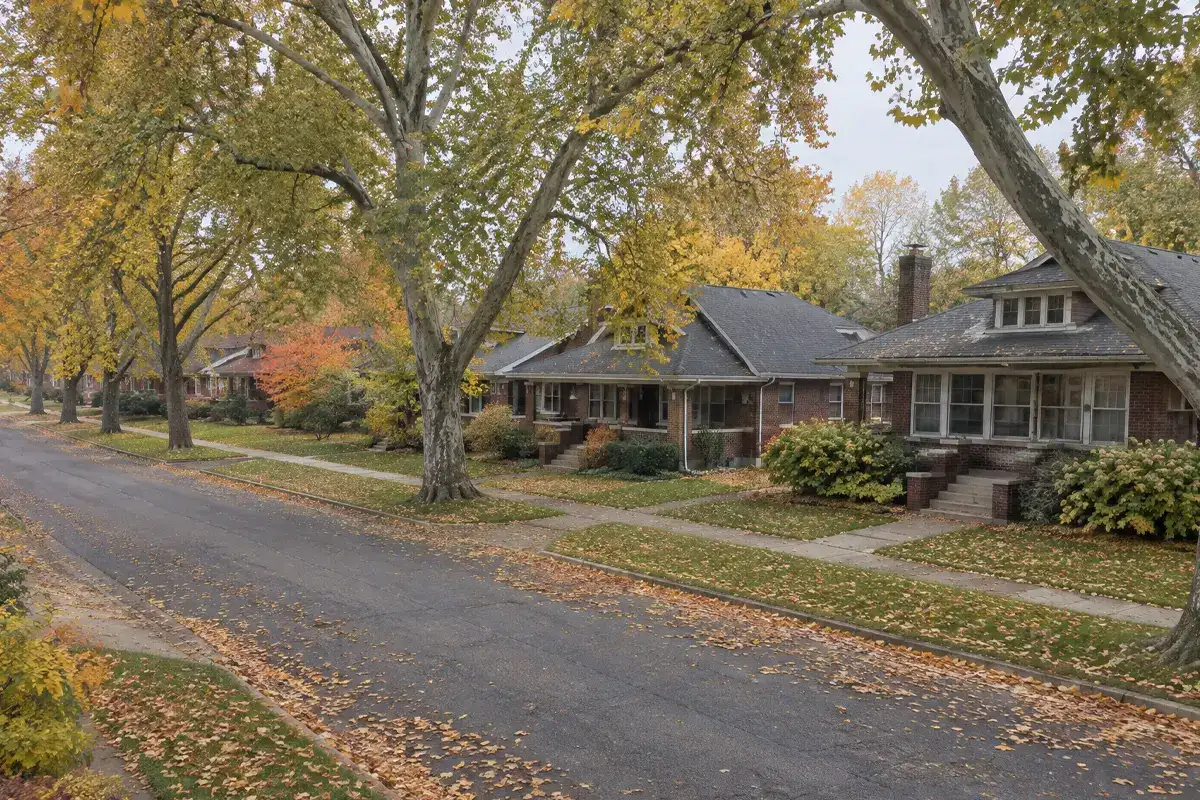
In most places the homeowner owns the sewer lateral, according to the Insurance Information Institute’s guide to sewer backups, including any part that runs under the street or public right of way. Bison’s pre-purchase page says the same about the buyer taking ownership of the pipe at closing. Ownership rules differ by community, so ask your municipality where the homeowner’s responsibility ends. Whatever condition the pipe is in, you pay for it afterward, which is why it makes sense to learn that condition first.
Which Homes Need a Sewer Inspection Most
Age and pipe material drive the risk. Bison recommends a camera inspection before closing on any pre-1990 home in Macomb or Oakland County. Its city pages describe what buyers typically find, and you can see them for Troy, Birmingham, Rochester Hills, and Royal Oak.
| Area (per Bison) | Typical Lateral | Why It Matters |
| Ferndale | Clay tile from the 1920s to 1950s, roughly 70 to 100 years old | Bison says end-of-life pipe is common here |
| Birmingham | Clay tile from before the 1950s to the 1970s, 50 to 80 years old | Mature trees; Bison cites frequent root intrusion |
| Royal Oak | Clay tile from the 1940s to 1960s, 60 to 80 years old | Bison says silver maple and elm roots are widespread |
| Troy | Clay tile and cast iron from the 1960s to 1980s, 40 to 60 years old | Approaching the end of original pipe life, per Bison |
| Rochester Hills | Clay in older western areas; PVC in newer eastern developments | Repair risk differs a lot by era |
| Bloomfield Hills | Clay tile on large wooded lots, with long lateral runs | More pipe, and more trees, to be exposed |
Newer homes aren’t exempt. Bison notes that PVC laterals can fail from ground settlement or freeze-thaw movement. A newer pipe is lower risk, not no risk.
When to Schedule: Your Inspection Timeline
Timing is where most buyers lose leverage. Bison says Michigan purchase agreements typically include a 7 to 14 day inspection contingency window. Check the exact period in your own agreement, and ask your agent or attorney what happens if it expires. Then work backward from it:
- Order it right away. Bison advises scheduling within the first two to three days of the inspection period.
- Arrange cleanout access. The listing agent coordinates access with the seller. The buyer doesn’t have to attend, but may.
- Allow time for the inspection. Bison says it takes about 45 to 90 minutes, depending on the length of the lateral.
- Wait for the written report. Bison’s pre-purchase page says the report and video arrive within 48 hours of the inspection.
- Leave time to negotiate. You will need days, not hours, to review the findings with your agent and attorney and to get any amendment signed before the period ends.
To book, call Bison at (248) 247-7707 or request an inspection online. Have the property address, your closing date, and the listing agent’s contact ready.
What the Camera Can Find
Every finding on the video tells you something different, and each points to a different repair. This table summarizes what Bison says each condition means and how it typically responds.
| What the Camera Shows | What It Usually Means | Typical Response (per Bison) |
| Grease or mineral scale | Flow is narrowing but the pipe wall may be sound | Hydro jetting or cleaning |
| Roots in joints, walls intact | Joints are open but the pipe is structurally sound | Root removal, then CIPP lining to seal the entry points |
| Cracks or fractures | Aging, freeze-thaw, or settlement | Patching or lining, depending on length and severity |
| Offset joints | Sections have shifted, forming a lip that catches debris | Lining can bridge some offsets; larger offsets may need repair |
| Bellied sections | A low spot where water and waste pool | Usually cannot be lined; re-grading or replacement |
| Partial or full collapse | The pipe has failed structurally | Pipe bursting or excavation; Bison says a liner can’t make contact through a collapse |
Bison’s repair options include hydrojetting, CIPP pipe lining, pipe patching, trenchless sewer repair, and sewer line replacement. See its guide to the signs you need sewer line replacement for when cleaning or lining is no longer enough.
What a Good Inspection Report Includes
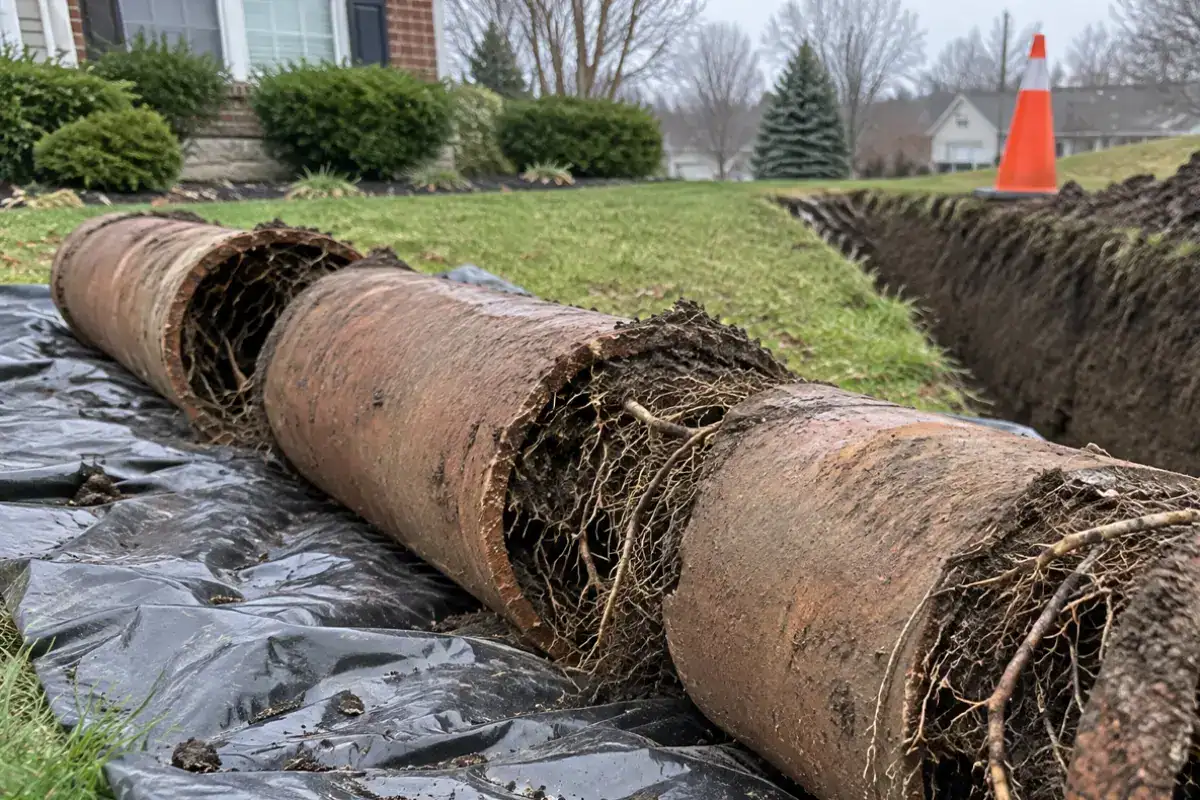
Footage alone isn’t a report. Bison says its pre-purchase report includes HD video, each finding with its footage timestamp and distance from the cleanout, a severity rating, the pipe material and age assessment, and a repair recommendation with a cost range. Use this checklist with any inspector:
| Ask the Report to Include | Why It Matters |
| Recorded video of the whole run you can keep | You can share it with your agent, attorney, or another contractor |
| Each finding’s distance from the cleanout | A repair crew can find it, and you can compare it to another bid |
| Pipe material, size, and approximate age | Clay, cast iron, and PVC fail in different ways and on different timelines |
| Structural defects separated from buildup | Buildup is maintenance; structural damage is the cost you are negotiating |
| How much of the line was actually viewed | A blockage or missing cleanout can leave part of the lateral unseen |
| The repair method the footage supports | Ties the estimate to evidence instead of a guess |
| A signed, written report | Gives you something your agent and attorney can use |
Ask about certification
NASSCO, the national association for the pipeline industry, says inspections of private building sewers typically start inside or near the building and run toward the main. It offers a certification built for this work, BSDI (Building Sewer and Drain Inspection), and you can verify certified inspectors in its certified professionals directory. Certification is one signal, not a guarantee, so also ask to see a sample report.
Using the Findings in Negotiation
Bison’s page describes three ways buyers use a pre-purchase report. Which one fits depends on your contract and the severity of the problem, and your real estate attorney can advise on the contract side.
- A seller credit at closing. The most common outcome. You present the report and a repair estimate and ask for a credit that funds the work after closing.
- A seller repair before closing. The seller funds the repair, and you ask for a post-repair camera inspection to confirm the work reached the defect.
- A price reduction or an exit. For severe damage, such as a collapsed lateral, buyers may negotiate the price down or use an inspection contingency to withdraw.
What it looks like in practice
Bison’s October 2026 press release on its sewer camera evidence library describes three cases. In Troy, footage of root intrusion and a longitudinal crack on a home listed at $485,000 supported a $7,200 seller credit. In Birmingham, documentation of a deteriorated clay lateral on a $725,000 property led to a $14,500 price reduction. In Warren, a pre-purchase inspection found the lateral in acceptable condition, and the buyer closed with a documented pass report. These are Bison’s own examples, and outcomes depend on the property and the negotiation.
Tips for a stronger request
- Send the video and written report together, not just a summary.
- Get a written repair estimate for the method the footage supports.
- For a large repair, get a second opinion. Bison’s page says the footage can be shared with another contractor.
- Let your agent and attorney decide how to word the request and any amendment.
If you take a credit and plan the repair yourself, Bison lists financing through GreenSky for larger jobs. If you are on the selling side instead, see Bison’s guide to fixing a sewer line before selling.
What a Pre-Purchase Sewer Inspection Costs
Bison’s pre-purchase page lists the inspection at $217, depending on lateral length and access. Other pages on the site list different camera inspection prices, so confirm the exact figure and what it includes when you book. The inspection is a small cost next to the repairs it can uncover, and the Troy and Birmingham examples above show how a single report can change the numbers at closing.
How to Choose an Inspector
- Confirm the Michigan license. Ask for the contractor’s LARA license number and check it through the state’s license search.
- Ask about NASSCO certification. Ask which program and verify it in NASSCO’s directory.
- See a sample report. Bison publishes a sewer camera evidence gallery with real footage.
- Ask how the report is delivered and when. You need it inside your inspection period.
- Know who profits from repairs. A company that inspects and repairs can explain the footage and quote the fix, but for a big repair it is wise to get another estimate.
Frequently Asked Questions
Do I need a sewer inspection when buying a house in Michigan?
Michigan’s Seller Disclosure Act doesn’t require one, and the disclosure form itself tells buyers to get their own inspections. A camera inspection is the only way to see inside the sewer lateral, and Bison recommends one before closing on any pre-1990 home in Macomb or Oakland County. Some communities have their own rules, so check locally.
Does a regular home inspection include the sewer line?
Usually not. A general home inspection covers visible and accessible systems, and Bison says the buried lateral is outside a standard inspection’s scope. Some inspectors offer a sewer scope as an add-on, so ask what your inspection agreement covers.
How long does a pre-purchase sewer inspection take?
Bison says the inspection itself takes about 45 to 90 minutes, depending on the lateral’s length, and that the written report and video arrive within 48 hours. Confirm the timeline for your closing date when you book.
How much does a pre-purchase sewer inspection cost?
Bison’s pre-purchase page lists $217, depending on lateral length and access. Confirm the price and what it includes when you schedule.
What happens if the inspection finds a problem?
You can ask the seller for a credit at closing, ask the seller to repair the line before closing and verify it with a post-repair camera inspection, negotiate a price reduction, or, for severe damage, use your inspection contingency to withdraw. Your agent and attorney should guide the choice.
Who owns the sewer lateral?
In most places the homeowner owns it, including any part under the street or public right of way, according to the Insurance Information Institute. Ownership rules vary by community, so ask your municipality.
Can I get the sewer inspected after I close?
You can, but you lose your negotiating leverage. After closing, any repair is your cost. An inspection during your inspection period is the point when the findings can still change the deal.
Does a newer home need a sewer inspection?
It is lower risk, but not risk-free. Bison notes that PVC laterals can fail from ground settlement or freeze-thaw movement, so a quick camera check can still be worthwhile on a newer home, especially if the lot has large trees.
A sewer inspection costs little compared with what it can reveal, and it is the only way to see what you are really buying underground. To schedule one, call Bison at (248) 247-7707 or request a quote, and see the communities Bison covers on its service areas page.
Bison Plumbing: Family-Owned in Warren, Michigan Since 1998
Bison Plumbing is a family-owned, Michigan LARA-licensed plumbing and sewer company based at 25780 Ryan Rd in Warren. It serves homes and businesses across Macomb and Oakland County and says it runs a camera inspection before major sewer and drain work.
Call (248) 247-7707 to schedule an inspection.
Buying a home in Macomb or Oakland County?
Schedule the sewer inspection early in your inspection period. Bison provides HD video and a written report you can use in negotiations.
Schedule a Pre-Purchase Inspection
Or request a quote at mybisonplumbing.com/contact