

If your home has cast iron sewer or drain pipe, the repair-or-replace decision depends on what a camera finds inside the pipe, not on its age alone. A cast iron line that is rough with scale but continuous and aligned is often a candidate for lining. One that has collapsed, sagged, or failed along most of its length usually needs replacement. This guide explains why Oakland County homes have so much old pipe, how cast iron fails, how the camera decides, and what to ask before you hire anyone.
The short version: Don’t guess from the age of the house. Ask for a camera inspection, get the footage, and ask the plumber to show you why lining or replacement fits that section of pipe. Lining suits continuous, aligned pipe. Collapses, sags, and widespread failure point to replacement.
Why Oakland County Has So Much Old Pipe
Roughly 58% of Oakland County’s housing units were built before 1980, and the county’s median home dates to about 1975, according to Census Bureau American Community Survey estimates as compiled by Point2Homes. Homes from those decades were commonly plumbed with cast iron or clay.
Bison Plumbing’s city pages describe the local picture. This is how Bison characterizes the older housing in the communities it serves in Oakland County:
| Community (per Bison) | Typical Housing and Pipe | Why It Matters for Cast Iron |
| Troy | 1960s to 1980s homes with clay tile and cast iron, roughly 40 to 60 years old | Original lines are reaching the age where camera checks pay off |
| Birmingham | Homes from before the 1950s to the 1970s with clay tile, roughly 50 to 80 years old | Older lines and mature trees |
| Royal Oak | 1940s to 1960s homes with clay tile, roughly 60 to 80 years old | Some of the oldest pipe in the county |
| Ferndale | 1920s to 1950s homes with clay tile, roughly 70 to 100 years old | Original pipe near the end of its life, plus combined sewers |
You can see what Bison says about each area on its pages for Troy, Royal Oak, Birmingham, and Rochester Hills.
How Cast Iron Fails
Cast iron is strong and was the standard for decades, but its problems are hard to see. Plumbers and inspectors commonly describe a few failure patterns:
- Corrosion from the inside. Rust and scale build up inside the pipe and thin its wall, often with little sign on the outside.
- Scale that narrows the pipe. Rough buildup slows flow and catches debris, which causes repeat clogs.
- Open or failing joints. Joints are a common weak point, and roots enter through them.
- Cracks and breaks. Brittle old iron can crack when the ground moves, and Bison names freeze-thaw movement as a cause of cracks in Michigan.
There is no single lifespan for cast iron. Published figures range from about 30 years to 100 years depending on the pipe, the soil, and how it is used, which is why a camera tells you more than a calendar. Bison’s corroded sewer pipe repair guide covers the signs, and its repair vs. replacement guide for Oakland County explains the general decision.
Repair or Replace? How the Camera Decides
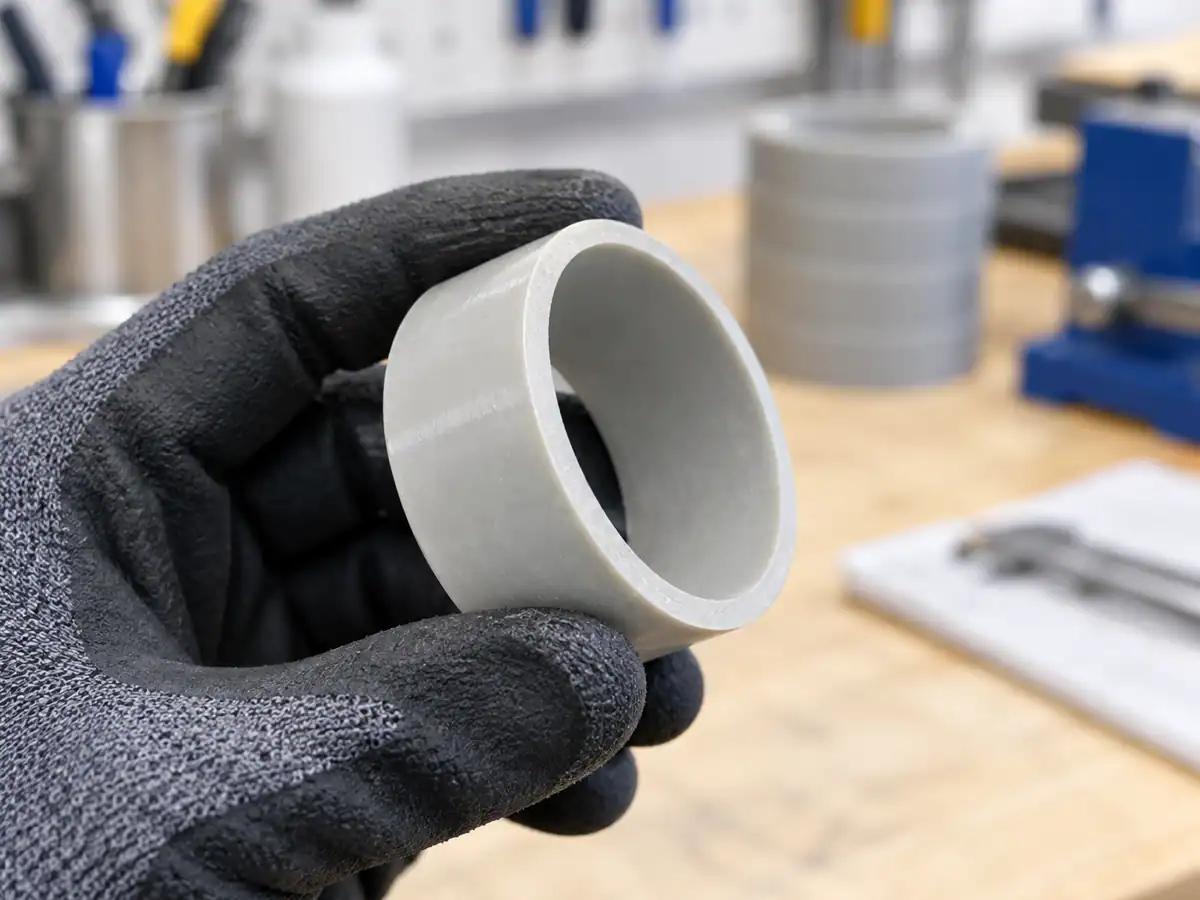
Bison says it starts every job with a sewer camera inspection to confirm the pipe’s condition before recommending a fix. Bison also says cast iron needs a professional assessment to decide between lining and replacement. The table below summarizes how the findings usually point.
| What the Camera Shows | Lining Fit? | Why |
| Rough scale and buildup, pipe still continuous | Often yes, after cleaning | Cleaning restores flow; lining seals the wall afterward if it is weakened |
| Pinholes, thin spots, or cracks along the run | Often yes | A liner forms a new pipe inside the old one and seals defects along the section |
| Open or failing joints with roots | Often yes, after the roots are cleared | Joints are a common weak point in older cast iron |
| A sag or belly holding water | Not on its own | A liner follows the pipe’s shape, so the grade must be corrected first |
| Collapse, breakage, or severe misalignment | No | NASSCO treats these as open-cut point repairs; widespread failure points to replacement |
| Failure along most of the line | Usually replacement | When most of the pipe is compromised, replacing the line is more practical |
The lining logic comes from the pipeline industry’s own guidance. NASSCO’s CIPP installation guideline calls for the line to be cleaned and inspected first, designs the liner without relying on the old pipe’s strength, and treats a collapsed section, a sag, or severe misalignment as an open-cut repair to do before lining. It is written for municipal sewers, but the same sequence applies to a home’s lateral.
Your Options for Cast Iron, Explained
- CIPP pipe lining. Bison says it recommends lining first when a camera confirms structural damage, because it is the least invasive viable repair for most pre-1980 clay and cast iron failures, and says lining works with cast iron host pipe. See its CIPP pipe lining page.
- Trenchless replacement. When the pipe is too far gone to line, Bison says it uses pipe bursting to replace a failed line with minimal digging. See trenchless sewer repair and sewer line replacement.
- Spot repair or patching. For isolated damage in an otherwise sound line. See Bison’s sewer line repair page.
- Traditional excavation. Where trenchless methods aren’t viable, such as a collapsed or bellied section.
For a real example, see Bison’s cast iron trunk line replacement in Warren, where a full cast iron sewer trunk line was removed and replaced with PVC. For the cost side of cast iron replacement, Bison has a separate guide to cast iron pipe replacement in Oakland County.
Inside the House vs. Under the Yard

Cast iron shows up in two places, and they are different jobs. The first is inside the house: the vertical stack and the building drain in the basement or crawlspace. The second is outside: the sewer lateral that runs from the house to the street. Ask any contractor which section the camera findings apply to, whether the problem is inside or outside, and whether that specific section can be lined or must be replaced.
Questions to Ask Any Contractor About Cast Iron
- Which section of pipe is the problem, and can I see the footage? You should see the same video the plumber saw.
- Why lining or replacement for this pipe? A good answer refers to what the camera showed.
- Is the pipe continuous and aligned? If not, ask what needs fixing before lining.
- What happens to the rest of the line? Ask about the parts you can’t see.
- Who pulls the permit, and what is inspected? The City of Warren, for example, says plumbing inspections are required for sewer repairs and that licensed plumbing contractors obtain the permit. See its plumbing inspection and permit page. Oakland County municipalities have their own rules.
- What is the warranty, and in writing? Get the terms before work starts.
- Can I get a second opinion on a large repair? Bison says you can share the footage with another contractor.
Buying or Selling a Home With Cast Iron
Cast iron is a common reason to scope a sewer line before closing on an older home. See Bison’s pre-purchase sewer inspection and its guides to a sewer scope inspection for a Michigan home purchase and to fixing a sewer line before selling.
What About Cost?
Cost depends on the length, depth, access, and condition of the line, and on whether it can be lined or must be replaced, so Bison quotes after a camera inspection. Ask for a written quote for each option that applies, and ask about financing if the job is larger than you planned for.
Frequently Asked Questions
How long does cast iron sewer pipe last?
There is no single answer. Published figures range from about 30 to 100 years depending on the pipe, the soil, and how it is used. A camera inspection shows the actual condition, which is more useful than the pipe’s age.
Can cast iron sewer pipe be lined instead of replaced?
Often, when the pipe is still continuous and aligned. Bison says CIPP lining works with cast iron and that it recommends lining first when a camera confirms structural damage. Collapses, sags, and severe misalignment need other repairs.
When does cast iron pipe need to be replaced?
Replacement is usually the answer when the pipe has collapsed or broken, is badly misaligned, or has failed along most of its length. NASSCO treats collapses and sags as open-cut repairs, and Bison says widespread collapse or root damage at multiple joints often calls for replacement.
How do I know if my home has cast iron pipes?
Homes built before about 1980 often have cast iron or clay. Cast iron is heavy and dark, and you may see it in a basement or crawlspace as the vertical stack or the main drain. A plumber can confirm it, and a camera inspection shows the inside.
Does cast iron rust through from the inside?
Often. Plumbers and inspectors commonly describe cast iron corroding from the inside out, with little visible sign on the outside, which is why a camera inspection is the reliable way to check.
Is lining cheaper than replacing cast iron?
It is often the less invasive option, and Bison says it is the least invasive viable repair for most pre-1980 failures. The price depends on the length and condition of the line, and Bison quotes after the camera inspection. Ask for a written quote for each option.
Do I need a permit to repair a sewer line?
Usually. Michigan’s plumbing permit information says plumbing inspections are required for sewer repairs and that licensed plumbing contractors obtain the permit. Rules differ by municipality, so confirm yours with your building department and ask your contractor to handle it.
Should I replace cast iron pipe before I sell my house?
It depends on the camera findings and your timeline. Bison suggests sellers do a camera inspection so buyers see documented pipe condition, and says repair costs should be weighed against any price discount.
The right answer for your cast iron is in the footage, not the calendar. To get a camera inspection and a straight explanation, call Bison at (248) 247-7707 or request an inspection, and see the communities Bison covers on its service areas page.
Bison Plumbing: Family-Owned in Warren, Michigan Since 1998
Bison Plumbing is a family-owned, Michigan LARA-licensed plumbing and sewer company based at 25780 Ryan Rd in Warren. It serves homes and businesses across Macomb and Oakland County and says it runs a camera inspection before major sewer and drain work.
Call (248) 247-7707 to schedule an inspection.
Wondering if your cast iron pipe can be saved?
Start with a camera inspection. Bison shows you the footage and explains why lining or replacement fits your pipe.
Schedule a Camera Inspection