
Hydro Jetting vs Snaking a Drain: Choosing the Best Drain Cleaning Method for Your Oakland County Home
Maintaining plumbing in your Oakland County home means picking the right drain-cleaning method. Two common options — hydro jetting and drain snaking — address different problems. This article explains how each works, their strengths and limits, typical costs, and when one method is a better choice so you can decide with confidence.
Key Takeaways
- Hydro jetting uses high-pressure water to effectively clear stubborn drain blockages and debris.
- Drain snaking involves a flexible metal cable to break apart specific types of clogs.
- Hydro jetting provides thorough cleaning, reducing future clogs and improving plumbing health.
- Drain snaking is a quick, cost-effective solution for minor, localized blockages.
- Hydro jetting is environmentally friendly, using only water without harsh chemicals.
- Snaking is suitable for older pipes, as it is less aggressive than hydro jetting.
- Hydro jetting is ideal for severe blockages, while snaking works for minor issues.
- Hydro jetting has a higher upfront cost but offers long-term benefits.
- Choosing the right method depends on clog severity, pipe condition, and budget.
What Is Hydro Jetting and How Does It Clean Drains?
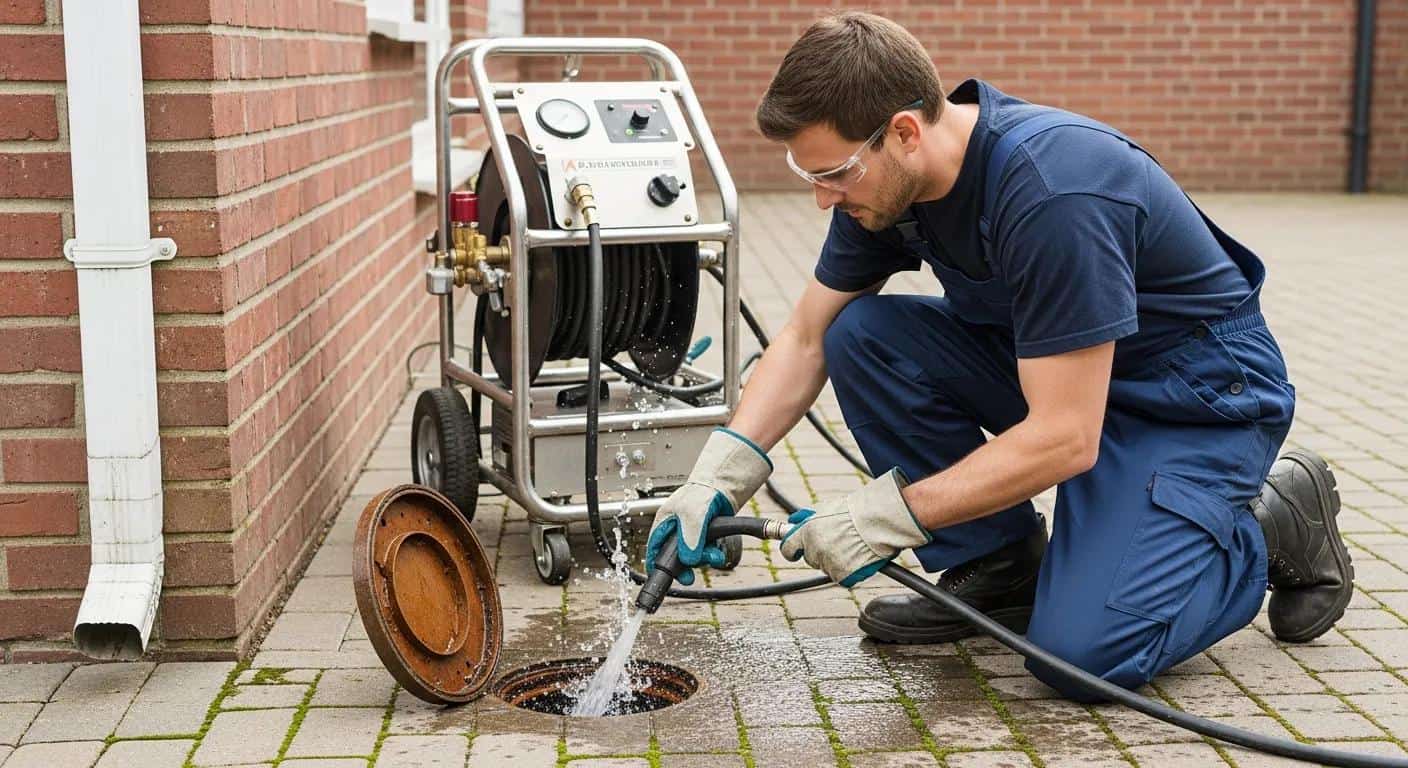
Hydro jetting is classified among hydraulic cleaning methods, which use pressurized water to break apart buildup and flush debris through the line, breaking apart buildup and flushing debris. Pressures often exceed 3,500 psi, which helps remove grease, mineral deposits and roots and restores full flow. Bison Plumbing’s professional hydro jetting service is available throughout Oakland County.
Process of Hydro Jetting
Technicians start with a camera inspection to locate the blockage, then feed a hose and nozzle into the line and apply controlled high-pressure water. The stream both breaks obstructions and scrubs pipe walls.
Benefits of Hydro Jetting
The method delivers a deep, chemical-free clean that reduces repeat clogs and improves system performance. It’s effective for long, continuous buildup and can prevent costly future repairs.
Effectiveness in Cleaning Drains
Hydro jetting handles a wide range of issues from minor obstructions to heavy deposits without digging or invasive work, making it a fast, practical option for thorough restoration.
What Is Drain Snaking and When Is It Effective?

Drain snaking uses a flexible metal cable (a snake) to mechanically break up or pull out clogs. It works well for hair, soap scum and small debris and is often quicker and less expensive for isolated issues.
Definition
The technician feeds the cable to the obstruction; the coiled or cutting tip grabs, slices or dislodges the clog. Snaking is commonly used for single, accessible blockages and can be completed quickly.
Effectiveness
Snaking is effective for localized clogs but does not clean pipe walls. For recurring or widespread buildup, hydro jetting is usually more appropriate. Learn more about sewer and drain services for comprehensive solutions.
Suitable Scenarios for Use
Snaking is a good emergency fix for a backed-up sink or toilet and is often preferred for older, fragile pipes because it is less aggressive than high-pressure methods.
How Does Hydro Jetting Work to Remove Clogs?
After a camera inspection pinpoints the problem, the nozzle is positioned and pressure is applied to break the clog and flush debris downstream, restoring flow and leaving pipe walls cleaner than mechanical methods alone.
How Does Drain Snaking Clear Blockages in Pipes?
Snaking physically disrupts or extracts debris with a flexible cable. The cable is maneuvered to the obstruction and then rotated or retracted to remove or break up the clog, improving flow for many common, localized problems.
How Do Hydro Jetting and Snaking Compare in Cost and Benefits?
Hydro jetting usually costs more upfront due to equipment and training but offers comprehensive cleaning and fewer repeat clogs. Snaking is less expensive and effective for simple, isolated clogs but may not resolve deeper or recurring issues.
| Method | Cost Range | Benefits | Limitations |
|---|---|---|---|
| Hydro Jetting | $300 – $600 | Thorough cleaning, long-lasting results | Higher upfront cost |
| Drain Snaking | $100 – $300 | Quick solution for minor clogs | Limited effectiveness for severe blockages |
What Are the Advantages of Hydro Jetting for Oakland County Homes?

Hydro jetting helps prevent grease and debris buildup common in older systems, uses only water (no chemicals), improves flow and can extend the useful life of plumbing while reducing the likelihood of future repairs. The EPA’s guidance on water use underscores why chemical-free methods are preferred for maintaining household plumbing systems.
What Are the Limitations and Benefits of Drain Snaking?
Snaking is a fast, economical option for localized clogs but won’t remove heavy buildup along pipe walls and may not stop recurring issues. It remains a good choice for simple, accessible blockages and fragile piping.
Which Drain Cleaning Method Is Right for Your Oakland County Home?
Choose snaking for quick fixes and isolated clogs, especially in older pipes. Choose hydro jetting for recurring clogs, multiple affected drains, or heavy buildup where a long-term clean is needed. When unsure, consult a professional inspection. For more context, read our posts on when you need hydrojetting and our hydrojetting vs snaking comparison guide.
What Factors Should Homeowners Consider When Choosing Between Hydro Jetting and Snaking?
- Severity of the Clog: Hydro jetting is ideal for severe blockages, while snaking is better for minor issues.
- Pipe Condition: Older pipes may benefit from the gentler approach of snaking, while newer systems can handle the intensity of hydro jetting.
- Budget: Drain snaking is generally more affordable, but hydro jetting offers long-term benefits that may justify the higher cost.
How Can Bison Plumbing Help with Professional Drain Cleaning Services?
Bison Plumbing offers both hydro jetting and drain snaking for Oakland County homeowners. Our technicians use camera diagnostics to recommend the right method and perform efficient, professional cleanings or repairs to keep systems working reliably.
Frequently Asked Questions
What are the signs that I need to consider hydro jetting for my drains?
Consider hydro jetting for frequent clogs, slow drains, recurring backups or when several fixtures are affected—these signs often indicate deeper-line buildup or main sewer issues.
Is hydro jetting safe for all types of plumbing systems?
Hydro jetting is safe for most modern systems but may not suit very old or fragile pipes (certain clay or older PVC). A professional inspection should confirm pipe condition first.
How often should I have my drains cleaned using hydro jetting or snaking?
Frequency depends on use and pipe condition. Annual hydro jetting can benefit high-use homes or those with recurring issues; snaking can be used as-needed for occasional clogs.
Can I perform drain snaking myself, or should I hire a professional?
DIY snaking is possible for simple clogs, but professionals reduce risk of damage, have the right tools and can spot underlying issues that a DIY attempt might miss.
What should I do if my drains are still clogged after snaking or hydro jetting?
If clogs persist, the pipe may be damaged or the blockage may lie further down. Contact a plumber for camera diagnostics and recommended repairs.
Are there any environmental concerns with using hydro jetting or snaking?
Hydro jetting and snaking have minimal environmental impact; hydro jetting uses only water and avoids harsh chemicals. Professional application helps prevent accidental damage or leaks.