
Pipe Lining vs Pipe Bursting: Which Trenchless Method Does Your Oakland County Sewer Need?
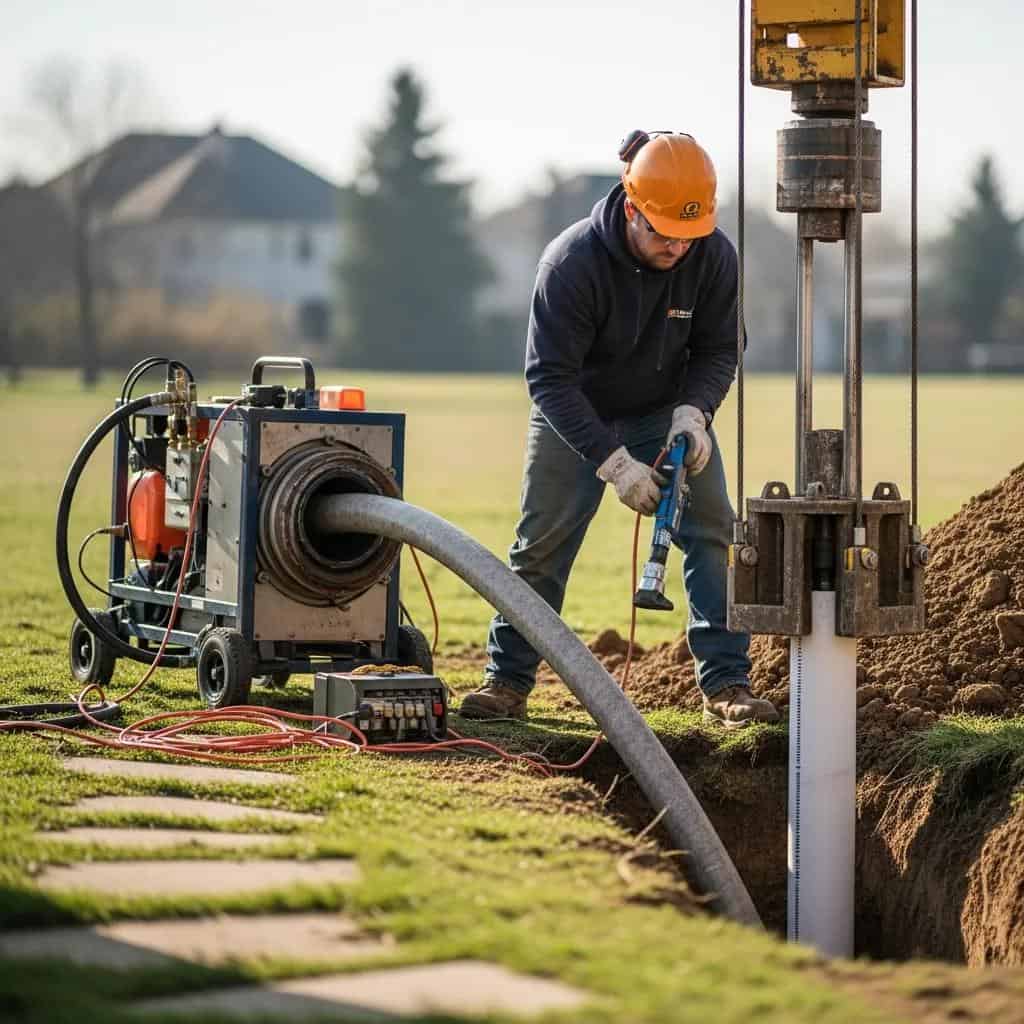
When sewer lines fail, pipe lining and pipe bursting are two common trenchless sewer repair options that limit landscape disruption. This article summarizes how each method works, the principal benefits and drawbacks, typical costs, and the factors to weigh for an Oakland County property so you can choose the right approach promptly.
The guide reviews both methods, compares costs and suitability, and highlights when a professional assessment is needed.
Key Takeaways
- Pipe lining and pipe bursting are trenchless alternatives to full excavation.
- Pipe lining (CIPP) installs a resin-saturated liner that cures inside the existing pipe to form a new smooth pipe.
- Pipe bursting fractures the old pipe while pulling a new pipe into place, enabling full replacement.
- Lining minimizes disruption and is cost-effective for intact pipes with limited damage.
- Bursting replaces severely damaged or collapsed pipes but requires access points and more setup.
- Typical costs: pipe lining $80–$250/linear foot; pipe bursting $100–$200/linear foot.
- Choice depends on pipe condition, budget, and acceptable site impact.
- Bison Plumbing provides trenchless sewer repair in Oakland County, Michigan.
What Are Pipe Lining and Pipe Bursting in Trenchless Sewer Repair?
Both techniques repair underground sewer lines without open trenches. Pipe lining (CIPP) creates a new pipe inside the old one by inserting and curing a resin-saturated liner. Pipe bursting breaks the existing pipe apart while simultaneously pulling in a replacement pipe, allowing full renewal of the line. For a broad overview, see the National Sewer Authority’s guide to trenchless sewer repair.
Each reduces excavation, restores flow, and limits surface restoration compared with traditional dig-and-replace work.
How Does Pipe Lining Work?
The process begins with a sewer camera inspection to verify access and damage. Typical steps:
- Cleaning: Remove roots, scale, and debris with hydro-jetting or mechanical tools.
- Liner insertion: Insert a resin-saturated felt or fiberglass liner sized to the existing pipe.
- Inflation & curing: Inflate the liner and cure (steam, hot water, or UV) to form a continuous new pipe.
CIPP lining can extend service life substantially and restores a smooth, corrosion-resistant interior.
What Is the Pipe Bursting Method and How Is It Performed?
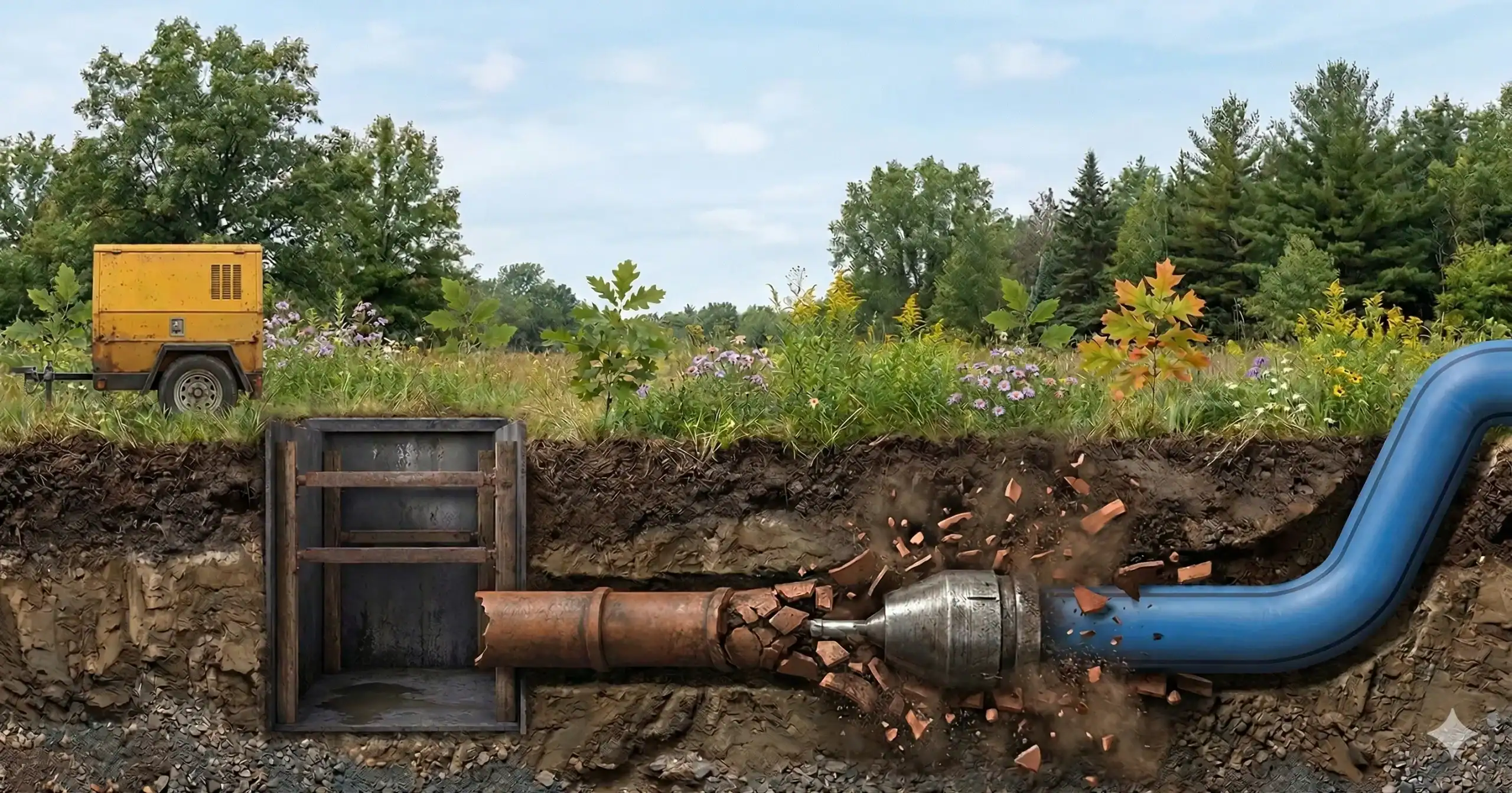
Pipe bursting replaces the line by fracturing the old pipe and pulling a new one in behind the bursting head. Typical steps:
- Inspection: Confirm line route and obstructions with camera work.
- Access points: Excavate small pits at each end of the run for equipment.
- Bursting: Insert a bursting head that breaks the old pipe and expands the surrounding soil slightly.
- Pull-in: Pull the new pipe into the created cavity as the head advances.
Bursting allows full replacement of collapsed or heavily damaged pipes without long open trenches, although it requires localized excavation for pits and equipment.
What Are the Benefits and Drawbacks of Pipe Lining and Pipe Bursting?
Each method has clear advantages and limits; choose based on structural needs and site constraints.
Benefits of Pipe Lining
- Minimal disruption: Little surface disturbance and reduced restoration needs. Learn more about Bison Plumbing’s no-dig sewer repair services.
- Cost-effective: Lower labor and restoration costs for many runs.
- Durability: Creates a corrosion-resistant liner that often lasts decades.
Drawbacks of Pipe Lining
- Suitability: Not appropriate for pipes that are fully collapsed or require diameter upsizing.
- Temporary outage: Curing can take hours, during which service may be limited.
Benefits of Pipe Bursting
- Full replacement: Replaces failing pipe completely, allowing new material and size changes.
- Versatility: Works with various pipe materials and many diameters.
Drawbacks of Pipe Bursting
- More setup: Requires access pits and heavier equipment.
- Higher upfront cost: Equipment and labor can increase initial expense.
How Do Pipe Lining and Pipe Bursting Costs Compare for Oakland County Sewer Repairs?
Costs vary by run length, damage, access, and local rates. For a detailed breakdown see our guide on trenchless sewer repair costs in Michigan. Typical figures:
| Method | Cost per Linear Foot | Total Project Cost Range |
|---|---|---|
| Pipe Lining | $80–$250 | $6,000 to $15,000 |
| Pipe Bursting | $100–$200 | $5,000 to $15,000 |
Severe damage or the need to upsize the pipe often favors bursting; lighter structural issues are commonly resolved with lining.
What Factors Influence the Cost of Pipe Lining Services?
Major cost drivers include material quality, labor rates, run length, and site complexity.
- Material: Higher-grade liners raise costs but lengthen service life.
- Labor: Local labor and access difficulty affect pricing.
- Project complexity: Multiple bends, long runs, or lateral connections add time and cost.
Accurate camera inspection produces the estimate needed to budget correctly.
Is Pipe Bursting More Expensive Than Pipe Lining?
Bursting can be costlier for short, simple repairs, but when full replacement or upsizing is required, the total difference may be modest. Base the decision on condition, lifespan needs, and restoration costs.
Which Trenchless Sewer Repair Method Is Right for Your Oakland County Property?
Choose by matching pipe condition and site tolerance for disruption:
- Pipe Lining: Best for minor to moderate structural defects where the pipe remains continuous.
- Pipe Bursting: Best for collapsed, severely damaged pipes or when replacing and upsizing is needed.
A professional inspection will identify the most appropriate, cost-effective option.
How to Choose Between Pipe Lining and Pipe Bursting Based on Sewer Damage?
Consider these criteria:
- Extent of damage: Lining for limited defects; bursting for extensive collapse.
- Budget: Compare short-term cost and long-term value.
- Property impact: Decide how much excavation and surface restoration you can accept.
These factors guide a practical choice aligned with long-term performance and cost.
What Makes Bison Plumbing the Trusted Choice for Trenchless Sewer Repair in Oakland County, Michigan?
Bison Plumbing serves Oakland County, Michigan with trenchless solutions including pipe lining and pipe bursting. Their approach combines camera diagnostics, experienced crews, and industry-standard materials to deliver tailored repairs with minimal disruption.
If you suspect sewer issues, Bison Plumbing can inspect the line and recommend the most suitable trenchless option.
Frequently Asked Questions
What are the environmental benefits of trenchless sewer repair methods?
Trenchless methods limit soil disturbance, preserve landscaping and trees, and reduce heavy equipment and restoration needs, which lowers emissions and environmental impact compared with full excavation.
How long does the trenchless sewer repair process typically take?
Duration varies by method and damage. Many pipe lining jobs finish within a day. Pipe bursting may take longer due to access and full replacement needs. Both are usually far quicker than open-trench replacement.
Are there any maintenance requirements after trenchless sewer repair?
Maintenance is minimal: schedule periodic inspections, avoid flushing non-biodegradable items, and prevent heavy loads over the repaired run to protect the new pipe.
Can trenchless methods be used for all types of pipes?
They work on common materials such as PVC, clay, and cast iron. Suitability depends on material and condition—lining for intact pipes with defects; bursting for collapsed or extensively damaged lines.
What should I expect during the inspection process before repair?
A sewer camera inspection identifies cracks, blockages, roots, and collapses and provides the information needed to recommend lining or bursting and produce an accurate estimate.
How do I know if my sewer line needs repair?
Look for frequent backups, slow drains, persistent odors, wet yard spots, foundation cracks, or unexplained water bills. If you notice these signs, schedule a professional inspection promptly.