

Quick Answer: Trenchless sewer repair vs excavation comes down to the condition of the pipe. Trenchless methods like CIPP lining and pipe bursting repair the line from the inside in about a day, without digging up the yard or driveway, while traditional excavation opens a trench and adds restoration costs on top of the plumbing bill. Oakland County homeowners with a cracked, root-invaded, or aging line usually qualify for trenchless repair, while a fully collapsed or severely misaligned pipe still needs excavation. Bison Plumbing determines which method fits after a camera inspection.
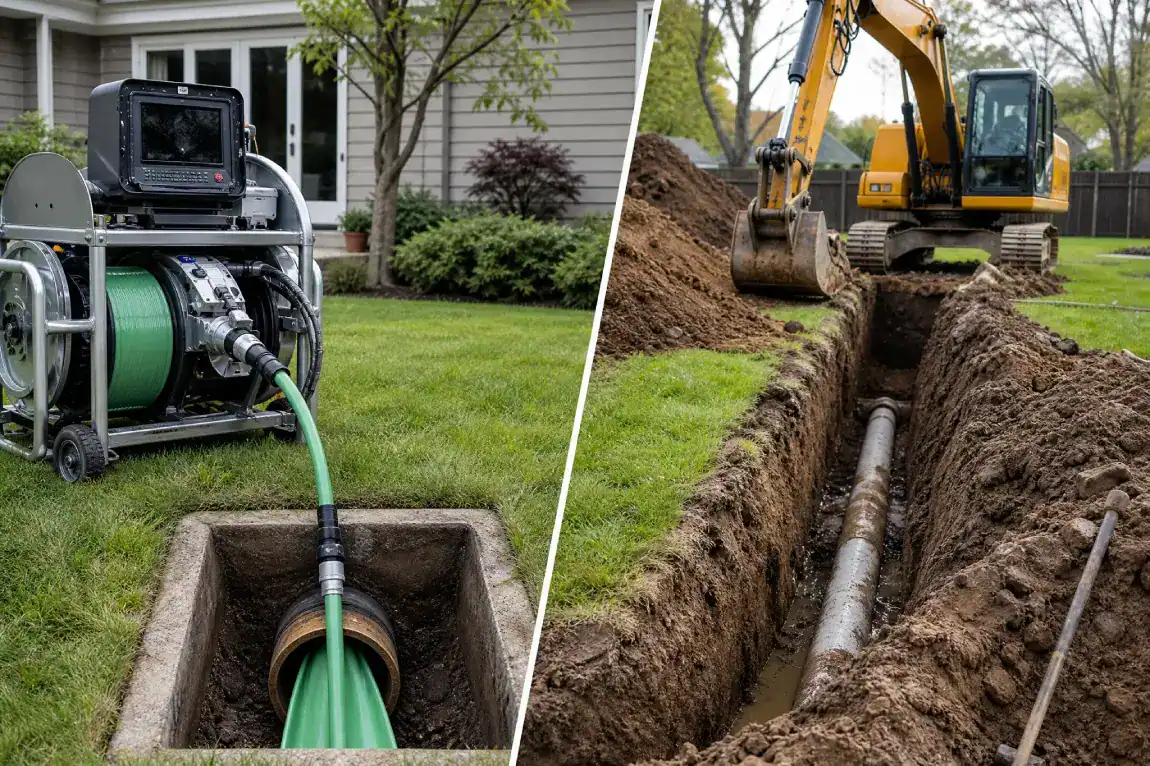
Trenchless sewer repair costs vary by project scope but typically finish in one day for a standard residential lateral. Excavation involves plumbing costs plus added restoration expenses that also vary by project scope. Bison Plumbing, based in Warren, MI, offers CIPP lining with a 50-year design life, avoiding destroyed landscaping and driveway damage.
Trenchless sewer repair costs for Oakland County homeowners vary by project scope for a standard residential lateral, with less yard disruption than traditional excavation, which involves plumbing costs plus restoration fees that vary by project scope. Bison Plumbing, Inc. runs a camera inspection first, confirming pipe condition before recommending CIPP lining, pipe bursting, or full excavation for Oakland County properties.
What Are the Key Takeaways on Trenchless Repair vs Excavation?
- Trenchless repair reduces or eliminates restoration costs by avoiding yard and driveway excavation damage.
- Bison Plumbing uses CIPP lining and pipe bursting methods certified by APSTA standards.
- Traditional excavation remains necessary only when sewer pipes have fully collapsed or failed.
- Trenchless solutions repair cracked, root-invaded, and aging sewer lines faster with minimal disruption.
What’s the Difference Between Trenchless Repair and Excavation?
Trenchless sewer repair vs excavation comes down to how the damaged pipe gets reached. Trenchless methods restore the pipe from the inside, avoiding a long trench dug across the yard, as long as the existing line qualifies for the trenchless sewer repair process. Traditional excavation, by contrast, requires tearing up the yard, driveway, or landscaping to physically expose the broken section.
For homeowners in Troy, Ferndale, Royal Oak, and Southfield, that difference matters most when a finished driveway or mature landscaping sits above the sewer line. Trenchless repair reduces disruption, shortens the repair timeline, and protects the property from the mess that excavation typically creates.
| Factor | Trenchless Repair | Traditional Excavation |
| Yard impact | Minimal digging | Full trench required |
| Timeline | Shorter | Longer |
| Property mess | Reduced | Significant |
| Access method | Works from inside pipe | Requires full pipe exposure |
Is Trenchless Repair as Durable as Traditional Excavation?
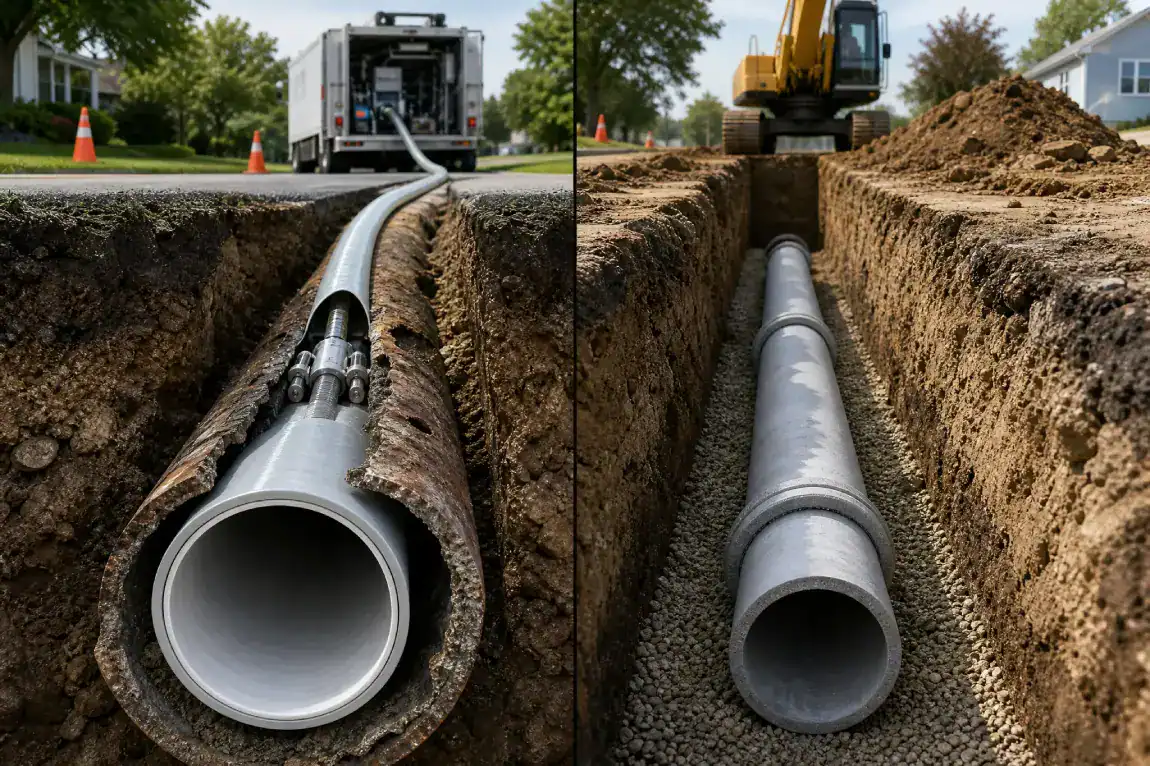
Durability depends on using compliant, tested methods rather than shortcuts. Bison Plumbing’s trenchless work, including cured-in-place pipe lining and pipe bursting, follows ASTM F1216 & F1743 standards for municipal-grade compliance. Those benchmarks confirm the repair meets recognized engineering criteria, not just convenience.
Which Method Fits an Oakland County Home?
The right choice depends on the pipe’s condition and location beneath the property. Homeowners with qualifying lines gain speed and less mess through trenchless methods. Severely damaged sections may still need traditional excavation. Bison Plumbing evaluates each Oakland County property individually before recommending either approach.
📞 Ready to Get Started? A camera inspection is the only way to know for certain whether your Oakland County home qualifies for trenchless repair. Contact Bison Plumbing today for a fast inspection and an accurate, no-surprises quote.
How Do Trenchless and Excavation Costs Compare?
Trenchless sewer repair vs excavation comes down to a straightforward math problem for Oakland County homeowners. Trenchless method pricing varies based on pipe length, material, and project scope for a standard residential lateral in Troy, Ferndale, Royal Oak, Southfield, and surrounding communities. Traditional excavation pricing for plumbing labor alone also varies by project scope. That figure doesn’t include restoration.
Does Excavation Cost More Than the Plumbing Bill Suggests?
Yes — restoration is the hidden expense homeowners often miss. Torn-up lawns, cracked driveways, and disturbed landscaping typically add significant restoration expenses on top of traditional repair costs. Once that total lands, many Oakland County property owners find trenchless repair the more cost-effective route overall.
Per-foot pricing offers a clearer comparison for trenchless work, since costs scale with pipe length and method:
| Cost Factor | Trenchless | Traditional Excavation |
| Plumbing cost | Varies by pipe length and scope | Varies by dig scope |
| Restoration cost | Minimal to none | Varies by extent of yard/driveway damage |
| Per-foot pricing | Varies by method and pipe length | Varies by dig scope |
Does Trenchless Repair Require an Excavation Permit?
Most trenchless jobs skip the excavation permit entirely, since no trench gets opened. That keeps projects HOA-friendly for homeowners in planned communities, avoiding the delays and paperwork that often accompany traditional dig-and-replace jobs.
When Is Excavation Still the Better Choice?
Excavation remains the stronger option for Oakland County homeowners when a sewer pipe has fully collapsed or shifted severely out of alignment. No liner or bursting head can restore a line that has lost its shape entirely. The ground around homes in Troy, Ferndale, Royal Oak, and Southfield sometimes shifts enough to cause exactly that kind of damage. In those cases, sewer line repair through direct replacement is the only reliable fix.
Deciding between trenchless sewer repair vs excavation always starts with a clear look at the pipe itself. A professional camera inspection confirms whether the line qualifies for a no-dig method or needs traditional excavation. That footage also produces a more accurate cost estimate before any work begins.
How Do Homeowners Know Their Pipe Is Too Damaged for Trenchless Repair?
Severe collapse, major offsets, or missing sections of pipe usually rule out trenchless methods. Camera inspection footage reveals these conditions clearly, giving homeowners and their plumber a factual basis for the decision rather than a guess.
Does Bison Plumbing Handle Excavation Cases Too?
Yes. With more than 25 years serving Macomb and Oakland County, Bison Plumbing evaluates every sewer line honestly, recommending excavation when trenchless methods, including pipe bursting or CIPP liners rated for a 50-year design life, simply won’t hold.
When facing a failing sewer line, Oakland County homeowners benefit from understanding both repair paths. Trenchless technology offers minimal disruption and faster recovery, while traditional excavation remains the right choice for certain situations. The best decision depends on your specific line condition, budget, and property layout. Bison Plumbing’s licensed technicians assess each scenario thoroughly and recommend the solution that delivers lasting results with fair, transparent pricing.
TL;DR — Trenchless Sewer Repair vs Excavation at a Glance
- Trenchless sewer repair vs excavation comes down to the pipe’s actual condition, confirmed by a camera inspection.
- CIPP lining and pipe bursting typically finish in about a day with minimal yard disruption and a 50-year design life for qualifying lines.
- Traditional excavation remains the necessary option when a pipe has fully collapsed or shifted out of alignment.
- Restoration costs — torn-up lawns, cracked driveways — often make excavation pricier than the plumbing bill alone suggests.
- Bison Plumbing has served Oakland and Macomb County homeowners for more than 25 years, recommending trenchless or excavation honestly based on pipe condition.
- Next step: Schedule a camera inspection with Bison Plumbing to find out which repair method fits your sewer line.
Frequently Asked Questions
How Long Does Trenchless Sewer Repair Typically Take?
Trenchless sewer repair for a standard residential lateral typically finishes in one day, compared with traditional excavation, which usually takes longer because of digging, pipe replacement, and yard or driveway restoration. CIPP lining and pipe bursting both work from inside or alongside the existing pipe path, so crews avoid opening a full trench across the property. For Oakland County homeowners in Troy, Ferndale, Royal Oak, and Southfield, that shorter timeline means less time without full sewer function and less disruption to daily life. Bison Plumbing confirms timing during the initial camera inspection, since pipe condition affects how quickly the chosen method can be completed.
What Is CIPP Pipe Lining and How Does It Work?
CIPP, or cured-in-place pipe lining, is a trenchless method that repairs a damaged sewer line from the inside without digging up the yard or driveway. Bison Plumbing installs the liner through existing access points, and it cures in place to create a new pipe within the old one, backed by a 50-year design life for lines that qualify. The process follows ASTM F1216 and F1743 standards for municipal-grade compliance, so the repair meets recognized engineering benchmarks rather than a shortcut fix. CIPP lining works well for cracked, root-invaded, or aging sewer lines that haven’t fully collapsed or shifted out of alignment.
What Is Pipe Bursting and How Does It Differ From CIPP Lining?
Pipe bursting is a second trenchless method Bison Plumbing uses alongside CIPP lining to repair Oakland County sewer lines. Rather than lining the inside of the existing pipe, pipe bursting pulls a new pipe through the old one while a bursting head fractures and displaces the deteriorated pipe outward into the surrounding soil. Like CIPP lining, it avoids the long trench that traditional excavation requires, keeping yard and driveway disruption to a minimum. Pipe bursting suits sewer lines that need a full pipe replacement rather than a liner, as long as the line hasn’t collapsed or shifted too severely for the method to work.
How Much Does Sewer Line Replacement Cost in Michigan?
Sewer line replacement costs in Michigan vary by project scope, pipe length, material, and whether the job uses a trenchless method or traditional excavation. Trenchless pricing scales with pipe length and the method chosen, while traditional excavation pricing covers plumbing labor alone and doesn’t include restoration. That’s the hidden expense: torn-up lawns, cracked driveways, and disturbed landscaping typically add significant restoration costs on top of the excavation bill itself. Once homeowners in Oakland County factor in that total, many find trenchless sewer repair the more cost-effective route overall, even before accounting for the shorter timeline and reduced property mess.
How Does a Camera Inspection Help Decide Between Trenchless Repair and Excavation?
A professional camera inspection is the starting point for choosing between trenchless sewer repair and excavation, since it shows the pipe’s actual condition rather than leaving the decision to guesswork. The footage reveals whether a line has cracks, root intrusion, or aging damage that CIPP lining or pipe bursting can resolve, or whether it shows severe collapse, major offsets, or missing sections that rule trenchless methods out. That same footage also produces a more accurate cost estimate before work begins. Bison Plumbing evaluates every Oakland County sewer line this way before recommending either a no-dig method or traditional excavation.
Related Resources
- Trenchless Sewer Repair Services
- Ferndale, MI Sewer Repair
- Trenchless vs. Traditional Sewer Repair
- Trenchless Sewer Repair Guide
- Trenchless Sewer Repair Cost in Michigan
- Pipe Lining vs. Pipe Bursting
Get a Free Sewer Repair Quote
Choosing between trenchless sewer repair and excavation in Oakland County comes down to one question: what condition is the pipe actually in? A camera inspection turns that decision from a guess into a fact-based recommendation, and it’s the starting point for an accurate cost estimate either way. Contact Bison Plumbing today for a free, no-obligation quote and camera inspection.
About Bison Plumbing: Bison Plumbing has served homeowners in Troy, Ferndale, Royal Oak, Southfield, and surrounding communities across Oakland and Macomb County for more than 25 years, specializing in trenchless sewer repair, CIPP lining, pipe bursting, and traditional excavation. Contact Bison Plumbing today for a free, no-obligation quote.