
Tree Roots in Michigan Sewer Lines: Signs and Solutions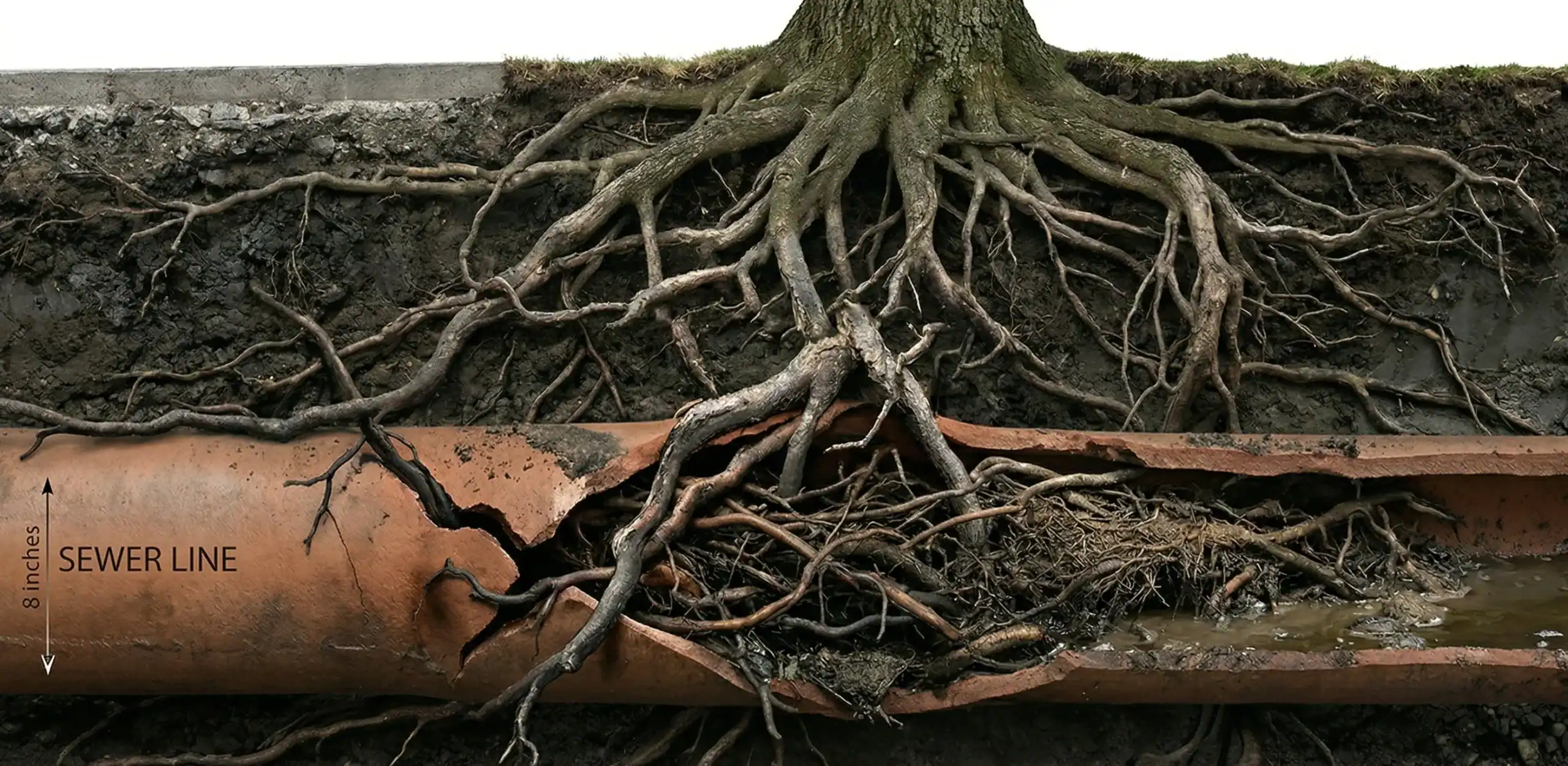
Tree roots commonly threaten sewer lines across Michigan. This article summarizes the typical signs, how professionals assess damage, and the practical repair options homeowners can use, including trenchless methods to limit disruption and cost.
Key Takeaways
- Tree roots often infiltrate sewer lines in Michigan.
- Watch for slow drains, gurgling, and foul odors.
- Soggy lawn spots or visible sewage suggest leaks.
- Video camera inspections reveal root extent and pipe damage.
- Repairs include root cutting, CIPP lining, and pipe bursting.
- Trenchless repair reduces excavation and landscape disruption.
- Routine maintenance and root barriers lower future risk.
- Hydro jetting clears roots and debris effectively.
- Knowing root growth patterns helps assess pipe vulnerability.
Sewer Line Root Intrusion in Michigan: Overview and Solutions
Roots seek moisture and will exploit pipe cracks or joints, causing blockages and structural harm. Michigan’s mix of trees and soils increases this risk; prompt detection and the right repair choice limit costs and disruption. If you’re unsure whether you need repairs, explore common sewer and drain problems to identify your situation.
Identifying Signs of Root Intrusion

Early spotting reduces damage and expense. If you notice the following, consider a professional inspection with a camera survey.
Slow Drains
Persistent slow draining across multiple fixtures often indicates roots restricting flow and warrants an inspection before a full blockage forms.
Gurgling Sounds
Gurgling from drains usually means air is trapped by an obstruction, commonly roots, and may precede backups.
Foul Odors
Strong sewer smells in drains or the yard can point to leaks where roots have cracked pipes; address them promptly due to health risks.
Soggy Lawn Patches
Unexpected wet patches, especially in dry weather, can indicate a leaking sewer line caused or worsened by root intrusion.
Visible Sewage Pooling
Surface sewage is a serious sign of failure from blockages or collapsed pipes and requires immediate professional attention.
Chronic Backups
Repeated backups suggest a deeper issue such as root intrusion; schedule a camera inspection to locate and diagnose the problem. Read more about sewer drain problem symptoms to understand what you’re dealing with.
Assessing Damage from Root Intrusion

Video camera inspections and professional evaluations reveal roots, joint separation, cracks, and collapsed sections, guiding whether cleaning, lining, or replacement is needed.
Effective Repair Solutions for Tree Roots in Sewer Lines
Choice of repair depends on pipe condition, access, and severity. Trenchless methods often offer faster, less disruptive outcomes.
Root Removal
Mechanical cutting or hydro jetting clears roots to restore flow; regrowth is possible, so follow-up maintenance is important.
CIPP Pipe Lining
Cured-in-place pipe lining installs a resin liner that seals cracks and joints, creating a smooth new pipe inside the old one and reducing future root entry. Learn more about our no-dig sewer repair services for Michigan homeowners.
Pipe Bursting
Pipe bursting replaces a damaged pipe by fracturing the old line and pulling in a new one, useful for severely damaged sections with limited surface excavation. See our trenchless sewer repair options for more detail.
Regular Maintenance
Scheduled inspections, cleanings, and root barrier installation reduce recurrence and extend pipe life.
Bison Plumbing, operating via mybisonplumbing.com, is a Michigan plumbing provider that offers inspections, root removal, and trenchless sewer repair services for homeowners facing root-related sewer issues.
Common Types of Sewer Pipe Damage from Root Intrusion
In Michigan, sewer pipes are particularly vulnerable to damage from tree roots due to the region’s diverse tree species and soil conditions. Common types of damage include:
- Internal Blockages: Roots infiltrate pipes through small cracks or joints, growing inside and causing partial or complete blockages that restrict wastewater flow.
- Longitudinal Cracks: As roots grow, they can widen existing cracks along the length of pipes, weakening structural integrity and allowing more roots and debris to enter.
- Joint Separation: Tree roots can force apart pipe joints, especially in older clay or cast iron pipes common in Michigan homes, leading to leaks and misalignment.
- Full Pipe Breaks or Collapses: Severe root intrusion can cause pipes to break or collapse entirely, resulting in sewage leaks into the surrounding soil, which can contaminate yards and groundwater.
- Corrosion and Material Degradation: Roots can exacerbate corrosion in metal pipes or degrade older materials, accelerating pipe failure.
Michigan’s freeze-thaw cycles can worsen these damages by causing soil movement around pipes, making root intrusion more likely and repairs more urgent.
What Are the Effective Sewer Line Inspection and Root Removal Methods?
For Michigan homeowners, effective inspection and removal methods are critical to managing root intrusion:
- Video Camera Inspections: Professional plumbers use waterproof CCTV cameras to inspect the interior of sewer lines, identifying root locations, pipe damage, and blockages. This method is non-invasive and provides precise diagnostics.
- Mechanical Root Cutting: Specialized cutting tools, such as root saws or augers, are inserted into pipes to physically cut and remove roots. This method is effective for clearing blockages but may require repeat treatments.
- Hydro Jetting: High-pressure water jets are used to blast away roots and debris inside pipes. Hydro jetting is particularly effective in Michigan’s varied soil conditions and can clear pipes without damaging them. Research published by the IWA Publishing on roots in wastewater systems shows that tree roots form dense hair mats inside pipes that respond well to high-pressure flushing.
- Chemical Root Treatments: In some cases, root-killing foams or gels are applied to inhibit regrowth. These treatments must be used carefully to avoid environmental harm and are often combined with mechanical removal. According to a CDC guide on sewer line root control, a combined chemical and mechanical approach yields the most effective long-term results.
Regular inspections, especially after seasonal changes common in Michigan, help detect root intrusion early and prevent costly damage.
What Are the Benefits of Trenchless Sewer Repair for Root Damage?
Trenchless sewer repair methods offer significant advantages for Michigan homeowners dealing with root damage:
- Minimal Landscape Disruption: Trenchless techniques avoid extensive digging, preserving lawns, gardens, and hardscapes that are common in Michigan residential properties.
- Faster Repair Times: Repairs such as cured-in-place pipe (CIPP) lining or pipe bursting can often be completed in a day or two, reducing inconvenience.
- Cost-Effective: By eliminating the need for large excavations and restoration work, trenchless repairs often lower overall repair costs.
- Durability and Longevity: Trenchless liners create a seamless, jointless pipe within the old pipe, reducing future root intrusion and extending pipe life.
- Environmental Benefits: Less soil disturbance means reduced erosion and runoff risks, important in Michigan’s varied ecosystems.
Given Michigan’s seasonal weather and soil conditions, trenchless repairs provide a reliable and homeowner-friendly solution to root-related sewer problems. For a cost breakdown, see our guide on trenchless sewer repair costs in Michigan.
How Can Michigan Homeowners Prevent Tree Root Intrusion in Sewer Lines?
Prevention is key to avoiding costly sewer repairs. Michigan homeowners can take several localized steps to reduce root intrusion risk:
- Choose Tree Species Wisely: Avoid planting aggressive-rooted trees such as willows, poplars, and silver maples near sewer lines. Opt for less invasive species suited to Michigan’s climate.
- Maintain Proper Distance: Plant trees and shrubs at least 30 feet away from sewer lines when possible, considering root growth patterns common in Michigan soils.
- Install Root Barriers: Physical root barriers made of metal or plastic can be installed underground to redirect roots away from pipes, especially in areas with known root problems.
- Regular Sewer Line Inspections: Schedule camera inspections every 1-2 years, or more frequently if you have mature trees nearby, to catch early signs of intrusion.
- Manage Soil Moisture: Avoid overwatering lawns near sewer lines, as excess moisture attracts roots toward pipes.
By combining these strategies, Michigan homeowners can significantly reduce the likelihood of root intrusion and protect their sewer infrastructure.
What Maintenance Practices Help Avoid Root Damage to Sewer Pipes?
Consistent maintenance is essential for Michigan homeowners to keep sewer lines clear and functional:
- Routine Camera Inspections: Annual or biennial inspections help detect root growth before it causes blockages or damage.
- Scheduled Hydro Jetting: Periodic hydro jetting removes roots and debris, maintaining clear pipes and preventing buildup. Not sure if jetting is right for you? Compare your options in our hydrojetting vs. snaking guide.
- Prompt Repairs: Address minor cracks or joint separations quickly to prevent roots from exploiting these entry points.
- Root Barrier Upkeep: Inspect and maintain any installed root barriers to ensure they remain effective over time.
- Professional Consultations: Work with local Michigan plumbing experts familiar with regional soil and tree conditions to develop a tailored maintenance plan.
These practices help extend the life of sewer lines, reduce emergency repairs, and maintain healthy home plumbing systems in Michigan’s unique environment.
Frequently Asked Questions
What are the long-term effects of tree root intrusion on sewer lines?
Left unchecked, roots can cause recurring blockages, leaks, and eventual pipe failure, often requiring lining or full replacement. Check out our article on signs you need sewer line replacement to know when to act.
How often should homeowners inspect their sewer lines for root intrusion?
Annual inspections are a practical baseline; inspect more often if you have many trees or experience recurring clogs.
Can tree roots grow back after removal, and how can this be managed?
Yes. Manage regrowth with regular maintenance, barriers, or repeat treatments; a professional can recommend the best schedule.
What types of trees are most likely to cause sewer line issues?
Species with aggressive roots—willows, poplars, maples, and some oaks—are more likely to cause issues if planted close to lines.
What should I do if I suspect root intrusion in my sewer line?
Act promptly: note symptoms, avoid chemical drain additives, and contact a professional for a camera inspection and recommended repairs.
Are there any DIY methods for preventing tree root intrusion?
You can avoid planting near lines, install approved root barriers, and keep drains clear, but major problems require professional service.
How does climate affect tree root growth and sewer line intrusion?
Wet seasons can encourage lateral root growth toward lines; drought can push roots deeper seeking water, both affecting intrusion risk.
Conclusion
Addressing tree root intrusion in Michigan’s sewer lines is crucial for maintaining a healthy plumbing system and preventing costly repairs. By recognizing early signs and utilizing effective solutions like trenchless repairs, homeowners can minimize disruption and extend the life of their sewer infrastructure. Regular inspections and proactive maintenance further enhance the resilience of sewer lines against root damage. For expert assistance and tailored solutions, connect with our team today.