
Is Backflow Testing Required in Michigan? What the Law Says for Your City

Quick Answer: Yes, backflow testing is required in Michigan under state law, which mandates annual testing for irrigation systems, commercial properties, and any cross-connection point on the municipal water supply. The Michigan Department of Environment, Great Lakes, and Energy (EGLE) enforces this requirement together with local water authorities, who send property owners official notices with strict testing deadlines. Only a licensed technician can perform the certified test and file the required report with the water authority on the owner’s behalf.
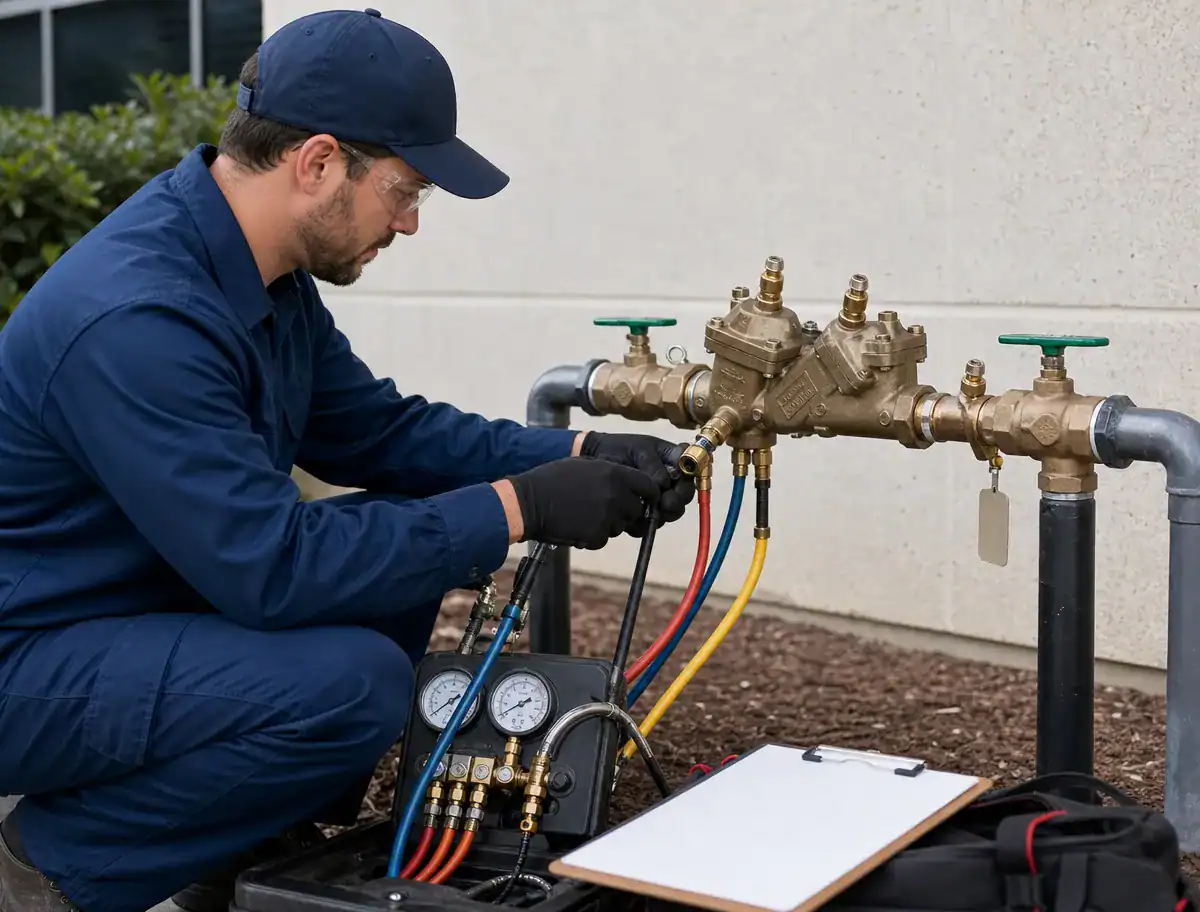
A technician in blue coveralls and gloves tests a brass valve system outdoors using gauges and colored hoses, with a clipboard and tools nearby.

Michigan state law mandates annual backflow preventer testing for irrigation systems, commercial properties, and any cross-connection point on the municipal water supply, with enforcement overseen by EGLE and local water authorities. Southeast Michigan cities, including Downriver communities, send compliance letters with strict deadlines. Bison Plumbing’s LARA-licensed technicians perform certified tests and file reports directly with the water authority.

What Does Michigan Law Require for Backflow Testing?

  • Michigan water authorities enforce backflow testing compliance across Southeast Michigan communities including the Downriver area.
  • EGLE continuously assesses cross connection prevention status and collaborates with industry partners to strengthen regulations.
  • Water distribution systems require continuous positive pressure to prevent backflow and contamination in Michigan.
  • Property owners in regulated areas receive official letters from local water authorities about backflow preventer testing.
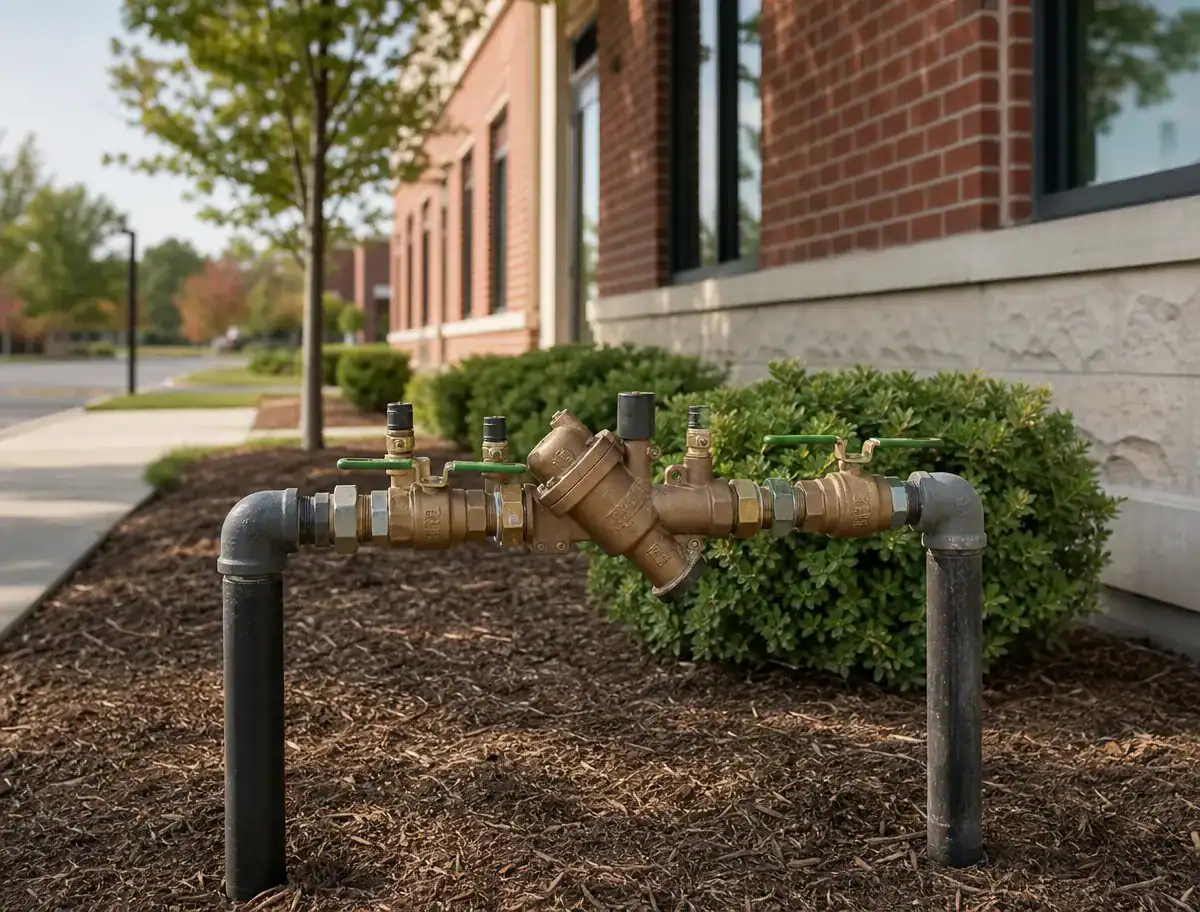
A brass backflow preventer valve is installed between two black pipes in a landscaped area outside a brick building with shrubs and windows.

Why Does Michigan Require Annual Backflow Testing?

Michigan mandates yearly testing because water distribution systems depend on continuous positive pressure to keep contaminants out. Any drop in that pressure allows water to reverse direction, pulling sewage, bacteria, pathogens, or chemical residue back into the drinking supply. The Michigan Safe Drinking Water Act, 1976 P.A. 399, formally defines this reversal as backflow: contaminated water, waste, or other pollutants entering a public water system. That legal definition gives the Michigan Department of Environment, Great Lakes, and Energy (EGLE) authority to keep reviewing cross-connection rules and compliance procedures across the state.

For Southeast Michigan properties, backflow testing required by Michigan law applies specifically to:

  • Irrigation systems connected to municipal water
  • Commercial properties with cross-connection points
  • Any assembly linking a property’s plumbing to the public water supply
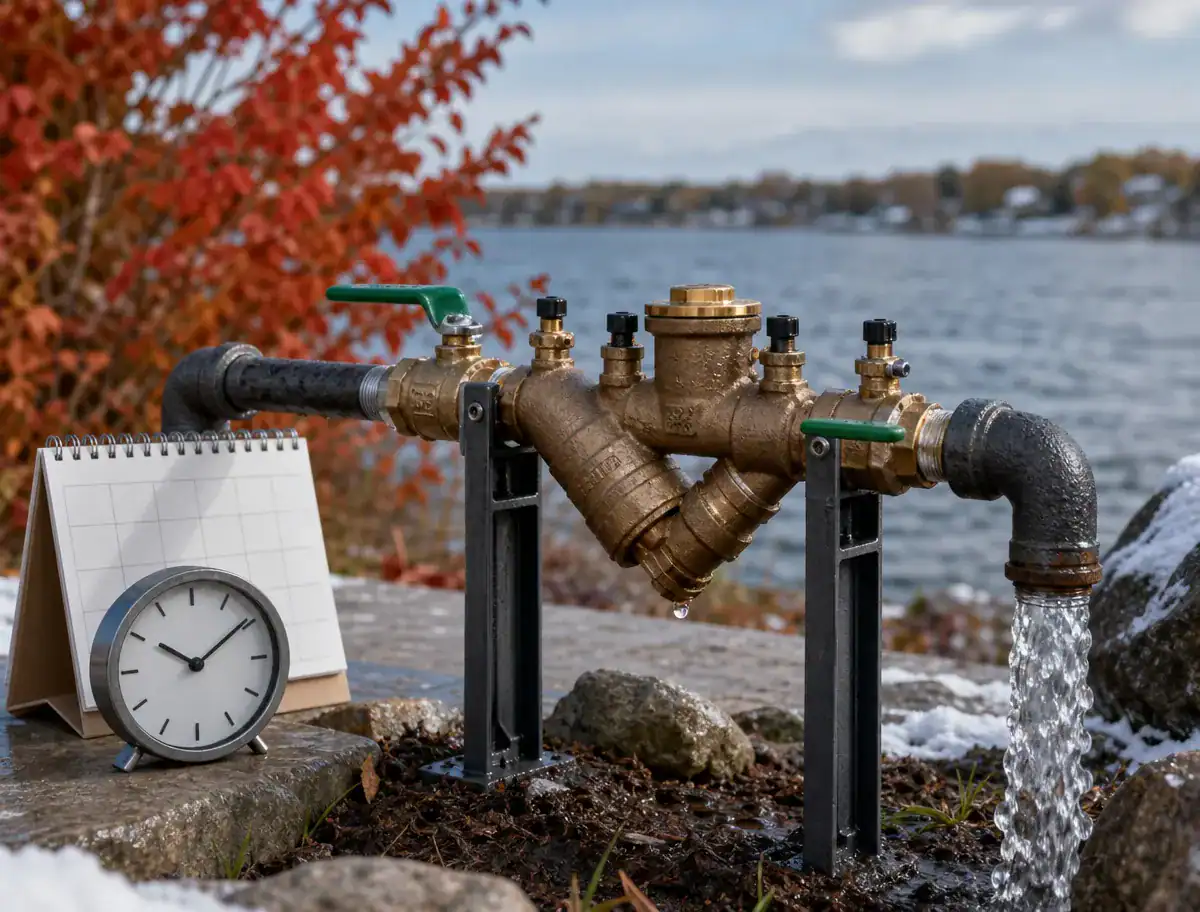
A backflow preventer by a river with water flowing, flanked by rocks, a desk clock, and a blank calendar. Autumn trees and snow patches are in the background.

Is Backflow Testing Just a Formality?

No. Backflow protection exists for a public health reason, not paperwork. It prevents undesirable water, sewage, bacteria, pathogens, or chemical solutions from reaching a home or business’s potable water system. Skipping testing leaves that safeguard unverified, and a failed assembly can go unnoticed until contamination already occurred.

How Do You Complete Backflow Testing Compliance?

Compliance follows a specific sequence: confirm the notice deadline, schedule certified testing, and submit documentation to the correct water authority. Property owners across Macomb, Oakland, and surrounding Southeast Michigan counties face active enforcement, complete with firm deadlines, required paperwork, and real consequences for missed windows. Meeting the backflow testing requirements in Michigan starts with understanding where the obligation comes from before any technician arrives on site.

Most property owners first learn about this obligation through a letter from their local water authority, flagging a specific backflow preventer assembly on record. That notice typically sets a testing window and outlines what documentation the authority expects back. Ignoring it does not make the requirement disappear.

Once that notice arrives, the path to compliance runs through four steps:

  1. Locate the assembly identified in the water authority’s letter and confirm its make, model, and location.
  2. Schedule a licensed technician to perform the certified test before the stated deadline.
  3. Repair or replace any assembly that fails testing, since a failed test alone does not satisfy the requirement.
  4. Confirm the technician files the test report directly with the water authority on the owner’s behalf.

Bison Plumbing serves testing and reporting needs throughout Southeast Michigan communities from its Warren, MI base, with licensed backflow testing services handling each step above.

What Happens If a Property Owner Misses the Deadline?

Missed deadlines trigger escalating consequences from local water authorities. Cross-connection control programs exist specifically to limit backflow threats to the public water supply. Consequences can include additional notices, fines, or water service disruption until testing is complete and documented.

Who Files the Compliance Report With the Water Authority?

The testing technician files the report, not the property owner. This step matters because an untested or unreported assembly still counts as non-compliant, regardless of when the actual test occurred.

📞 Ready to Get Started? Don’t risk fines or a water shutoff waiting on a compliance deadline. Contact Bison Plumbing today to schedule certified backflow testing anywhere in Southeast Michigan.

What Happens If You Miss the Deadline?

Missed backflow deadlines carry a direct penalty: water service suspension for the property. That consequence isn’t a scare tactic — Michigan water authorities enforce it because unresolved backflow failures create real contamination risk. Once a backflow preventer fails and goes unrepaired, drinking water contamination becomes a legitimate health hazard, not a distant possibility.

Backflow testing required Michigan rules exist because plumbing systems connect to everyday water uses that can introduce contaminants. Common culprits include:

  • Lawn irrigation and sprinkler systems
  • Garden hoses attached to chemical sprayers
  • Commercial fixtures tied into the municipal supply, including those covered under Bison Plumbing’s commercial plumbing services

Each of these creates a pathway for polluted water to siphon backward into the drinking supply if the assembly fails.

Is Backflow Testing Just Paperwork?

No. Testing functions as a public health safeguard built directly into a property’s plumbing, protecting the broader municipal water system. Skipping it doesn’t just risk a fine — it risks contaminated water reaching neighbors, employees, or family members before anyone notices.

Can a Suspended Water Service Be Restored?

Yes, once the failed assembly gets repaired or replaced and a passing test is filed with the water authority. Delaying that fix only extends the disruption.

Backflow testing requirements vary across Michigan municipalities, and staying compliant protects both your property and your community’s water supply. Whether your city mandates annual inspections or requires testing only during specific circumstances, understanding your local code is the first step toward peace of mind. Bison Plumbing’s licensed technicians know Michigan’s mechanical codes inside and out and stand ready to help you navigate these requirements with clarity and expertise. When you’re ready to schedule your backflow test or discuss your property’s compliance status, reach out to our team—we’re here to make the process straightforward and hassle-free.

Frequently Asked Questions

Is Backflow Testing Required in Michigan?

Michigan state law mandates annual backflow preventer testing for irrigation systems, commercial properties, and any cross-connection point on the municipal water supply, with EGLE and local water authorities overseeing enforcement.

Who Enforces Backflow Testing Compliance in Southeast Michigan?

Local water authorities enforce compliance and send property owners official letters with strict testing deadlines, including in Downriver communities. Detroit, for example, runs its own cross connections program alongside the county-level enforcement described above.

What Happens If a Property Owner Ignores a Backflow Testing Notice?

Property owners across Macomb, Oakland, and surrounding counties face active enforcement with firm deadlines, required paperwork, and real consequences for missed windows. Ignoring the notice does not make the requirement disappear.

How Often Do I Need to Test My Backflow Preventer in Michigan?

Michigan requires backflow preventer testing on an annual basis for most regulated properties. Local water authorities track the testing schedule and mail a reminder notice when a property’s assembly is due.

Who Is Qualified to Perform Backflow Testing in Michigan?

Only a licensed technician certified to test backflow prevention assemblies can perform the test and file the report with the water authority. Bison Plumbing’s LARA-licensed technicians handle both steps for Southeast Michigan properties.

TL;DR — Backflow Testing Requirements in Michigan at a Glance

  • Michigan state law requires annual backflow testing for irrigation systems, commercial properties, and cross-connection points on the municipal water supply.
  • EGLE and local water authorities enforce compliance and send official notices with firm deadlines.
  • Only a licensed technician can perform the certified test and file the report with the water authority.
  • Missing a deadline can lead to fines or water service suspension until a passing test is filed.
  • Bison Plumbing’s LARA-licensed technicians handle testing and reporting throughout Southeast Michigan, including Macomb, Oakland, and Downriver communities.
  • Next step: Schedule your certified backflow test with Bison Plumbing before your compliance deadline arrives.

Related Resources

Get a Free Backflow Testing Quote

Backflow testing requirements vary from city to city, but missing your deadline can mean fines or a water service shutoff for your property. Bison Plumbing’s LARA-licensed technicians handle the test, any needed repairs, and the paperwork so your property stays compliant year after year. Contact Bison Plumbing today for a free, no-obligation quote.

About Bison Plumbing: Bison Plumbing has served Southeast Michigan homeowners and businesses from its Warren, MI base, specializing in backflow testing, sewer and drain services, and licensed plumbing repairs. Contact us today for a free, no-obligation quote on backflow testing compliance.

Written & reviewed by Jeff Bianchini Co-founder, Bison Plumbing, Inc. · Michigan (LARA) licensed plumbing contractor · Serving Warren & Metro Detroit since 1998 Jeff co-founded Bison Plumbing in Warren, MI in 1998 and has spent his career on Metro Detroit sewer and drain lines — camera-first diagnosis, CIPP lining, and trenchless pipe bursting. He reviews every sewer and drain guide on this site for technical accuracy against current Michigan plumbing code and field practice in Macomb and Oakland County. Reviewed for technical accuracy by a Michigan LARA licensed plumbing contractor | Last updated: September 1, 2026
Table of Contents
American Flag Banner Detail

Request A Quote

When Bison Plumbing is on the job, you can rest assured that your job will be done right, on time, and for a fair price. Contact us today for a Free Quote! 

Apply Now

Financing Plans Available

Bison Plumbing has partnered with Green Sky to offer simple financing plans for every family and every budget. The financing process takes just minutes and can be completed in three easy steps.

Step 1

Visit our financing partner Green Sky to begin the application process (see below). Bison Plumbing Reference Number: 81085618

Step 2

Submit the application. Approval is often granted within minutes.

Step 3

Get low monthly payments for $0 down on repairs, comfort systems, plumbing services, and more.

No Interest if Paid in 6 Months

Subject to credit approval. Interest is billed during the promotion period but all interest is waived if the purchase amount is paid in full within 6 months. 

Reduced APR of 9.99% for 96 Months!

Subject to credit approval. Fixed APR of 9.99% for 96 months. Payment example for $10,000 purchase on approval date. 96 payments of $151.68. 

No Interest if Paid in 12 Months

Subject to credit approval. Interest is billed during the promotion period but all interest is waived if the purchase amount is paid in full within 12 months. 

Reduced APR of 0% for 6 Months!

Subject to credit approval. 6-month purchase window.  0.00% interest rate during a 6-month promotional period followed by a fixed interest rate of 9.99% for 120 months. Payment example assumes one time $10,000 purchase on approval date (8.94% APR) with 6 months of $0.00 payments followed by 120 amortized of $132.10