
Most property managers should plan on one full sewer camera inspection every year, plus extra inspections at a few trigger points such as a tenant change or a backup. That is a planning default, not a legal requirement, and your local sewer authority and health department set any rules that apply to your property. The reason to do it anyway is simple: a sewer line is one of the few systems in your building you can’t see, and a recorded inspection each year turns it from a surprise into a line item.
The short version: Inspect the main building sewer once a year, put a camera before and after every jetting visit, add an inspection when something changes, and keep every report. The footage is your baseline for budgeting repairs.
The Annual Sewer Inspection Calendar
Here is a simple year for a commercial property. For jetting intervals by tenant type, see Bison’s guides to commercial hydrojetting in Michigan and commercial plumbing in Oakland County.
| What to Schedule | When | What It Does |
| Main building sewer camera inspection | Once a year, ideally late winter or early spring, after the freeze-thaw | Gives you a dated, recorded picture of the line to compare against next year |
| Camera pass before and after every jetting visit | With each cleaning (see the jetting guide for tenant-based intervals) | Confirms the line is actually clear and that jetting didn’t stress a weak pipe |
| Branch lines and floor drains | When cleaned, or as soon as drains slow | Catches problems on the lines tenants use most |
| Grease interceptor and kitchen lines (food tenants) | On the interceptor’s service schedule | Keeps the kitchen-to-interceptor run from becoming the weak point |
| Backflow device testing | On your water utility’s schedule | Belongs on the same calendar as your sewer work |
| Records review | Each January | Compare this year’s footage to last year’s, and update the budget |
Bison says backups cluster in late winter and early spring, when thaw and heavy rain collide, which is why the main inspection fits best right after winter.
Add an inspection when something changes
- A new tenant moves in, especially a food tenant on a shared lateral.
- Drains slow or back up, even once. A camera shows whether it was buildup or a defect that will keep catching debris.
- You’re buying or refinancing a property. A recorded inspection during due diligence shows condition before it becomes your cost.
- Construction happens near the line. Renovation or excavation can shift or crack older pipe.
- After a repair. A post-repair inspection confirms the work. Bison says it is included with its trenchless repairs.
What a Commercial Sewer Inspection Covers
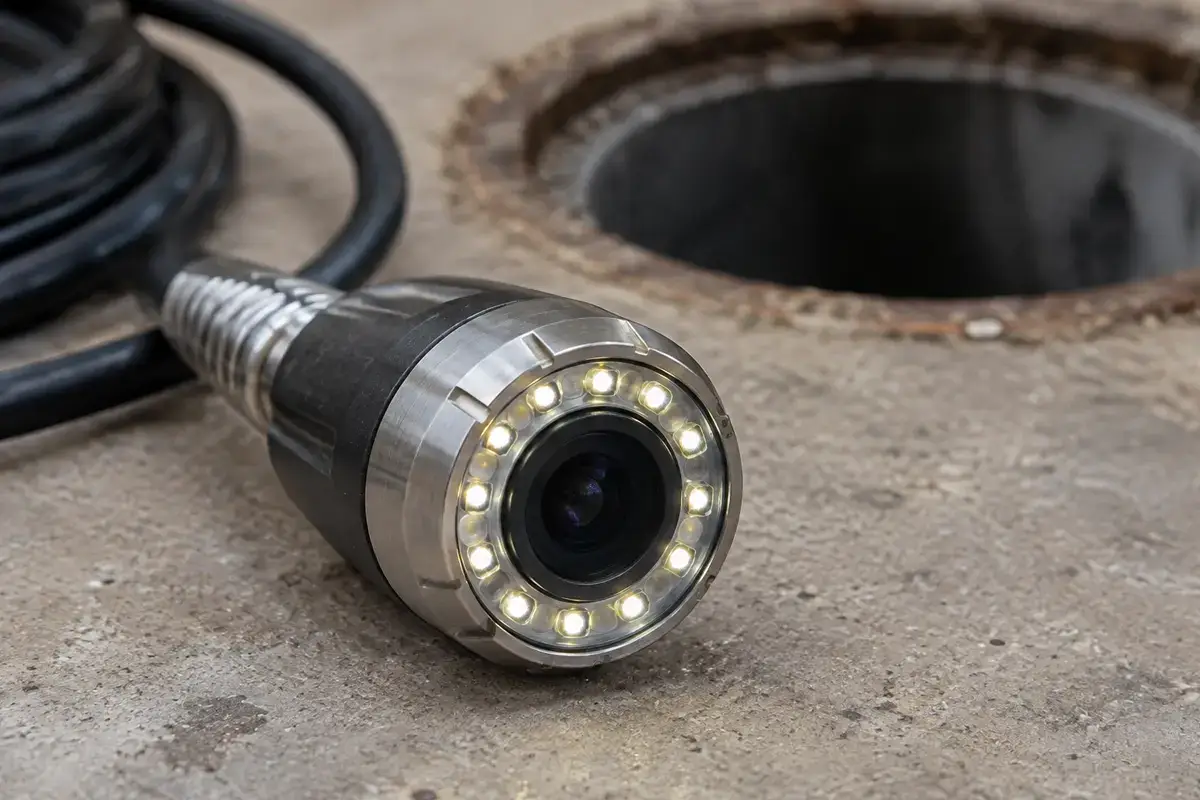
A sewer camera inspection sends a waterproof camera through the line while a technician watches a live monitor, and every finding is tied to a distance from the access point. The camera usually enters through an existing cleanout. According to NASSCO, inspections of private building sewers typically start from inside or very close to the building and run down through the lateral toward the sewer main.
Bison’s camera page lists the conditions the footage identifies, and each one points to a different decision:
| What the Camera Finds | What It Usually Means | Typical Next Step |
| Grease and scale buildup | Flow is narrowing but the pipe may be sound | Hydro jetting, plus interceptor service for kitchens |
| Roots at joints | Joints are open enough for roots to enter | Clear the roots; line the pipe if it is otherwise sound |
| Cracks and fractures | Freeze-thaw, settlement, or age | Lining or replacement, depending on the footage |
| Offset joints | Sections have shifted, creating a step or gap | Repair, since offsets invite roots and catch debris |
| Bellied pipe | A low spot where water and debris pool | Cannot be lined; needs re-grading or replacement |
| Collapse | Full or partial loss of the pipe | Lining is not viable; excavation or bursting |
One caution: Bison’s camera page describes its equipment for residential laterals of 2 to 6 inches, while commercial lines are larger. Ask any contractor what pipe sizes their camera handles before you hire them.
What a Good Inspection Report Includes
Footage alone isn’t enough. NASSCO’s CCTV performance specification describes what a proper deliverable looks like for municipal sewers: a certified operator, recorded video with measured distances, coded defects, a pipe clean enough to see them, and delivery in electronic form. It is a municipal guideline, not a rule for private property, but it makes a useful checklist. Bison says its own report includes the footage, each defect with its distance, pipe material and approximate diameter, which conditions are structural and which are buildup, and the repair method the footage supports.
| Look For This in the Report | Why It Matters |
| A certified inspector and a standard coding system | Codes make findings comparable year to year and between contractors |
| Recorded video with a distance counter | Every finding has a footage mark, so a repair crew can find it |
| Pipe material, diameter, and length surveyed | You need to know what you own and how much of it was seen |
| Defects listed by location, separating structural damage from buildup | Buildup is a maintenance item; structural damage is a capital item |
| Proof the line was clean enough to inspect | Grease and debris can hide cracks and roots |
| The method the footage supports, and the ones it rules out | Keeps the repair scope tied to evidence |
| Delivery in an electronic format you can keep | Footage and reports become your baseline |
Ask about certification
NASSCO’s coding standard for sewer inspection is PACP, and it also offers a program built for private property. Its BSDI (Building Sewer and Drain Inspection) certification is designed for plumbers and contractors who inspect private building sewers and drains, and it is based on PACP. BSDI certification is valid for three years. You can verify any NASSCO certification in the NASSCO certified professionals directory. Certification is one signal, not a guarantee, so also ask to see a sample report.
Turn Findings Into a Capital Plan
A good inspection doesn’t just tell you what’s wrong. It lets you sort problems by urgency so you can budget. Here is one practical way to do it:
- Collect the report and footage. Put them in a shared folder with last year’s.
- Sort defects into three groups. Monitor (minor wear), schedule (roots, offsets, and cracks that will worsen), and act now (collapse, severe fractures, or a belly causing repeat backups).
- Rank by consequence. Weigh tenant downtime, health-code exposure, and repair cost. A shared lateral serving many units moves up the list.
- Match the repair to the footage. Bison’s options include CIPP pipe lining, trenchless sewer repair, sewer line repair, and sewer line replacement. See a cast iron trunk line replacement in Warren for an example.
- Budget and finance. Bison lists GreenSky financing on its financing page for larger repairs.
- Re-inspect and re-baseline. After any repair, verify it on camera, and start next year’s comparison from the new footage.
Michigan Factors Property Managers Should Know
- Freeze-thaw. Bison’s camera page names freeze-thaw stress and soil settlement as causes of cracks. A post-winter inspection catches the damage early.
- Older pipe. Bison notes that many older Macomb and Oakland County homes still have their original clay or cast iron laterals, and older commercial buildings can too. If your building is older, put it first on the inspection list.
- Food-service exposure. For restaurants and food tenants, a sewage backup can trigger a health-department response. The commercial hydrojetting guide covers the Michigan rules and how a documented schedule helps.
- Documentation. Footage and reports give you something to show an inspector, an insurer, a lender, or a buyer.
What to Prioritize by Property Type
| Property Type | Where to Focus | Add an Inspection When |
| Restaurants and food tenants | Kitchen lines and the run to the interceptor | A new food tenant moves in, or a line slows between services |
| Apartments, condos, and HOAs | Shared laterals and the building main, where one blockage affects many units | Two or more units report slow drains or backups |
| Offices and retail | Restroom branch lines and the building main | A tenant turns over, or a food tenant shares the lateral |
| Schools and medical facilities | The main building sewer, with documented condition | Before major renovation or a change in use |
| Industrial and warehouse | Floor and process drains and the main | After a process change or any backup |
Bison’s commercial plumbing page lists apartment and condo complexes, office buildings, restaurants and hospitality venues, retail, schools, medical facilities, and industrial plants among the properties it serves. Its about page says it also does camera inspection and reporting for municipalities, including the City of Warren and the City of Center Line, and works with school systems and property managers.
How to Choose an Inspection Contractor
- Confirm the Michigan license. Ask for the license number and look it up through the state’s LARA license search before you sign.
- Ask about NASSCO certification. Ask which program (PACP, LACP, or BSDI) and verify it in NASSCO’s directory.
- Match the camera to your pipe. Ask what pipe sizes and lengths the equipment handles.
- See a sample report. Bison publishes a sewer camera evidence gallery so you can see what its findings look like.
- Ask who repairs what the camera finds. An inspector who also repairs can explain the footage and quote the fix, but you should still be free to get a second opinion.
- Get the scope in writing. It should name the lines, the access points, the deliverables, and how work is scheduled around tenants.
What It Costs
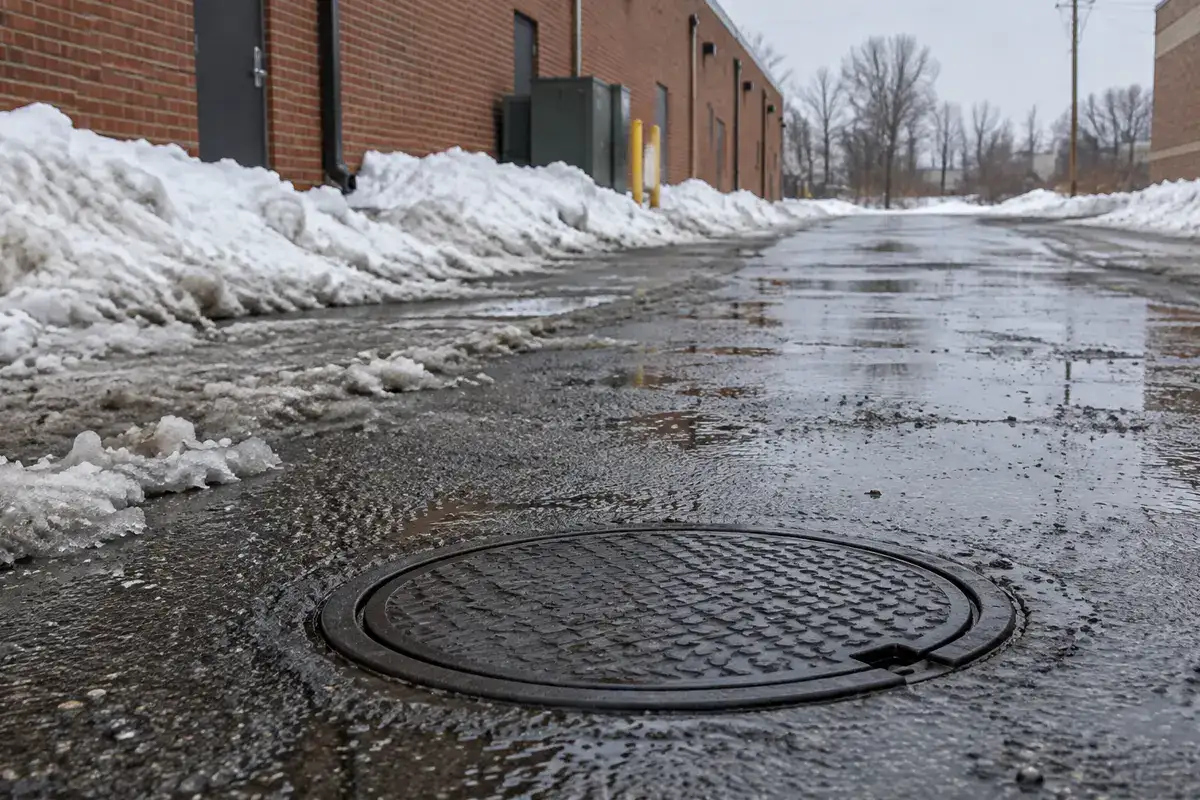
Commercial inspection is priced by scope, not a flat fee. The main drivers are pipe diameter and length, how many lines are included, how easy the access is, whether the lines need cleaning before the camera can see them, and when the work is scheduled. Ask for a written scope and quote before work begins.
Frequently Asked Questions
How often should a commercial building have its sewer inspected?
A common planning default is once a year for the main building sewer, with a camera pass before and after each jetting visit and extra inspections after a backup, a tenant change, or nearby construction. There is no one rule for every property, so confirm local requirements and adjust based on what the footage shows.
What does a commercial sewer inspection include?
A camera is run through the line from an access point, usually a cleanout, with a live feed and a recording. The findings are tied to distances and written up, covering conditions like cracks, roots, offset joints, bellies, buildup, and collapses.
Do I need a sewer inspection before buying a commercial property?
It is not required by default, but it is a smart part of due diligence, because a defect found before closing can be priced into the deal. Some jurisdictions also require building or lateral inspections at sale, so check local rules. Ask your contractor whether it can scope a commercial property of your size.
Will an inspection disrupt my tenants?
Usually very little. The camera typically enters through an existing cleanout or a fixture, and most of the work happens outside tenant spaces. Ask the contractor how it will schedule around your tenants, especially for restaurants.
What should a sewer inspection report include?
Recorded video, each defect with its distance from the access point, pipe material and diameter, a note on which problems are structural and which are buildup, and the repair method the footage supports. Bison says its reports include all of these.
What certifications should the inspector hold?
In Michigan, check that the plumbing contractor is licensed through LARA. Ask about NASSCO certification as well, such as PACP, LACP, or BSDI, and verify it in NASSCO’s directory.
Does Bison serve my property?
Bison says it serves commercial and institutional clients across Macomb, Oakland, and Wayne County. Its commercial work has covered corridors in Troy, Auburn Hills, Warren, Birmingham, Royal Oak, Rochester Hills, and Sterling Heights. Call to confirm coverage for your property.
A yearly inspection, a clean record of what the camera found, and a plan for what to fix first is a simple way to keep sewer problems from becoming emergencies. To talk through your property, call Bison at (248) 247-7707 or request a quote, and see the list of communities Bison covers on its service areas page.
Bison Plumbing: Commercial Sewer and Drain Service for Macomb and Oakland County Since 1998
Bison Plumbing is a family-owned, Michigan LARA-licensed plumbing and sewer company based at 25780 Ryan Rd in Warren. It serves commercial and institutional clients across Macomb, Oakland, and Wayne County, and says it runs a camera inspection before major sewer and drain work.
Call (248) 247-7707 to talk through your property.
Need a sewer inspection plan for your property?
Start with a camera inspection. Bison documents what it finds with footage and a written report, so you can plan repairs and budget with evidence.