
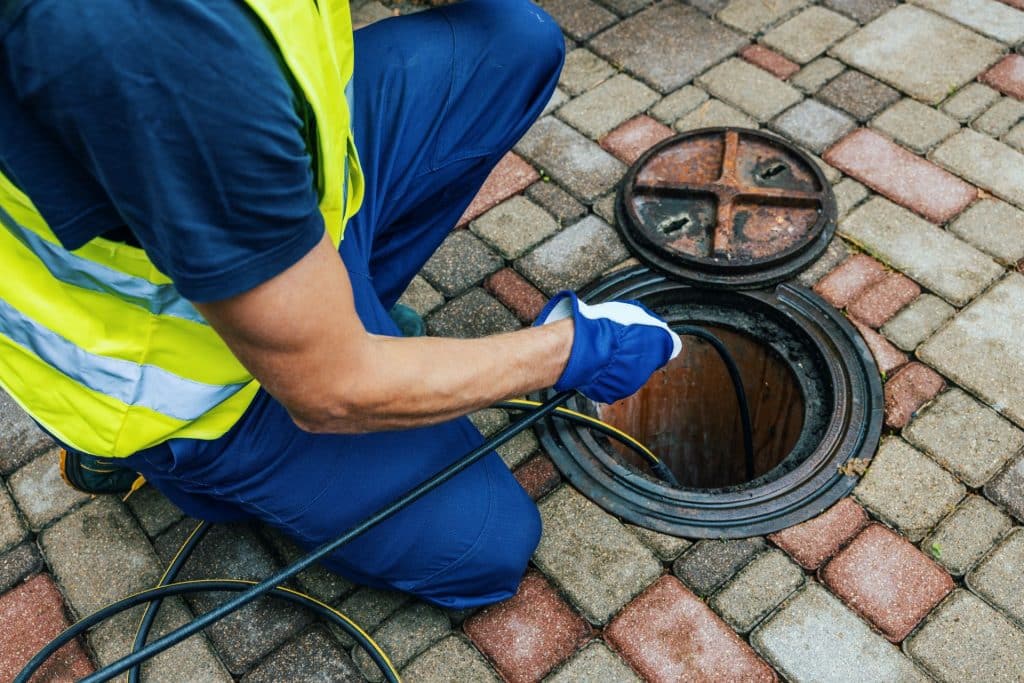
The most common sewer drain problem symptoms Warren, MI homeowners experience include slow-draining fixtures, gurgling toilets, foul sewer gas odors, multiple simultaneous clogs, water backing up when flushing, wet spots in the yard, sinkholes, unexplained water bill spikes, pest infestations, lush grass patches over sewer lines, and persistent basement dampness. Any combination of these signs points to a failing sewer line that requires a professional sewer inspection — the sooner you act, the less costly the repair.
Every drain in your Warren, MI home — the bathroom sink, kitchen drain, shower, toilet, and washing machine — connects to one shared artery: your main sewer line. When that line develops a problem, the symptoms don't stay hidden underground for long. They show up in your drains, your yard, your walls, and even your energy bills.
Most homeowners first notice a "slow drain" or an occasional gurgling toilet and chalk it up to a minor clog. But what looks like a small inconvenience is often the early warning signal of a much larger issue — a cracked, root-invaded, or partially collapsed sewer line that, if ignored, can lead to raw sewage backing up into your home, foundation damage, and repair costs that easily reach $3,000 to $6,000 or more.
This guide covers all 11 sewer drain problem symptoms you should never dismiss, explains exactly what each sign means, and walks you through your repair options — from professional drain cleaning to trenchless sewer repair.
1 Slow Draining Sinks, Tubs, and Showers
A single slow drain in your bathroom sink is usually a localized clog — hair and soap scum buildup is the usual culprit. But when you notice that the tub, the kitchen sink, and the shower are all sluggish around the same time, the problem is almost certainly further down the line, in your main sewer drain.
Your home's sewer system works on gravity. Every fixture's drain branches off a main "trunk line" that runs from your house to the municipal sewer system. When that trunk line is partially obstructed — by grease buildup, invasive tree roots, or a collapsed pipe section — drainage slows everywhere in the house simultaneously. The lowest fixtures, typically the basement floor drain, slow down first.
If multiple fixtures are slow-draining at once, stop using chemical drain cleaners — they can corrode aging pipes. Call a licensed plumber for a camera sewer inspection to pinpoint the blockage location.
2 Gurgling Sounds from Toilets and Drains
That gurgling or bubbling noise coming from your toilet when you flush — or from the tub drain when you run the washing machine — is your sewer line communicating a serious message. The sound happens because a blockage downstream is trapping air in the pipes. As water tries to force its way through the obstruction, it displaces the trapped air back up through the nearest available fixture, creating that distinctive gurgling sound.
Pay special attention to cross-fixture connections. If you flush the upstairs toilet and hear gurgling in the basement bathroom, or if running the dishwasher causes the kitchen floor drain to bubble, those connected symptoms are a strong indicator that your main sewer line — not just a branch drain — is affected.
Gurgling sounds often precede sewage backups by days or weeks. Don't wait until sewage surfaces — a professional drain evaluation at the gurgling stage is far less expensive than emergency sewage cleanup.
3 Foul Sewer Gas Smell — Hydrogen Sulfide in Your Home
A properly functioning sewer line is a sealed system. Wastewater and sewer gas flow in one direction — away from your home and toward the municipal sewer system. If you're detecting a rotten-egg odor, the distinct smell of sulfur, or a persistent sewer-like odor inside or immediately outside your home, it means that seal has been broken.
The primary culprit is hydrogen sulfide (H₂S), a gas produced when organic matter decomposes in your sewer line. Cracks, failing pipe joints, or a partially collapsed sewer line allow this gas to escape underground and seep back into your living spaces. Beyond being unpleasant, hydrogen sulfide poses real health hazards at elevated concentrations, including headaches, nausea, and in extreme cases, respiratory problems.
Never dismiss a persistent sewer gas smell as "just a drain." If the odor is strong or appears in multiple rooms, ventilate your home immediately and call a licensed plumber. Do not attempt to locate the crack yourself.

4 Multiple Drain Clogs Happening at the Same Time
There's a meaningful difference between a toilet that clogs once — likely due to excess toilet paper or a flushed wipe — and a scenario where your toilet, your shower, and your bathroom sink are all clogging or backing up within the same week. Simultaneous or rapidly recurring clogs across multiple fixtures are the hallmark of a main sewer line obstruction.
Because all your home's drain lines feed into one main sewer pipe, a significant blockage or collapse in that pipe creates a system-wide bottleneck. Wastewater from every fixture has nowhere to go, so it stalls. It's not a coincidence — it's your sewer drain telling you it's overwhelmed.
If you've already dealt with a clogged drain recently and the problem keeps returning, it's time to look past the symptom and investigate the root cause.
The main sewer line is the largest drain in your home. When multiple fixtures back up simultaneously, no amount of store-bought drain cleaner will fix the underlying blockage. Professional snaking or hydro jetting is required.
5 Water Backing Up When You Flush the Toilet
Few plumbing symptoms are as alarming — and as diagnostic — as flushing a toilet and watching water rise in the bathtub or shower. This cross-fixture backup happens because the large volume of water from a toilet flush has no clear path through the sewer line. Instead of flowing toward the street, it backs up and surfaces through the nearest low-lying drain: usually the tub or shower located on the same floor or in the basement.
Similarly, running the washing machine and then hearing the toilet overflow, or watching water appear in a floor drain when using any fixture, are definitive signs that your main sewer line has a significant obstruction or failure. The closer these backup points are to the foundation or basement, the higher the likelihood that the problem is in the main line outside the home.
Don't keep using water-consuming appliances. Stop running laundry, dishwashers, or additional showers until this is professionally evaluated. Learn more about preventing sewer backups and what to do when they occur.
This symptom in a Warren, MI home often points to a blockage in the section of pipe running from the house to the city connection — especially in older neighborhoods with aging cast iron or clay sewer lines.
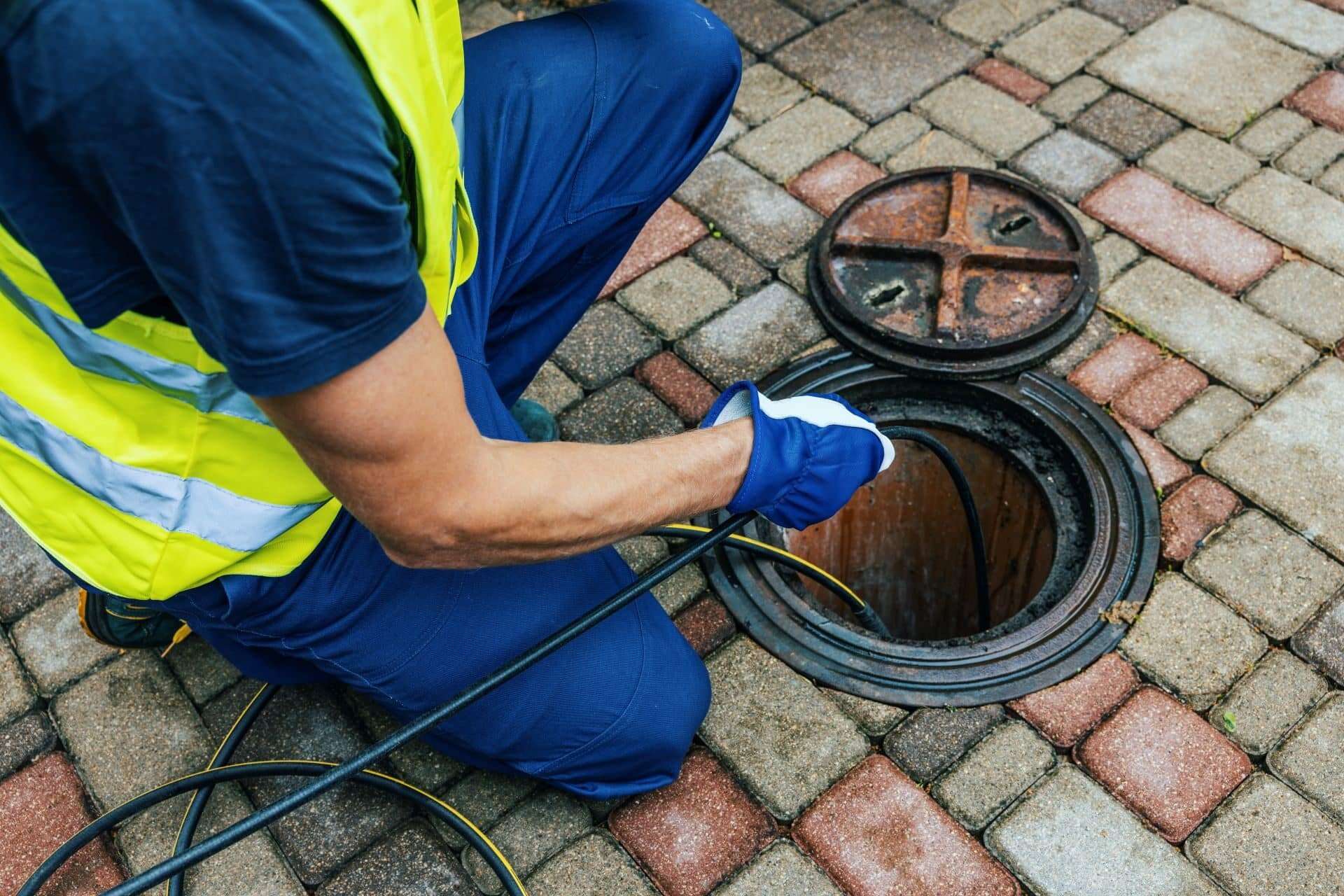
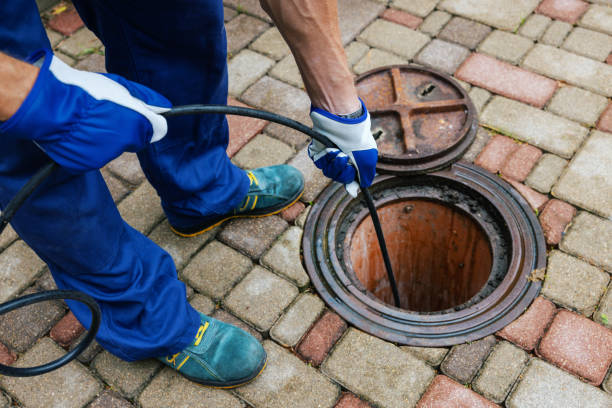
Image credit: Bison Plumbing, Warren MI — Sewer line repair in progress. Many Warren-area homes have aging cast iron or clay pipes that are overdue for inspection.
Why Warren, MI Homes Are Particularly Vulnerable
Many residential neighborhoods in Warren were developed in the 1950s through 1970s, when clay and cast iron sewer pipes were the standard. These materials have a lifespan of 50–100 years, meaning thousands of Warren homes are living on borrowed time with aging sewer infrastructure.
Michigan's freeze-thaw cycles also accelerate pipe deterioration. When soil contracts and expands around buried pipes each winter, joints shift, pipes belly, and small cracks become large fractures. If your home is more than 40 years old, a preventive sewer system inspection is highly advisable — even if you haven't noticed symptoms yet.
6 Wet Spots or Standing Water in Your Yard
If you notice unexplained soggy or wet areas in your yard — particularly in a concentrated spot away from irrigation lines or downspout drainage — your buried sewer line may be actively leaking. When a sewer pipe cracks or a joint separates underground, raw sewage saturates the surrounding soil. Over time, this moisture wicks upward and pools at the surface, creating soft, muddy patches even during dry weather.
Beyond being a nuisance, surfacing sewage is a health hazard. Wastewater contains harmful pathogens, bacteria, and parasites. Children and pets playing in or near these areas are at real risk of exposure. If this is happening in your yard, limit access to the area and call a plumber immediately.
This type of failure is a prime candidate for no-dig sewer repair methods — trenchless pipe lining or pipe bursting — which allow the broken section to be rehabilitated without excavating your entire yard.
Soggy yard spots directly over the sewer line route (typically running from your home toward the street) are the most telling. A camera inspection will confirm the leak's exact location.
7 Sinkholes or Soft, Sinking Ground Near the Sewer Line
When a sewer pipe fails severely enough that it allows wastewater to continuously saturate the surrounding soil, the ground above it can lose its structural integrity. The saturated soil erodes, compresses, or washes away, eventually forming visible depressions, soft patches, or in the worst cases, sinkholes in your yard or driveway.
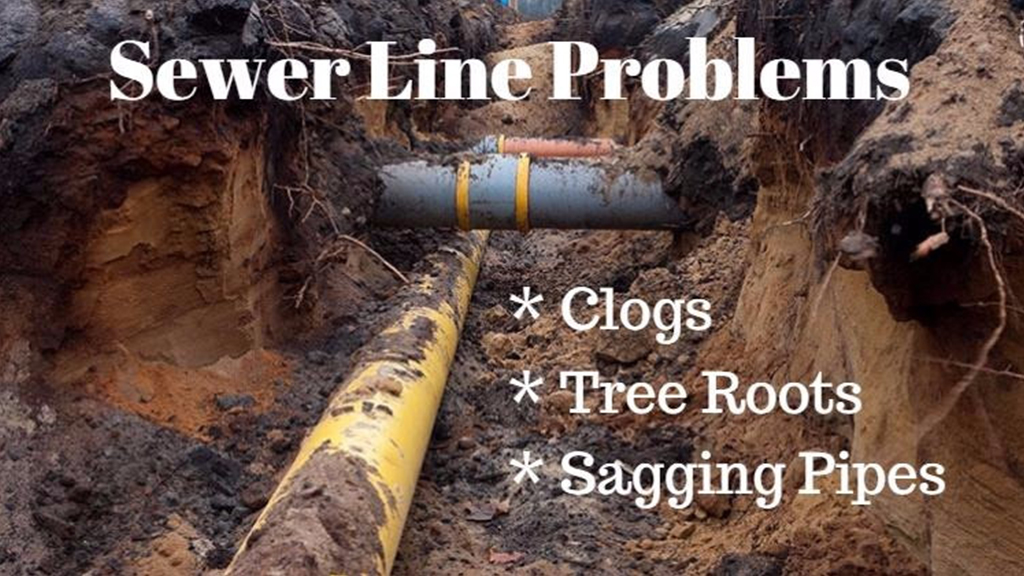
A sinkhole over your sewer line isn't just an aesthetic problem — it's evidence of major structural failure underground. It signals a collapsed or severely broken pipe section, and potentially a risk to any underground utilities sharing the same corridor. If you notice a depression forming in a straight line from your home toward the street — especially if it follows the same path as your sewer cleanout — treat this as an emergency.
Do not attempt to fill or compact a sinkhole over a sewer line yourself. The underground void may be larger than it appears. Contact a licensed plumbing contractor for emergency camera inspection and repair.
8 An Unexpected Spike in Your Water Bill
Your water usage habits haven't changed — no new appliances, no houseguests, no extra laundry — but your water bill just jumped by $30, $50, or more. That unexplained increase can sometimes trace back to a leaking sewer line, particularly when a pipe joint separates underground and allows water to escape continuously before it even reaches the drain fixtures inside your home.
A cracked supply-side connection near the sewer system can also cause a rise in water consumption without any visible leaking indoors. Pair a rising water bill with any of the other symptoms on this list — slow drains, gurgling, or yard wet spots — and you have strong evidence of a sewer system failure. Learn more about plumbing improvements that can lower your water bill.
To do a quick leak check, turn off all water inside your home and watch your water meter for 15 minutes. If the meter continues to move, you have a leak somewhere in the system — possibly underground in your sewer or supply lines.
9 Pest Infestations — Rats and Cockroaches via Broken Sewer Lines
Rats and cockroaches are notorious for exploiting damaged sewer infrastructure. Rodents — particularly the Norway rat common throughout Macomb County — can enter homes through sewer pipe breaks as small as half an inch in diameter. American cockroaches are another species well-adapted to living in and migrating through sewer systems, entering homes through cracked pipes, floor drains, and unsealed cleanout access points.
If you've noticed an uptick in rodent or cockroach activity — particularly in basements or bathrooms — and pest control treatments aren't providing lasting relief, the entry point may be underground. A broken sewer line isn't just letting pests in; it's actively attracting them, because raw sewage provides both food and moisture.
Eliminating the pest infestation without repairing the broken sewer line is a temporary fix. A camera inspection of your sewer and drain system can identify the exact breach point where pests are entering.
10 Unusually Lush, Fast-Growing Grass in One Spot of Your Yard
It might seem like a green thumb win — a patch of grass that's noticeably greener, thicker, and faster-growing than the rest of the lawn — but this is actually one of the more subtle sewer drain problem symptoms that Warren homeowners frequently miss. A leaking sewer line underground acts as an unintended fertilizer, releasing nutrient-rich wastewater into the soil above.
Grass and plants directly above the sewer line naturally absorb these nutrients, resulting in a visually obvious green stripe or patch that follows the underground pipe route. If this lush area also feels soft or spongy underfoot, or if you notice a faint sewage odor nearby, the connection is almost certain: you have a leaking sewer line below.
This symptom is subtle but provides valuable early-detection information. Catching a sewer leak at this stage — before the wet patch turns into a sinkhole — gives you access to non-invasive repair methods like trenchless pipe lining (CIPP) that preserve your yard and landscaping.
Check whether the lush area runs in a straight line from your home's foundation toward the street or a neighboring property line. If so, it's almost certainly following your buried sewer pipe.
11 Mold Growth, Sewage Odor, or Persistent Dampness in the Basement
The basement and foundation level of your home are the first places a sewer drain problem will manifest — because those floor drains sit closest to the main sewer line. If your basement has developed a persistent damp, musty odor that doesn't go away even after dehumidifying, or if you're seeing visible mold growth on walls or floors near drain access points, your sewer line may be the source.
A cracked or bellied sewer pipe allows moisture and organic matter to accumulate. Combined with Michigan's naturally high soil moisture levels in spring, this creates ideal conditions for mold and mildew growth inside the home — conditions that can aggravate respiratory conditions and create costly remediation situations if left unaddressed.
For Warren homeowners dealing with older cast iron pipe systems, basement moisture combined with any of the other symptoms above is a strong signal that pipe corrosion has progressed to the point of failure.
Sewer-related moisture in basements isn't just a comfort issue — it can compromise your foundation over time. Get a professional assessment of both your sewer line and your foundation drainage before the two problems compound each other.
What Warren, MI Homeowners Should Do When They Spot These Symptoms
Spotting one or more of these sewer drain problem symptoms doesn't always mean your sewer line needs full replacement. The right solution depends on the type, location, and extent of the damage — which is why a professional camera inspection is always the essential first step.
Sewer Camera Inspection
A waterproof video camera is fed into your sewer line to pinpoint cracks, root intrusion, collapses, and blockages — without any digging. This non-invasive diagnostic tool tells us exactly what repair method is needed. Learn about our sewer inspection services.
Hydro Jetting & Drain Cleaning
For blockages caused by grease, scale, and debris, high-pressure hydro jetting scours pipe walls clean — far more effective than snaking alone. Also great for proactive maintenance before a clog becomes a backup.
Trenchless Pipe Lining (CIPP)
Cured-in-place pipe lining inserts a resin-saturated liner into the damaged pipe, which cures into a smooth, joint-free pipe within the old one — no excavation required. Ideal for cracked or root-invaded lines. Explore no-dig repair options.
Pipe Bursting
When a pipe is too deteriorated for lining, pipe bursting is a trenchless method that fractures the old pipe outward while simultaneously pulling a new pipe into place. No open trenches, no torn-up landscaping. See how trenchless sewer repair works.
Sewer Line Repair or Replacement
For severe collapses or pipe sections that can't be lined, traditional sewer line repair or replacement may be the most effective solution. We assess whether spot repair or full replacement is the right call. Repair vs. replace: which is right for you?
Plumbing Repairs
Sometimes sewer drain problems originate inside the home — at fixtures, cleanouts, or branch drain connections. Our team handles all aspects of residential plumbing repair to trace the problem to its true source. View our plumbing repair services.
Unlike municipal sewer systems, the sewer line from your home to the city's connection point is your property and your financial responsibility. Most standard homeowner's insurance policies do not cover sewer line replacement unless you've added a sewer line rider — making early detection and proactive maintenance the best financial protection available to you.
Is It a Municipal Sewer or a Septic System?
Most homes in Warren, MI are connected to the municipal sewer system maintained by the City of Warren and Macomb County Public Works. These properties connect to public wastewater infrastructure and share common sewer mains. Homes on rural properties or those outside city sewer service areas may instead use a septic system, which handles waste on-site through a tank and drain field.
Many of the symptoms described above — slow drains, wet yard patches, foul odors, and pest activity — can signal problems with either system. If you're unsure whether your home is on municipal sewer or septic, check your water and sewer utility bills or contact the City of Warren Water Division. Bison Plumbing services both municipal sewer connections and can help you identify what type of system your property uses.
Noticing Any of These Symptoms in Your Warren, MI Home?
Don't wait until a slow drain becomes a sewage backup. Bison Plumbing has served Warren and the greater Macomb County area for over 25 years. We offer sewer camera inspections, drain cleaning, hydro jetting, and trenchless sewer repair — all with upfront pricing and no surprises.
Schedule a Sewer Inspection Today Or call us directly — we answer fastThe 11 Sewer Drain Problem Symptoms: A Quick Summary
- Slow-draining fixtures across multiple areas of the home signal a main sewer line blockage, not just an isolated clog.
- Gurgling toilets and drains are caused by trapped air being forced backward through your pipes — an early warning before backups begin.
- Sewer gas odor (hydrogen sulfide) means your sewer line has a crack or open joint allowing toxic gases to escape into your home.
- Simultaneous clogs in the tub, sink, and toilet confirm a main line obstruction rather than localized buildup.
- Water backing up when flushing is a definitive sign of significant main line failure — stop using water appliances and call a plumber.
- Wet spots or soggy yard patches over the sewer pipe route mean active sewage is leaking underground and surfacing.
- Sinkholes or soft ground indicate severe pipe collapse and require emergency professional evaluation.
- Unexplained water bill spikes can point to an underground sewer leak even when no indoor symptoms are visible yet.
- Rat and cockroach infestations often enter through cracked sewer pipes; pest control alone won't fix the underlying entry point.
- Unusually lush green grass over the sewer line route is a subtle early sign of a leaking pipe fertilizing the soil above.
- Basement mold or persistent dampness near floor drains signals sewer moisture intrusion — especially serious in homes with aging cast iron pipe.
Frequently Asked Questions About Sewer Drain Problems in Warren, MI
The key indicator is how many fixtures are affected. A single slow or clogged drain — like a shower that drains slowly — is usually a localized blockage. But if two or more drains are slow simultaneously, or if flushing a toilet causes water to back up into the tub, the problem is almost certainly in your main sewer line and requires professional attention.
The most common causes in Warren's older residential neighborhoods are: tree root intrusion into aging clay or cast iron pipes, grease and debris buildup over decades, pipe corrosion and joint deterioration, and ground movement from Michigan's freeze-thaw cycles causing pipe settling or collapse. Homes built before the 1980s are particularly susceptible. A professional sewer inspection can reveal exactly what your pipe is dealing with.
Yes — in many cases, trenchless sewer repair methods like CIPP pipe lining or pipe bursting can rehabilitate a damaged sewer line with only one or two small access points rather than a full excavation. Whether trenchless repair is viable depends on the pipe's condition, diameter, and the nature of the damage — which is determined during the camera inspection.
Repair costs vary widely depending on the method, pipe length, and extent of damage. Drain cleaning and hydro jetting typically run $200–$600. Trenchless pipe lining can range from $80–$250 per foot. Full sewer line replacement in the greater Detroit metro area typically falls in the $3,000–$15,000 range depending on pipe depth and length. Getting a camera inspection first ensures you only pay for the repair that's actually needed.
Standard homeowner's insurance policies typically do not cover sewer line repair or replacement unless you've added a specific sewer line endorsement or service line rider to your policy. This makes preventive maintenance and early detection especially important — catching a problem at the inspection stage is far less costly than emergency repair after a full sewage backup.
A municipal sewer line connects your home to the city's shared wastewater infrastructure. Sewage travels through pipes to a treatment facility. A septic system is a self-contained on-site system: waste flows from the home to a buried tank, where solids settle, and liquid effluent drains into a leach field. Most Warren, MI homes are connected to the municipal sewer system. If you're unsure which system your property uses, check your utility bill or call the City of Warren.
For homes older than 20–30 years, a camera inspection every 3–5 years is a smart preventive measure. If you've already experienced any of the symptoms described above — slow drains, gurgling, yard wet spots — get an inspection right away rather than waiting. Regular hydro jetting every 1–2 years can also prevent organic buildup from becoming a serious obstruction.
Research sources: OSHA — Hydrogen Sulfide Hazards · Angi — Sewer Line Repair Cost Data · TriCo Regional Sewer — 10 Signs of a Sewer Problem