
Hydro jetting is high-pressure water cleaning at 1,500–4,000 PSI that scours the full circumference of pipe walls — removing grease, scale, root debris, and mineral deposits that snaking leaves behind. Bison Plumbing uses a Picote Solutions HD camera inspection before every jetting job to confirm the pipe is structurally sound. Three service tiers: residential ($350–$650), commercial ($500–$1,200), and grease trap cleaning ($200–$600).
Most homeowners call a plumber when a drain is slow or backing up. Most plumbers snake it. The drain runs again — for a few weeks. Then the call comes back. The cycle repeats because snaking only punches through the middle of a blockage. The grease coating the pipe walls, the scale building up at every joint, the root debris packed into the corners — none of that moves. The pipe interior is still narrowed. The problem hasn't been solved, just postponed.
Hydro jetting doesn't postpone the problem. High-pressure water at 1,500–4,000 PSI, delivered through a nozzle that rotates to hit the full pipe circumference, removes accumulation from wall to wall. When the job is done, the pipe is clean — not just unblocked. That's the difference between a fix and a maintenance visit.
Bison Plumbing runs a Picote Solutions HD camera inspection before every hydro jetting job — confirming the pipe is structurally sound before applying pressure. This protects aging clay and cast-iron pipe common throughout Macomb and Oakland County from being damaged by pressure calibrated for newer pipe. Diagnose first, then treat.
Hydro Jetting vs. Snaking — Why the Difference Matters
Both methods clear a blocked drain. The similarity ends there. Understanding what each method actually does — and doesn't do — explains why clogs return after snaking and why hydro jetting stops the cycle.
| Factor | Snaking (Cable Auger) | Hydro Jetting |
|---|---|---|
| What it removes | Punches hole through soft blockage. Leaves wall coating intact. | Scours full pipe circumference. Removes grease, scale, root debris from walls. |
| Grease buildup | Cannot remove grease coating. Grease compresses and rebuilds. | Emulsifies and flushes grease from wall to wall at 1,500–4,000 PSI. |
| Root intrusion | Cuts roots at the center. Root mass remains at pipe walls. | Rotary nozzle shreds root mass and flushes debris downstream. |
| Mineral scale | Cannot remove hardened scale deposits. | High-pressure water breaks up and flushes mineral scale. |
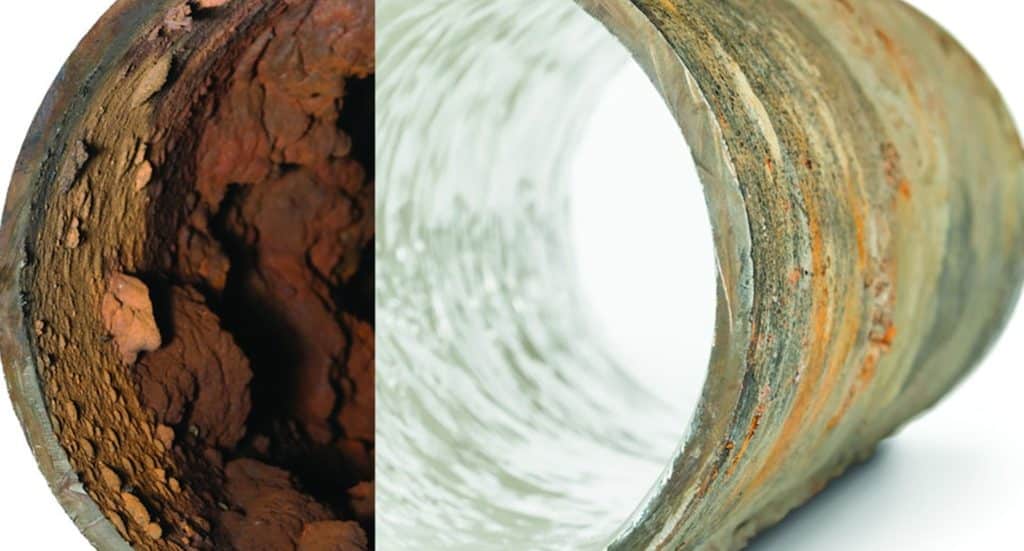
| Pipe walls after treatment | Pipe interior still coated — narrowed flow capacity. | Near-original interior diameter restored. |
| Clog recurrence | Weeks to months — buildup left on walls accelerates re-blockage. | Significantly longer — walls are clean, nothing for new buildup to adhere to. |
| Best use case | Single isolated soft blockage with no history of recurrence. | Recurring clogs, grease buildup, scale, root debris, commercial kitchens. |
| Cost | Lower upfront — $150–$300. | Higher upfront — $350–$1,200. Lower total cost when clog returns are eliminated. |

A single toilet clog with no prior history almost never needs hydro jetting — a snake clears it in minutes. But if the same drain has been snaked twice this year, or if grease odor accompanies the backup, or if multiple fixtures are slowing simultaneously, jetting is the appropriate tool. Bison's camera inspection will confirm which method is right before any work begins.
When to Use Hydro Jetting
Six situations where hydro jetting is the correct — and often only effective — solution:
Recurring Clogs
The drain has been snaked once — or twice — and the clog returns within weeks. Snaking doesn't address the wall coating causing recurrence. Jetting does.
Kitchen Grease Buildup
Grease odor with a slow kitchen drain means years of FOG (fats, oils, grease) has coated the cast-iron branch drain. The only way to clear it is pressure — not chemicals.
Root Intrusion
Root mass in the sewer line needs a rotary cutting nozzle running at pressure to shred and flush debris. Snaking cuts roots at the center but leaves the mass intact.
Commercial Pre-Inspection
Restaurants and commercial kitchens facing a health inspection need documented drain line clearance — jetting provides the clean line a camera can verify.
Pre-Listing Drain Cleaning
Sellers preparing a home for listing benefit from clean drain lines and a camera report confirming pipe condition — protects against buyer inspection surprises.
Preventive Maintenance
Homes with cast-iron or clay pipe over 40 years old benefit from annual or biennial jetting to keep lines clear before grease and scale accumulate to blockage levels.
Residential vs. Commercial Hydro Jetting
Pressure, nozzle configuration, and access requirements differ significantly between residential and commercial applications. Bison calibrates every job individually based on pipe material, diameter, age, and the type of buildup being cleared.
Residential Hydro Jetting
- Kitchen drain grease buildup in cast-iron branch lines
- Main sewer lateral cleaning after root intrusion treatment
- Recurring bathroom drain clogs from hair and soap scum
- Pre-sale drain cleaning for home listings
- Post-CIPP jetting to prepare pipe for liner installation
- Lower PSI calibrated to protect aging clay and cast-iron pipe
Commercial Hydro Jetting
- Restaurant and commercial kitchen FOG accumulation
- Grease interceptor line cleaning before health inspection
- Multi-family residential building main line cleaning
- Storm drain and catch basin cleaning
- Retail and office building drain maintenance programs
- Higher PSI for larger diameter commercial pipe stock
Why Michigan's Aging Pipe Stock Benefits from Periodic Jetting
The Macomb & Oakland County Pipe Problem
The residential neighborhoods that make up Bison's service area — Warren, Royal Oak, Ferndale, Troy, Rochester Hills, Birmingham — were largely developed between the 1940s and 1980s. The sewer and drain infrastructure installed in those homes uses clay or cast-iron pipe that is now 40–80 years old.
Two things happen to aging pipe that make periodic hydro jetting particularly valuable in this market. First, cast-iron pipe corrodes from the inside out. The rough corroded surface provides exceptional adhesion for grease and scale — buildup accumulates faster than in smooth PVC pipe and resists snaking more stubbornly. Second, Michigan's freeze-thaw cycle — an average of 40+ freeze/thaw events per year — stresses pipe joints annually, creating micro-gaps where tree roots enter. Once roots establish, they trap debris and accelerate grease accumulation.
The result is a drain system that clogs more frequently than newer construction, responds less reliably to snaking, and benefits significantly from jetting that removes the root cause of accumulation rather than just clearing the immediate blockage. Homes with clay or cast-iron drain lines over 40 years old should treat hydro jetting as maintenance, not just emergency response — the same way they'd treat gutter cleaning or HVAC servicing. Read more about sewer and drain maintenance for older Michigan homes.
Does Hydro Jetting Damage Old Pipes?
This is the most common concern Bison hears from homeowners with older pipe stock — and it's a legitimate question that deserves a direct answer rather than a dismissal.
The answer is: hydro jetting on structurally compromised pipe carries real risk — which is exactly why Bison never jets without a camera inspection first. A pipe that is already cracked, severely corroded to paper-thin wall thickness, or has active joint separations could be further damaged by high-pressure jetting. The camera inspection identifies these conditions before a nozzle goes in.
For pipe that the camera confirms is structurally sound — even aging cast iron — Bison calibrates pressure to the pipe's condition. Residential cast-iron lines that are corroded but intact receive 1,500–2,000 PSI treatment rather than the 3,000–4,000 PSI used for commercial applications. This pressure range is sufficient to clear grease and scale without stressing pipe walls. The camera run after jetting confirms clearance and checks that nothing changed during the process.
The short version: pipe in poor structural condition needs repair before jetting. Pipe in aged but sound condition can be safely jetted at calibrated pressure. The camera inspection tells us which situation you're in before we start.
Camera-confirmed structural integrity + calibrated pressure = safe hydro jetting on aging Macomb and Oakland County pipe stock. No structural inspection = risk. Bison always inspects first.
The Hydro Jetting Process — Step by Step
Here's exactly what Bison does from the time the truck arrives to the moment the job is confirmed complete:
Camera Inspection Before Jetting
The Picote Solutions HD camera runs through the line from the cleanout access point. This confirms the pipe is structurally sound for jetting, identifies the type of buildup present (grease, scale, roots), and determines the correct pressure and nozzle configuration for the job. No blind jetting.
Select Correct PSI and Nozzle
Residential pipe: 1,500–2,500 PSI with a forward-and-reverse rotating nozzle for grease and scale. Root-invaded lines: rotary cutting nozzle at appropriate pressure for the pipe material. Commercial lines: 3,000–4,000 PSI with larger-diameter nozzle for FOG and interceptor lines.
Jet Downstream to Upstream
The jetting nozzle is fed to the downstream end of the problem section and pulled back upstream — so dislodged debris is pushed toward the municipal connection, not further into the system. This direction of travel is critical to effective clearance.
Post-Jet Camera Verification
After jetting, the Picote camera runs the same section again. This confirms complete clearance, verifies pipe wall condition, and identifies any structural issues that were hidden behind the buildup — root damage or cracking that now requires repair attention.
Report and Recommendations
Bison provides a summary of what was found, what was cleared, and what the post-jet camera showed. If structural issues were revealed, a repair recommendation is included. If the pipe is clear and sound, you receive documentation of a clean line — useful for home listings or commercial compliance records.

Repeated snaking without jetting compresses grease buildup against pipe walls over time — literally making the narrowing worse with each cable run. In commercial kitchens, grease trap overflow creates health code violations and risks restaurant closure. Chronically grease-coated residential pipe eventually reaches a point where blockages occur weekly, and the corroded rough surface makes chemical drain cleaners actively counterproductive by providing more texture for buildup to adhere to.
Cost Ranges — Residential, Commercial & Grease Trap
| Service | Cost Range | Notes |
|---|---|---|
| Residential Hydro Jetting | $350–$650 | Branch drain or main sewer lateral. Includes pre-jet camera inspection. Calibrated to pipe age and material. |
| Commercial Hydro Jetting | $500–$1,200 | Depends on pipe diameter, line length, and grease load. Restaurant and multi-family properties. |
| Grease Trap Cleaning | $200–$600 | Depends on trap size and FOG accumulation level. Health code compliance documentation available. |
| Post-Jet Camera Verification | Included | Picote HD camera run after jetting to confirm clearance and pipe condition. Included in all Bison hydro jetting jobs. |
| Jetting + Trenchless Repair Package | Quoted per job | When jetting reveals structural damage requiring lining, camera and jetting costs apply toward the repair quote. GreenSky financing available (Ref: 81085618). |
For jobs over $1,000, GreenSky financing (Ref: 81085618) is available — same-day approval, no excavation costs added on top of repair. Bison provides an upfront written quote after the camera inspection confirms what work is needed, before any jetting begins.