

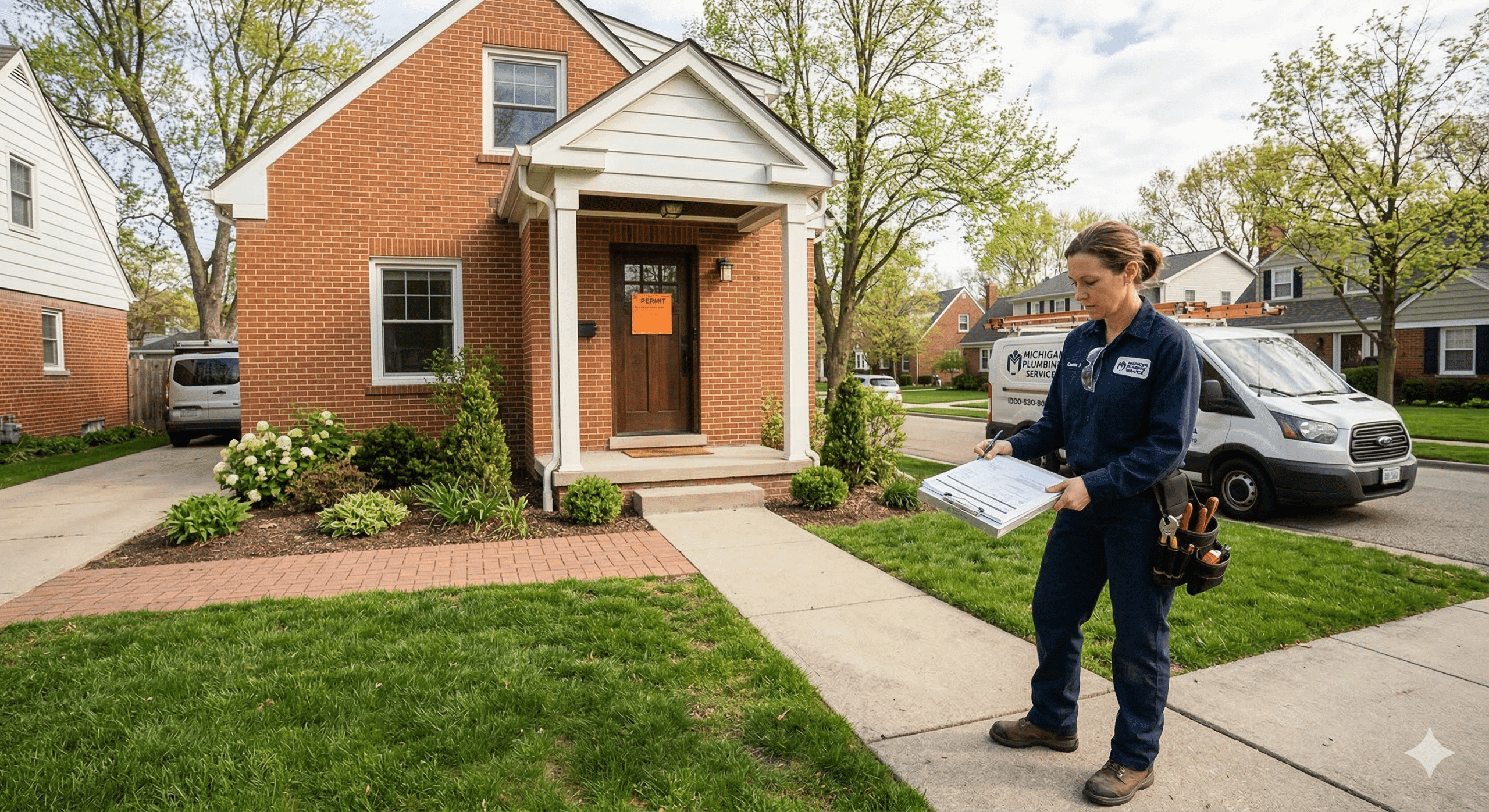
Macomb County follows the 2021 Michigan Plumbing Code (Part 7), effective March 12, 2024, which adopts the International Plumbing Code with Michigan-specific amendments. All major plumbing work — sewer line repairs, water heater replacements, fixture additions, backflow preventer installation, and new construction — requires a permit issued by the local enforcing agency. Work must be performed by a licensed Michigan plumbing contractor with a certified master plumber on staff. Homeowners may pull their own permits only for work in their own primary residence. Unpermitted plumbing work can result in fines, mandatory re-inspection, and complications at resale.
If you're planning a plumbing project in Warren, Sterling Heights, Clinton Township, Shelby Township, or anywhere else in Macomb County — whether it's replacing a water heater, repairing a sewer line, or adding a bathroom — you need to understand what the Michigan Plumbing Code requires before a single pipe is moved.
Plumbing code compliance protects your home's value, keeps your family safe, and ensures your insurance coverage remains valid. It also protects you from the financial nightmare of discovering unpermitted work during a home sale. This guide walks through the most important plumbing code requirements that apply to Macomb County homeowners in plain, practical language — no legalese.
Bison Plumbing has been performing code-compliant plumbing work across Macomb County since 1998. Everything we do is permitted, inspected, and performed by licensed master plumbers — because that's what the code requires and what your home deserves.
Which Plumbing Code Applies in Macomb County?
Michigan operates under a single state construction code system governed by the Stille-DeRossett-Hale Single State Construction Code Act (PA 230 of 1972). This means every municipality in Macomb County — Warren, Sterling Heights, Clinton Township, Chesterfield, Shelby Township, Macomb Township, and all others — enforces the same base plumbing code. Local municipalities cannot adopt looser standards, though some may add specific local requirements on top of state minimums.
The current applicable code is:
2021 Michigan Plumbing Code (Part 7) — Effective March 12, 2024. This adopts the 2021 second printing of the International Plumbing Code (IPC) with Michigan-specific amendments, deletions, and additions as specified in Administrative Rules R 408.30701 through R 408.30796.
For residential construction, the Michigan Residential Code (MRC 2015) with Part 5 administrative rule amendments also applies and contains plumbing requirements specific to one- and two-family dwellings. Commercial properties fall under the 2021 Michigan Plumbing Code exclusively.
The code is administered statewide by the Michigan LARA Bureau of Construction Codes (BCC). Locally, each municipality's building department serves as the enforcing agency responsible for issuing permits and conducting inspections within their jurisdiction.
Macomb Township, for example, enforces the 2021 Michigan Plumbing Code for commercial properties and the MRC 2015 for residential. Always confirm with your specific municipality's building department before starting any project, as local fee schedules and inspection procedures vary.
When Is a Plumbing Permit Required in Macomb County?
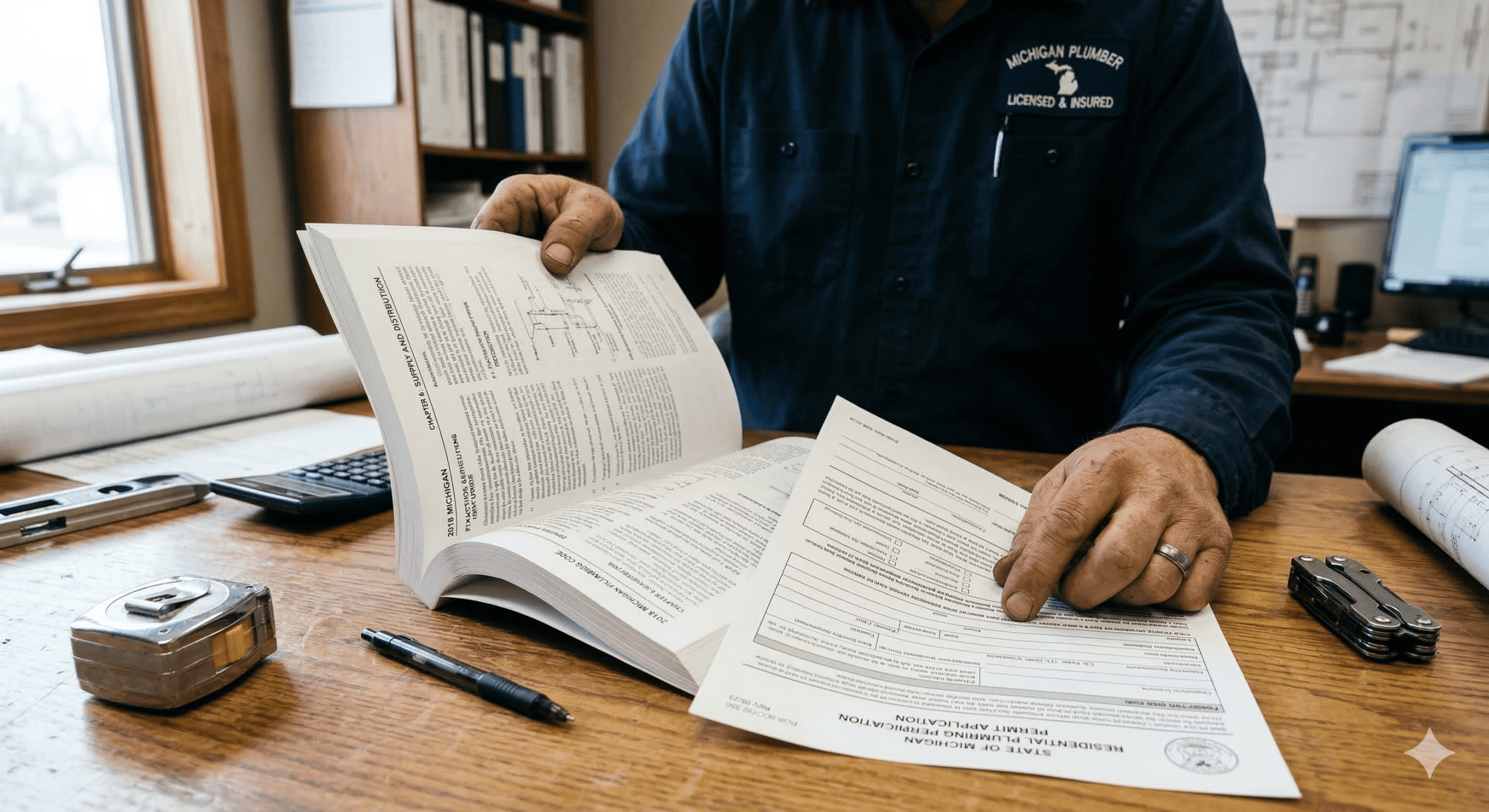
Michigan Plumbing Code Rule 715 states that a permit is required for the erection, installation, enlargement, alteration, repair, removal, conversion, or replacement of any plumbing system regulated by the code. In plain language, most significant plumbing work in a Macomb County home requires a permit. Here are the most common scenarios:
✓ Work That Requires a Permit
Sewer Line Repair, Replacement, or Installation
Any repair, replacement, modification, or new installation of a building sewer or drain line requires a plumbing permit. This includes sewer line repair, sewer line replacement, and trenchless sewer repair methods such as CIPP pipe lining or pipe bursting. In Macomb County, any excavation within a public right-of-way for sewer work additionally requires a separate right-of-way permit from the municipality.
Water Heater Replacement or Installation
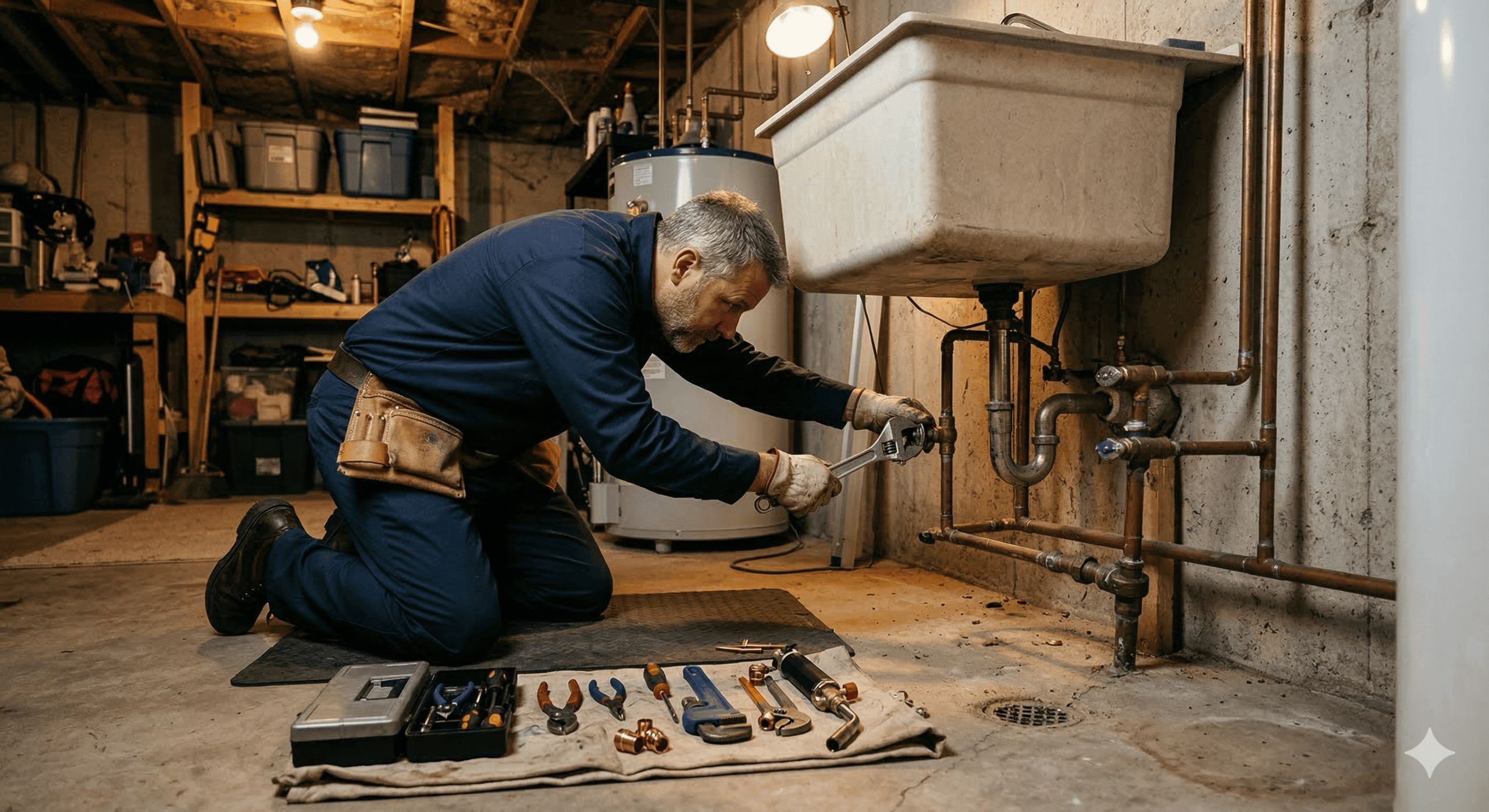
Replacing a water heater — even a direct, like-for-like replacement — requires a plumbing permit in Michigan. If the water heater is gas-fired, a mechanical permit for the gas piping and venting is also required. Our water heater services include pulling all required permits as part of the job scope.
Adding or Relocating Plumbing Fixtures
Installing a new bathroom, adding a utility sink, relocating a toilet, adding a shower, or any work that modifies drain, waste, or vent (DWV) piping or water supply connections to fixtures requires a permit. This includes bathroom remodels where existing fixture locations change.
Backflow Prevention Device Installation
Installation of any new backflow prevention assembly — including reduced pressure zone (RPZ) devices, double check valve assemblies (DCVA), and pressure vacuum breakers (PVB) — requires a plumbing permit. All installation and repairs must be performed by a Michigan-licensed plumber. See the full details in our backflow section below.
Sump Pump Installation or Replacement
Installing or replacing a sump pump system, including the associated discharge piping, requires a plumbing permit. This is a common project in Macomb County given the area's high water table and spring flooding challenges.
New Construction and Additions
All plumbing work in new residential or commercial construction, additions, and significant remodels requires a plumbing permit and inspections at rough-in and final stages. Plan review may be required for commercial projects.
Leak Detection and Pipe Repair Involving Pipe Modification
Repairing a pipe by cutting out and replacing a section, rerouting a line, or accessing pipe concealed within walls or floors requires a permit. Simple fixture repairs (faucet replacement, clearing stoppages) do not.
When in doubt, call your local municipal building department before starting any plumbing work. Permit fees in Macomb County municipalities are relatively modest — the cost of starting without a permit is not.
Work That Does NOT Require a Plumbing Permit
Michigan Plumbing Code Rule 715 and the Michigan LARA Bureau of Construction Codes specify that permits are NOT required for:
- Repairs to the working parts of a faucet or valve — washer replacement, cartridge replacement, aerator cleaning
- Clearing stoppages (drain snaking, plunging) — provided no alterations are made to existing piping or fixtures
- Replacing a toilet seat, flapper, fill valve, or flush handle
- Replacing a showerhead at the same connection point
- Installing or replacing water treatment/filtering equipment that does not require modification to existing cold water supply piping (note: if piping modification is required, a permit IS needed)
- Minor repairs that do not alter the existing piping configuration
The key test: if you're cutting pipe, moving a connection, or changing the configuration of any drain, supply, or vent line — a permit is required. If you're simply replacing a component at the same location without touching pipe — likely no permit needed.
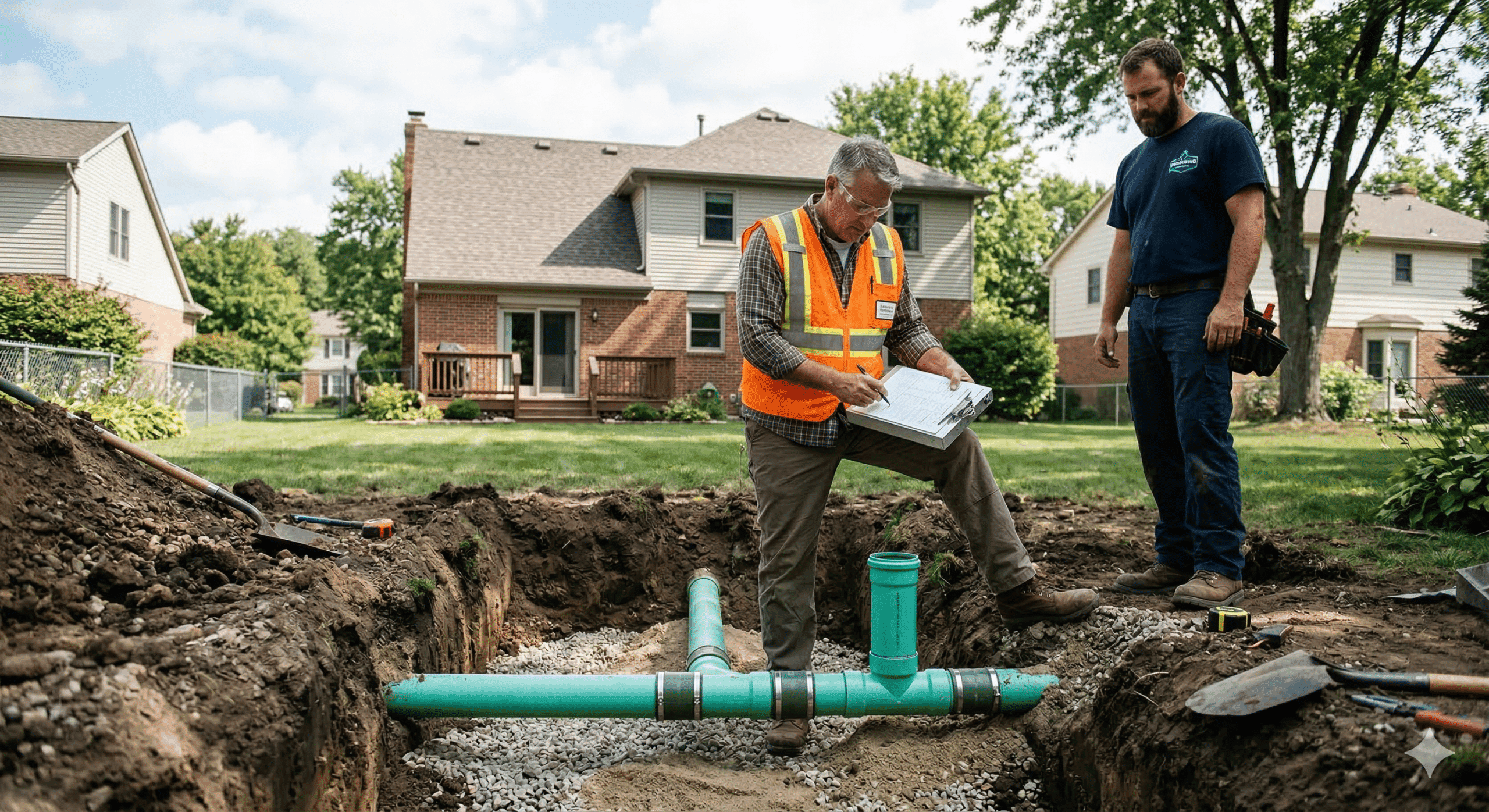
A licensed master plumber reviews the permit scope before starting a sewer line repair in Macomb County.
Single State Code: What This Means for Macomb County Homeowners
Michigan's single state construction code system means you can't shop for a looser jurisdiction by crossing a city line. Whether your property is in Warren, Clinton Township, Shelby Township, or Macomb Township, the same 2021 Michigan Plumbing Code applies.
Local municipalities do control permit fee schedules, inspection scheduling procedures, and right-of-way permit requirements — so there are administrative differences between jurisdictions. But the underlying code standards for pipe materials, installation methods, venting requirements, fixture counts, and testing are identical statewide.
This is actually a homeowner advantage: any licensed Michigan plumbing contractor knows exactly what standard applies regardless of which Macomb County city your property sits in. You don't need separate expertise for each municipality — just a licensed contractor who knows the state code.
Licensed Contractor Requirements
Michigan's Skilled Trades Regulation Act (Act 407 of 2016) governs who can legally perform and permit plumbing work in Macomb County. Here's exactly what's required:
Licensed Plumbing Contractor + Certified Master Plumber
To obtain a plumbing permit in Michigan, the applicant must be either:
- A licensed Michigan plumbing contractor — the contractor's current license number must be recorded on the permit application
- A homeowner installing plumbing in their own single-family dwelling that they occupy or are about to occupy — a homeowner's permit affidavit is required
When a licensed plumbing contractor pulls the permit, a licensed master plumber employed full-time by the contractor must directly supervise all installation work. The master plumber's license number must also appear on the permit application. This is why hiring a company that employs licensed master plumbers — like Bison Plumbing — is essential for code-compliant work.
License Tiers in Michigan Plumbing
| License Type | Can Pull Permits? | Can Supervise Work? | Can Work Independently? |
|---|---|---|---|
| Licensed Plumbing Contractor | ✓ Yes | ✓ With Master Plumber | ✓ Yes |
| Master Plumber | ✓ Yes (via contractor) | ✓ Yes | ✓ Yes |
| Journey Plumber | ✗ No | Under supervision only | ✗ No |
| Apprentice Plumber | ✗ No | ✗ No | ✗ No |
| Homeowner (own residence) | ✓ With affidavit | Own work only | Own residence only |
Always verify that your plumbing contractor holds a current Michigan plumbing contractor license and that a licensed master plumber will supervise the work. You can verify Michigan contractor licenses at michigan.gov/lara. Hiring an unlicensed contractor puts you at risk for fines, failed inspections, and work that must be redone at your expense.
Sewer & Drain Line Code Requirements
Macomb County sewer line work is subject to several specific Michigan Plumbing Code requirements that affect how repairs and replacements must be performed:
Minimum Burial Depth
Michigan Plumbing Code Rule 726 specifies that building sewer lines must be buried a minimum of 42 inches below finished grade to stay below the state's frost line. This is one of the most important Michigan-specific code requirements — shallower installations risk frost heave damage that can crack or displace pipes each winter. Any sewer line repair or replacement in Macomb County must meet or exceed this depth requirement.
Approved Pipe Materials
Michigan Plumbing Code Rule 726 specifies approved materials for building sewer installations. For residential work in Macomb County, the most common approved materials are:
- PVC (polyvinyl chloride) — the current standard for new sewer lateral installations
- ABS (acrylonitrile butadiene styrene) plastic pipe
- Cast iron pipe — still found in older Macomb County homes and permitted for repair/replacement use
- Copper or copper-alloy tubing — used primarily for supply lines
Orangeburg pipe and clay tile pipe — common in Macomb County homes built before the 1970s — are no longer permitted for new installations but are grandfathered in existing systems until they fail and require replacement. When those pipes are replaced, they must be replaced with code-approved materials. Learn more about plumbing problems in older Michigan homes that commonly trigger code-required upgrades.
Trenchless Methods and Code Compliance
Both CIPP pipe lining and pipe bursting are recognized trenchless repair methods under the Michigan Plumbing Code when properly executed with approved liner materials and pipe products. A plumbing permit is required for both methods. The completed work must pass a post-repair inspection. Our trenchless sewer repair services and no-dig sewer repair options are all performed under proper permits with required inspections included.
Fixture Traps
Michigan Plumbing Code Rule 725e requires that each plumbing fixture be separately trapped by a liquid-seal trap. The vertical distance from the fixture outlet to the trap weir must not exceed 24 inches, and the horizontal distance must not exceed 30 inches. No fixture may be double-trapped. These requirements apply to all new fixture installations and any remodeling work that involves drain piping modifications.
Backflow Prevention Requirements in Macomb County
Backflow prevention is one of the most strictly regulated areas of Michigan plumbing code — and one where the rules changed significantly in 2024. Here's what Macomb County property owners need to know:
What Is Backflow and Why Does It Matter?
Backflow occurs when the normal direction of water flow in a plumbing system reverses — allowing contaminated water (from irrigation systems, industrial processes, or sewer connections) to flow back into the clean municipal water supply. Michigan law requires backflow prevention assemblies on irrigation systems, commercial properties, and any connection point where cross-contamination is possible.
Bison Plumbing is licensed and certified to install, test, and repair backflow prevention devices throughout Macomb, Oakland, and St. Clair Counties. Learn more about our backflow testing services.
The 2024 Backflow Tester Credential Update
Effective July 31, 2024, Michigan significantly tightened the requirements for who can legally test backflow prevention assemblies. To have test results accepted by a public water supply official, the tester must now hold both:
- A valid ASSE 5110 certification (American Society of Sanitary Engineers backflow tester certification)
- An active Michigan plumbing license — at the apprentice, journey, or master plumber level. An ASSE 5110 certification alone is no longer sufficient.
This dual requirement means that non-plumbers who previously held only ASSE 5110 certification can no longer submit test results to public water supply officials in Michigan. Always verify that your backflow tester holds both credentials before scheduling service.
Testable Devices Requiring Annual Inspection
Most Macomb County municipalities require annual testing of testable backflow prevention assemblies. The most common testable devices include:
- Pressure Vacuum Breakers (PVB) — common on residential irrigation systems
- Reduced Pressure Zone Assemblies (RPZ) — required for higher-hazard applications including commercial irrigation and fire suppression systems
- Double Check Valve Assemblies (DCVA) — used in lower-hazard commercial applications
If you have an irrigation system connected to Macomb County municipal water, your backflow preventer likely needs annual testing — and since July 2024, that tester must be both ASSE 5110 certified and a licensed Michigan plumber. Bison Plumbing meets both requirements. Call us to schedule annual backflow testing: (248) 247-7707.
Water Heater Code Requirements
Water heater installation and replacement is one of the most common permitted plumbing jobs in Macomb County homes. Michigan Plumbing Code Rule 735 requires that hot water be supplied to all plumbing fixtures used for bathing, washing, and culinary purposes in residential occupancies. Here's what the code requires for water heater installations:
Permit Required for All Water Heater Replacements
Even a direct like-for-like water heater replacement requires a plumbing permit in Michigan. If the water heater is gas-fired, a mechanical permit for the gas piping and vent is also required in addition to the plumbing permit. Electric water heaters require a plumbing permit and may also require an electrical permit if the circuit is being modified.
Temperature and Pressure Relief Valve
Every water heater must be equipped with a properly sized temperature and pressure (T&P) relief valve. The discharge pipe from the T&P valve must terminate no more than 6 inches above a floor drain, must not be reduced in size, and must discharge in a safe location — not into a concealed space. This is a common code violation found during inspections on improperly installed water heaters.
Hot Water Temperature Requirements
Michigan Plumbing Code Rule 735 requires hot water supply at all residential fixtures used for bathing and washing. Water heaters should be set to deliver water at a minimum of 120°F to prevent Legionella bacterial growth, and no higher than 120°F at point-of-use fixtures to prevent scalding — a balance typically achieved through a mixing valve at the water heater. Our water heater repair and replacement services ensure your new installation meets all code requirements from day one.
Bison Plumbing: Fully Licensed & Code-Compliant Across All of Macomb County
Every service Bison Plumbing performs in Macomb County is done under proper permits, supervised by licensed master plumbers, and inspected according to the 2021 Michigan Plumbing Code. Here's what that means for you:
Sewer Line Repair & Replacement
Permitted sewer repairs including trenchless methods — all compliant with Michigan pipe material and depth requirements. View sewer line services.
Backflow Testing & Prevention
ASSE 5110 certified and Michigan-licensed — meeting the updated 2024 dual-credential requirement for backflow testing in Macomb County. View backflow services.
Plumbing Repairs & Fixture Work
All repairs performed by licensed plumbers with permits pulled where required — no shortcuts that create problems at resale. View plumbing repairs.
Water Heater Replacement
Licensed water heater installation with all required plumbing and mechanical permits — code-compliant from T&P valve to vent connection. View water heater services.
Sewer Camera Inspection
Pre-permit diagnostic inspections that confirm pipe condition and guide the right permitted repair approach. Schedule an inspection.
Sump Pump Installation
Permitted sump pump installation and replacement — critical for Macomb County homes in high water table areas prone to spring flooding. View sump pump services.
Plumbing Inspections in Macomb County — What to Expect
Once a plumbing permit is issued, work must pass inspections at key stages before being concealed or placed in service. Here's what the inspection process typically looks like for residential plumbing projects in Macomb County:
Rough-In Inspection
A rough-in inspection is required after all piping is installed but before any walls, floors, or ceilings are closed. The inspector verifies pipe material, sizing, support, slope, venting, and that the installation conforms to the approved permit scope. For sewer work, a trench inspection is required before backfilling — the inspector must see and approve the pipe installation while the trench is still open.
Final Inspection
A final inspection confirms that all fixtures are installed, connected, and functioning properly, that T&P valves and discharge pipes are correctly installed (for water heaters), and that the completed work matches the permit. The inspector issues a Certificate of Acceptance upon approval.
Requesting Inspections
Inspections must be requested at least 24 hours in advance through your local municipal building department. Most Macomb County municipalities allow inspection requests by phone, email, or online portal. Your licensed plumbing contractor will typically coordinate all inspections as part of their service.
Plumbing work concealed before a required rough-in or trench inspection is a serious code violation. The responsible party must pay all costs to uncover and re-expose the work for inspection. This is one of the most expensive and avoidable mistakes in residential plumbing projects.
Consequences of Unpermitted Plumbing Work in Macomb County
Some homeowners are tempted to skip permits for "small" plumbing jobs to save time and money. The real cost of unpermitted plumbing work almost always exceeds the permit fee many times over:
Fines and Penalties
Starting permitted plumbing work without a permit subjects the responsible party to a Michigan LARA investigation fee — currently $110 — in addition to the standard permit fee. More serious violations can result in stop-work orders, mandatory demolition of completed work, and civil penalties under Michigan Construction Code Act 230.
Required Exposure and Re-Inspection
If a code official discovers unpermitted work that has been concealed, the responsible party must uncover all affected work at their own expense for inspection. If the work doesn't meet code, it must be corrected before being closed again — meaning you pay for the opening, the correction, the re-inspection, and the re-closing.
Home Sale Complications
Unpermitted plumbing work is one of the most common red flags discovered during home sale inspections in Macomb County. Buyers can demand corrections as a condition of sale, negotiate price reductions, or walk away. Lenders may refuse to finance a home with known unpermitted work. Resolving unpermitted work retroactively during a sale is expensive, stressful, and time-consuming.
Insurance and Liability Exposure
Homeowner's insurance policies typically exclude coverage for damage caused by or related to unpermitted work. If a water leak from an improperly installed pipe (without a permit) causes significant water damage to your home, your insurer may deny the claim entirely. The liability exposure from unpermitted work extends to subsequent owners of the property.
Need Code-Compliant Plumbing Work in Macomb County?
Bison Plumbing pulls all required permits, employs licensed master plumbers, and ensures every job passes inspection — in Warren, Sterling Heights, Clinton Township, Shelby Township, and across Macomb County. No shortcuts, no surprises.
Request a Free Quote Today Or call us — (248) 247-7707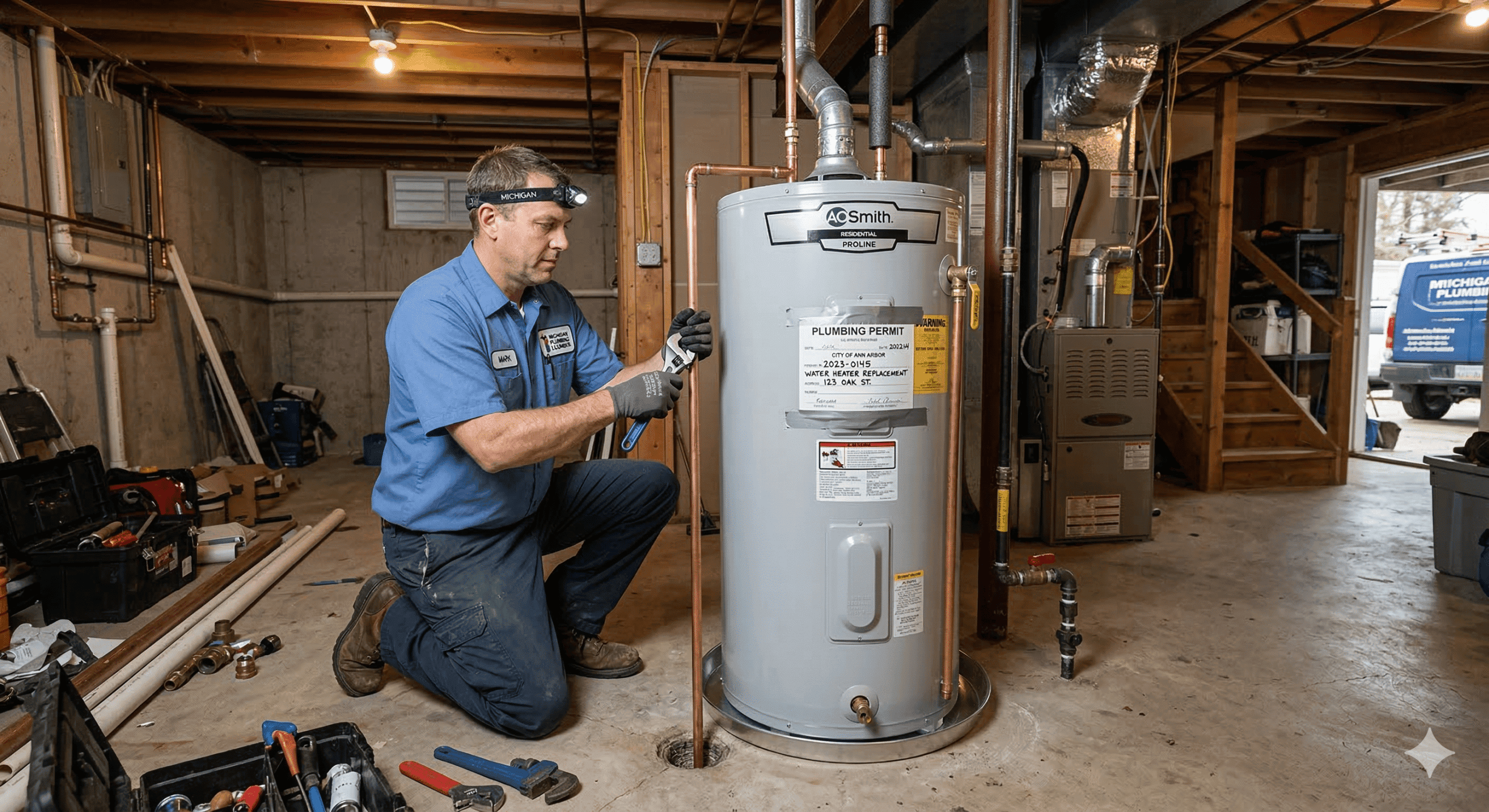
Macomb County Plumbing Code: A Quick Reference Summary
- Macomb County follows the 2021 Michigan Plumbing Code (Part 7), effective March 12, 2024 — the same standard across every municipality in the county.
- Permits are required for sewer line work, water heater replacements, fixture additions, backflow preventer installation, sump pump work, and any modification to drain, supply, or vent piping.
- Minor repairs like faucet part replacements and clearing stoppages do NOT require permits — as long as no pipe is modified.
- All permitted plumbing work must be performed by a licensed Michigan plumbing contractor with a certified master plumber supervising. Homeowners may pull their own permits only for work in their primary residence.
- Building sewer lines must be buried at least 42 inches below grade in Michigan to stay below the frost line.
- Since July 2024, backflow prevention assembly testers must hold both ASSE 5110 certification and an active Michigan plumbing license.
- Unpermitted plumbing work can result in fines, mandatory uncovering and correction, home sale complications, and insurance claim denials.
Frequently Asked Questions About Plumbing Code in Macomb County
Macomb County follows the Michigan state plumbing code — the 2021 Michigan Plumbing Code (Part 7), effective March 12, 2024. Michigan operates under a single state construction code system, meaning every municipality in the county enforces the same base standard. Individual cities and townships may have additional local requirements (such as right-of-way permit rules or specific inspection procedures), but the underlying plumbing code is identical statewide.
Yes. Even a direct like-for-like water heater replacement requires a plumbing permit in Michigan. If the water heater is gas-fired, a mechanical permit is also required for the gas piping and venting. Your licensed plumbing contractor will pull all required permits as part of the installation. Our water heater services include permit coordination at no additional hassle to you.
Yes, but only for work in your own primary residence that you will personally perform. Michigan law allows homeowners to obtain permits for their own single-family dwelling with a homeowner's affidavit, provided all inspections are completed. However, homeowners cannot pull permits for rental properties or homes they don't occupy. For any significant plumbing work, using a licensed Michigan plumbing contractor is strongly recommended to ensure code compliance and proper inspections.
Michigan Plumbing Code requires building sewer lines to be buried a minimum of 42 inches (3.5 feet) below finished grade. This requirement is specific to Michigan's frost line depth and ensures pipes are protected from the freeze-thaw ground movement that occurs every winter in Southeast Michigan. Any sewer repair or replacement that exposes pipe must meet this depth requirement for the reinstalled line.
Starting permitted plumbing work without a permit subjects you to a $110 investigation fee (in addition to the normal permit fee), potential stop-work orders, and mandatory uncovering of any concealed work for inspection at your own expense. Unpermitted work can also complicate or derail a home sale, and may void your homeowner's insurance coverage for related damage claims. The cost of starting without a permit almost always far exceeds the permit fee itself.
Yes. Both CIPP pipe lining and pipe bursting are recognized trenchless repair methods under the Michigan Plumbing Code, but both require a plumbing permit and a post-repair inspection. The completed trenchless work must use approved liner materials and pipe products. Bison Plumbing pulls all required permits for every trenchless repair job and coordinates the required inspections. See our full guide on trenchless sewer repair costs in Michigan for more details.
As of July 31, 2024, backflow prevention assembly testers in Michigan must hold both an active ASSE 5110 certification AND an active Michigan plumbing license (at the apprentice, journey, or master plumber level). ASSE 5110 certification alone is no longer sufficient for testing results to be accepted by a public water supply official. Always verify both credentials before scheduling backflow testing service. Bison Plumbing meets both requirements — contact us to schedule your annual backflow test.
Research sources: Michigan LARA — Current Code Books · 2021 Michigan Plumbing Code — Part 7 Final Rules · Michigan LARA — Plumbing Permit Information · Michigan EGLE — Backflow Tester Credential FAQs