
How Long Does a Sewer Line Last in Michigan? | Bison Plumbing

How Long Does a Sewer Line Last in Michigan? A Homeowner’s Lifespan Guide

Knowing how long a sewer line lasts helps Michigan homeowners plan maintenance and avoid surprise repairs. Lifespan depends on pipe material and local conditions. This guide summarizes expected service lives for common pipe types, the environmental and usage factors that shorten them, signs to watch for, inspection and maintenance steps to reduce risk, and repair options including excavation and trenchless methods.

Key Takeaways

  • Sewer line lifespan varies by material: cast iron 50–100 years; clay 60–100; PVC 100+ years.
  • Freeze-thaw cycles and soil conditions affect durability.
  • Signs of problems include recurring backups, multiple slow drains, and sewer gas odors.
  • Inspect sewer lines every two years to catch issues early.
  • Hydro jetting and prompt response to warning signs can extend service life.
  • Traditional repairs require excavation; trenchless methods reduce surface damage.
  • Replacement costs in Michigan commonly range $3,000–$30,000 depending on method and length.
  • Moisture, corrosive soils, and tree roots accelerate degradation.

What Are the Typical Lifespans of Common Sewer Pipe Materials in Michigan?
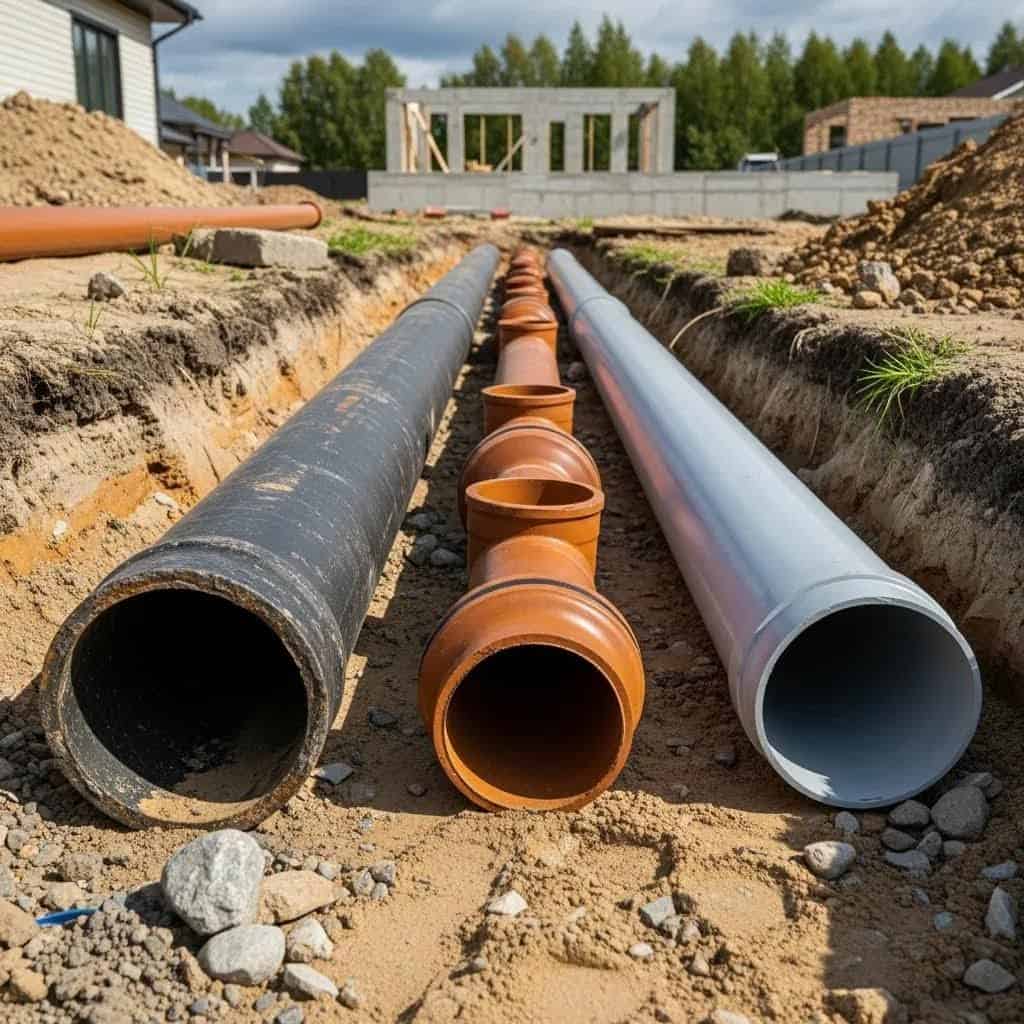
Three large pipes, one black, one brown, and one gray, are laid in a trench at a construction site with a partially built house and equipment visible in the background. Dirt and gravel cover the ground.

Lifespan depends on material and installation. Cast iron, clay, and PVC each offer different service ranges and vulnerabilities; knowing which your home has helps schedule inspections and plan replacements before failures occur.

Material Lifespan Maintenance Tips
Cast Iron 50–100 years Regular inspections to check for corrosion.
Clay 60–100 years Avoid heavy landscaping near pipes to prevent damage.
PVC 100 years or more Ensure proper installation to prevent joint issues.

Bison Plumbing provides maintenance, inspection, repair, and replacement services to help homeowners extend sewer pipe lifespan.

How Long Do Cast Iron, PVC, and Clay Sewer Pipes Last in Michigan’s Climate?

Michigan’s freeze-thaw cycles and soil conditions affect material performance: cast iron commonly lasts 50–100 years but corrodes in wet soils; clay often lasts 60–100 years but is prone to root intrusion and ground movement; PVC can exceed 100 years when joints are installed correctly. Consider these conditions when assessing any existing sewer line.

What Local Factors Affect Sewer Pipe Durability in Michigan?

Local conditions in Michigan—aging materials, frequent freeze-thaw, aggressive soils, and tree roots—drive premature failure. Awareness of these factors supports targeted maintenance and timely repairs. Local municipal guidelines confirm homeowner lateral responsibilities and common Michigan pipe materials like clay.

Empirical studies show that moisture, corrosive soils, biological activity, and temperature swings accelerate material degradation in sewer infrastructure. Research confirms PVC pipes can last 100+ year service life under proper installation conditions.

What Are the Key Signs of Sewer Line Failure Homeowners Should Watch For?

Watch for recurring backups, multiple slow drains, and persistent sewer gas odors. Read our guide on how to prevent sewer backups for proactive steps.

  • Recurring Sewage Backups: Indicate a blockage or line failure.
  • Multiple Slow Drains: Several slow drains suggest a main sewer issue.
  • Persistent Sewer Gas Odor: Foul smells may mean a leak or break.

Early detection reduces damage and lowers repair costs. Learn more about signs you need sewer line replacement.

How Can Early Detection Prevent Costly Sewer Repairs?

Early detection limits repair scope and expense. Regular inspections reveal developing issues before they escalate. Check for unusual plumbing sounds, wet spots in the yard, or changes in water pressure. Prompt action at first signs typically leads to simpler, less costly repairs.

How Often Should Michigan Homeowners Schedule Sewer Line Inspections and Maintenance?

Schedule inspections at least every two years. Homes with older pipes, frequent backups, or large trees near sewer lines should inspect more often. Signs that warrant an immediate inspection include persistent slow drains, odd noises, or recent heavy rainfall affecting the yard.

Familiarity with available inspection techniques helps homeowners and professionals select the most effective diagnostic approach for a given situation.

What Maintenance Tips Help Extend Sewer Line Lifespan?

Practical maintenance steps extend service life and reduce emergency repairs. Key actions include regular inspections, targeted cleaning, and prompt response to early warning signs.

  • Regular Inspections: Schedule inspections to catch issues early.
  • Hydro Jetting: Clear buildup to prevent blockages. See hydrojetting vs snaking to choose the right method.
  • Address Early Signs of Issues: Respond quickly to avoid larger problems.

Applying these measures consistently helps preserve pipe integrity and lowers the chance of expensive replacements.

What Are the Sewer Line Repair and Replacement Options Available in Michigan?

Two side-by-side images show construction workers installing large water pipes in trenches along a residential street lined with trees and houses. Heavy machinery and safety cones are present at the worksite.

Homeowners can choose traditional excavation or trenchless methods. Traditional replacement requires digging and full pipe removal; trenchless repairs or replacements use smaller access points and preserve surface features. Bison Plumbing has experience with both approaches to help you pick the best option for your property.

How Do Traditional and Trenchless Sewer Repair Methods Compare?

Traditional repairs often require extensive excavation and can damage landscaping and driveways. Trenchless methods use small access points and preserve surface features. Although traditional work may cost less up front, trenchless approaches frequently cut restoration costs and shorten downtime, reducing total project impact.

What Are Typical Sewer Line Replacement Costs in Michigan?

Sewer line replacement in Michigan commonly ranges from $3,000 to $30,000. Final cost depends on method, pipe length, material, accessibility, and local labor. For a detailed cost breakdown, see our guide on trenchless sewer repair cost in Michigan. Consult a licensed professional such as Bison Plumbing for an on-site estimate tailored to your situation.

Is Your Sewer Line Showing Its Age? Bison Plumbing Can Help.

Don’t wait until a failing sewer line becomes a costly emergency. Bison Plumbing serves homeowners and businesses throughout Michigan, specializing in trenchless and no-dig sewer repair that gets the job done with minimal disruption to your property. Contact Bison Plumbing today to schedule your sewer line inspection and find out exactly where your system stands.

Frequently Asked Questions

What factors can lead to premature sewer line failure in Michigan?

Freeze-thaw cycles, tree root intrusion, corrosive soils, and old or degraded materials can cause cracks, joint separation, and blockages that shorten service life. Regular monitoring reduces surprises.

How can homeowners identify tree root intrusion in their sewer lines?

Look for frequent clogs, multiple slow drains, gurgling noises, or unusually green/wet patches in the yard. A professional camera inspection confirms root presence and guides remediation.

What are the benefits of trenchless sewer repair methods?

Trenchless repairs minimize surface disruption, reduce landscaping and driveway restoration, often shorten project time, and can provide long-term durable materials that lower future issues.

How can homeowners prepare for a sewer line inspection?

Clear access to inspection points, note symptoms like slow drains or backups, and mark landscaping or structures that may affect access. Good preparation speeds the assessment.

What should homeowners do if they suspect a sewer line issue?

Limit water use to avoid further backups, check for wet spots or odors, and contact a professional plumber promptly. Early inspection and intervention reduce repair complexity and cost.

Are there any preventative measures to extend the lifespan of sewer lines?

Yes. Schedule inspections every two years, avoid flushing non-biodegradable items, and perform routine cleaning (such as hydro jetting) when recommended. Keep large trees away from sewer routes to limit root intrusion.

Facebook
Twitter
LinkedIn
A construction worker wearing a hard hat and gloves installs a large black pipe in a residential yard, surrounded by equipment, tools, and nearby houses under a clear blue sky.

Setting A New Standard In Plumbing

Residential & Commercial Services

GetThumb-1.jpg

Sewers & Drains

Whatever it is a small drain or a main sewer we can clear the heaviest blockage from hair to major tree roots or preventative maintained.

Hydrojetting-service-hero.jpg

Hydrojetting

Jetting uses a special high-pressure water hose to powerfully dislodge the sewer obstruction and clean the pipe thoroughly.

picote-service-hero.jpg

No-Dig Sewer Repairs

We offer pipe lining, pipe patching, and complete rehabilitation of sewer and storm lines.

Backflow-testing.jpg

Backflow Testing

We are licensed and insured to test, install, or replace all backflow valves residential or commercial.

plumbing-repairs.jpg

Plumbing Repairs

We have the expertise to ensure that the manufacturer’s standards are met when repairing toilets, faucets, and fixtures.

Mechanical.jpg

Mechanical Services

General mechanical piping service, repair, and upgrades – as well as conducting regular inspections for code compliance – Bison Plumbing has the solutions that you need.

before-after-lining.jpg

Trenchless Sewer Repair

Cutting-edge method used to fix damaged or deteriorating sewer lines without the traditional digging

Request A Quote

When Bison Plumbing is on the job, you can rest assured that your job will be done right, on time, and for a fair price. Contact us today for a Free Quote!

See Our Work

We Do It All!