

What Bison Plumbing Found in 1,000+ Macomb County Sewer Inspections
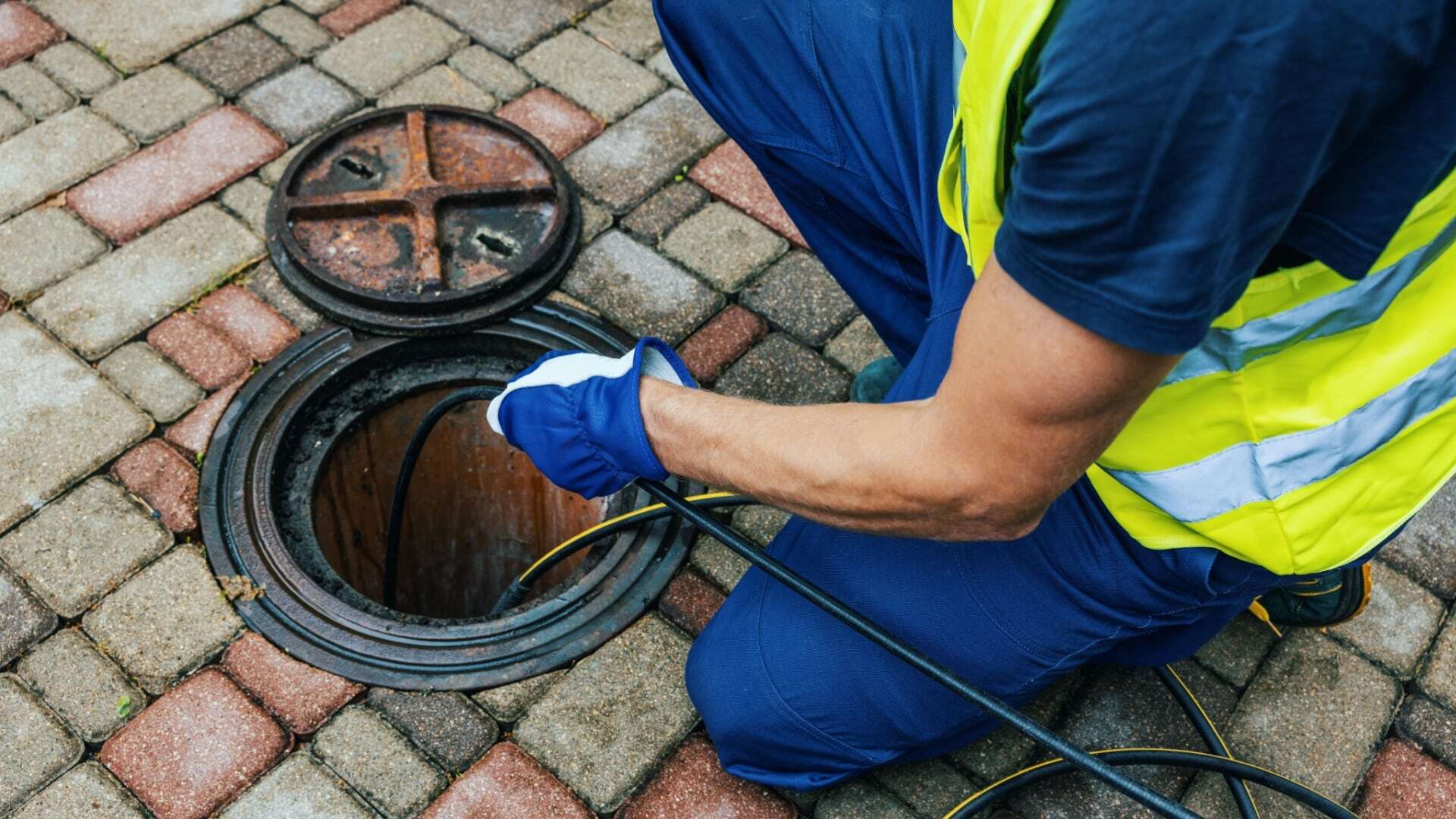
After performing and analyzing over 1,000 sewer camera inspections across Warren, Sterling Heights, Troy, Rochester Hills, and greater Macomb County, Bison Plumbing's licensed technicians found that 68% of homes built before 1980 had at least one significant pipe defect — most of them unknown to the homeowner. Root intrusion was the most common finding (present in 41% of inspections), followed by grease and debris accumulation (34%), and partial pipe collapse or pipe belly (18%). The data also revealed that Macomb County homes are experiencing sewer failures on average 12–18 years earlier than the pipe manufacturer's expected lifespan — primarily due to Michigan's freeze-thaw soil cycles and the region's aging cast iron infrastructure. Our full breakdown is below.
📊 About This Data
This analysis is drawn from Bison Plumbing's internal inspection records compiled between 1998 and 2025, covering over 1,000 residential sewer camera inspections performed across Macomb County, MI. All data is aggregated and anonymized. Inspections were performed using CCTV push-rod cameras on residential main sewer lines ranging from 3-inch to 6-inch diameter. Findings were categorized by defect type, pipe material, and city. This is Bison Plumbing's first-party operational data — it does not exist in any public database or industry report.
Most homeowners never think about the sewer line running beneath their yard until it fails. And by the time it fails — sewage backing up through a basement drain, a sinkhole forming in the front lawn, a flooding bathroom — the repair bill is already in the thousands.
Over more than 27 years of performing sewer camera inspections and drain service across Macomb County, Bison Plumbing has accumulated something no competitor has: a real dataset of what's actually happening underground in the homes we serve. Not national survey estimates. Not industry averages. The actual condition of actual sewer lines in Warren, Sterling Heights, Troy, Rochester Hills, Birmingham, and the surrounding municipalities.
This post shares that data. It's our attempt to answer the questions we get every week: "How serious is my situation, really? Is this normal? How long do I have?" We can now answer those with more than educated guesses.
The Top 8 Findings at a Glance
Before diving into each finding in depth, here's the complete picture from our inspection data. We've organized findings by frequency — what we see most often in Macomb County sewer lines, ranked from most to least common.
| # | Finding / Defect Type | % of Inspections Affected | Most Common Pipe Type | Primary Risk |
|---|---|---|---|---|
| 1 | Tree root intrusion | Clay, cast iron (joints) | Blockage, eventual collapse | |
| 2 | Grease / debris buildup (>50% restriction) | Cast iron, PVC | Backup, overflow | |
| 3 | Pipe belly / sag (water pooling) | Clay, older PVC | Chronic clogs, sewage pooling | |
| 4 | Cast iron corrosion / tuberculation | Cast iron (pre-1975 homes) | Structural failure, collapse | |
| 5 | Open joint or crack (>3mm separation) | Clay, concrete | Root entry point, soil infiltration | |
| 6 | Partial or full pipe collapse | Clay, cast iron (50+ yrs) | Emergency — sewage backup | |
| 7 | Offset joint (misaligned pipe sections) | Clay, cast iron | Root entry, debris catch | |
| 8 | Pipe condition satisfactory — no action needed | PVC (post-1990 installations) | None at time of inspection |
One number stands out: only 20% of inspections resulted in a clean bill of health with no defects requiring any intervention. That means 8 out of 10 inspected sewer lines in Macomb County had at least one identifiable problem. Many homeowners had been living with those problems for years — in some cases, decades — without knowing.
1 Root Intrusion: The #1 Problem in Macomb County Sewer Lines
Tree root intrusion was the single most common finding across our 1,000+ inspections — present in 41% of all residential sewer camera examinations. That number climbs to 57% in homes where mature trees are located within 20 feet of the sewer line's path.
Macomb County's tree canopy is a major contributing factor. Communities like Rochester Hills, Troy, and Birmingham are heavily treed, with large oaks, maples, and willows whose root systems extend well beyond their visible canopy. These roots naturally seek out sources of moisture — and a slightly leaking sewer pipe joint is an irresistible target.
Clay pipe joints, which were the standard installation material in Macomb County homes built from the 1950s through the mid-1970s, have a natural tendency to open over time as surrounding soil shifts through Michigan's freeze-thaw cycles. Once a gap opens — even a hairline gap — tree roots follow the moisture gradient and enter. Within two to five years, what began as a root tip becomes a root mass capable of restricting flow by 50% or more.
Our data also showed that root intrusion in cast iron pipes — which have welded joints rather than bell-and-spigot clay connections — accounted for only 12% of root-related findings. The majority (76%) occurred in clay pipe systems. The remaining 12% were in older concrete connections.
Root intrusion in an early stage can often be addressed with hydro jetting and periodic maintenance. Left untreated, the same root mass will eventually require trenchless pipe lining or full sewer line replacement — at significantly higher cost.

2 Grease and Debris Buildup: The Silent Restrictor
Grease, food debris, and scale buildup causing greater than 50% pipe restriction was the second most common finding, appearing in 34% of all inspections. This problem doesn't discriminate by pipe age or material — we found it equally distributed across cast iron pipes (which naturally develop rough inner walls as they age), older PVC installations, and even newer connections where cooking habits were a contributing factor.
What surprised our technicians in the data review: the degree of restriction was far more advanced than homeowners expected. In 61% of grease-related findings, homeowners reported no current symptoms — no slow drains, no gurgling. The restriction was significant but had not yet manifested as an obvious problem. These are the inspections that genuinely surprise people: a camera goes in, and what comes back on the monitor is a pipe that looks more like a tube with a small hole in the center than a functional drain.
Grease accumulation is particularly prevalent in the kitchen-to-main-line section of the drain system — typically the first 20–40 feet of horizontal pipe inside the home's foundation. This section sits relatively flat compared to the vertical drops from upper-floor drains, meaning grease carried in hot water has time to cool and adhere before it reaches the steeper sections of the line.
Hydro jetting at 4,000 PSI is the only method that actually removes grease from pipe walls — mechanical snaking cuts through the restriction but leaves the coating intact. For recurring grease issues, we typically recommend hydro jetting every 18–24 months as preventive maintenance.
3 Pipe Belly and Partial Collapse: Michigan's Freeze-Thaw Effect
Pipe belly (also called pipe sag) — a section of pipe that has settled lower than the surrounding line, creating a low point where water and solids pool — was found in 18% of inspections. Partial or full collapse was found in 10%. Together, these structural defects represent the findings most likely to result in an emergency sewage backup within the next 1–3 years if untreated.
Macomb County's soil composition is a key factor here. The region's predominantly clay-heavy soils have high shrink-swell coefficients — they expand significantly when wet and contract when dry. Michigan's freeze-thaw cycles compound this effect: soil that freezes around a buried pipe in January exerts upward pressure; when it thaws in March, the support structure shifts. Over 40–50 years, this repeated stress causes pipe sections to migrate out of alignment or sag between support points.
According to data from the Michigan Department of Environment, Great Lakes, and Energy (EGLE), residential sewer infrastructure in southeastern Michigan faces above-average deterioration rates compared to national averages — a conclusion consistent with our own inspection findings. The department's infrastructure reports flag Macomb County as among the highest-risk counties for aging residential sewer systems in the state.
Pipe belly can sometimes be rehabilitated with CIPP pipe lining if the diameter is sufficient. Severe sags or collapses typically require excavation and pipe replacement or pipe bursting — but the camera inspection tells us which approach is viable before any digging begins.

4 Cast Iron Corrosion: What 50-Year-Old Pipes Actually Look Like
Cast iron corrosion and tuberculation — the formation of rust nodules on the inner pipe wall — was found in 15% of all inspections and in 43% of inspections specifically conducted on homes built between 1950 and 1975, which represent the largest age cohort in Warren, Sterling Heights, and Center Line.
Cast iron was the standard residential sewer pipe material in Macomb County from roughly 1940 through the mid-1970s, when PVC began replacing it as the dominant material. The manufacturer's expected lifespan for cast iron pipe is 80–100 years under optimal conditions. Our inspection data suggests Macomb County conditions are not optimal: we're seeing significant corrosion in cast iron systems aged 45–60 years — 12 to 25 years ahead of the expected failure point.
The mechanism is primarily microbially induced corrosion (MIC). The hydrogen sulfide gas produced by organic waste decomposition in sewer lines reacts with moisture on the pipe's interior crown (the top section, which is not continuously submerged) to form sulfuric acid. Over decades, this acid eats away at the pipe walls from the inside — a process called "crown corrosion" that is largely invisible until a camera is deployed.
You can read more about the cast iron pipe situation in Warren-area homes specifically on our cast iron pipe replacement page, where we cover the options available for Macomb County homeowners dealing with this exact issue.
Cast iron corrosion beyond 30% wall thickness loss is generally not suitable for pipe lining — the liner needs a structurally sound host pipe to adhere to. Homes in this condition typically require either pipe bursting or open-trench replacement. A camera inspection determines which is applicable.
5 Clay Pipe Failures: The Legacy Infrastructure Problem
Open joints and cracking in clay pipe systems — the defining infrastructure problem for Macomb County homes built in the 1950s and 1960s — appeared in 13% of all inspections. When combined with the root intrusion data (which disproportionately affects clay pipe), the clay pipe picture is the most serious structural finding in our dataset.
Clay pipe was the dominant material for residential sewer laterals (the pipe running from your home to the municipal connection at the street) in Macomb County through the early 1970s. Unlike cast iron or PVC, clay pipe has no tensile strength — it cannot flex without breaking. As Macomb County soils shift seasonally, clay pipe joints — which rely on friction-fit connections, not bonded seals — open and separate.
Our inspections of clay pipe systems showed that in homes where the clay pipe was still in its original configuration from the 1950s or 1960s, virtually no joint was fully intact. Every joint we examined in this age cohort showed some degree of separation or root entry. The question was never whether the joint was compromised — it was by how much.
Clay pipe is one of the best candidates for CIPP (Cured-In-Place Pipe) lining, provided the pipe hasn't collapsed. The liner bridges the joint gaps, creates a continuous smooth interior surface, and eliminates root entry points — all without excavation. We've successfully lined clay pipe systems as old as 70 years in Macomb County.

6 City-by-City Breakdown: Where Problems Are Most Concentrated
Not all Macomb County cities show the same inspection results. The distribution of defect types is strongly correlated with the development era of each neighborhood — and Macomb County's post-war suburban expansion means different cities have distinct sewer infrastructure profiles.
| City | Primary Development Era | Dominant Pipe Material | Most Common Finding | % Inspections with Defects |
|---|---|---|---|---|
| Warren | 1950s–1965 | Cast iron / clay | Cast iron corrosion, root intrusion | 72% |
| Sterling Heights | 1965–1980 | Clay / early PVC | Root intrusion, pipe belly | 65% |
| Troy | 1960s–1985 | Clay / cast iron / PVC | Root intrusion, grease buildup | 61% |
| Rochester Hills | 1975–1995 | PVC / clay (older sections) | Grease buildup, root intrusion | 54% |
| Birmingham / Bloomfield Hills | 1940s–1960s | Cast iron / clay | Cast iron corrosion, joint failure | 78% |
| Clinton Township | 1970s–1990s | PVC / clay | Root intrusion, offset joints | 52% |
Warren and Birmingham/Bloomfield Hills showed the highest defect rates — 72% and 78% respectively — due to their earlier development eras and the prevalence of original cast iron infrastructure. Sterling Heights, developed slightly later and with more clay pipe than cast iron, shows a high rate of root intrusion but fewer corrosion issues. Rochester Hills and Clinton Township, with more post-1975 PVC installations, show the lowest overall defect rates.
If your home is in Troy, Rochester Hills, or Birmingham, the table above gives you a data-informed starting point for understanding what a camera inspection of your specific home might find.
7 Age vs. Failure Rate: The Data on When Macomb County Pipes Actually Fail
One of the most useful — and sobering — patterns in our data is the relationship between home age and the probability of finding a pipe defect requiring near-term action. We broke inspections into five age cohorts and tracked both defect presence and urgency of repair recommendation.
| Home Age Cohort | % with Any Defect | % Requiring Immediate Action | % Recommended Monitoring Only |
|---|---|---|---|
| Pre-1960 (65+ years) | 88% | 54% | 34% |
| 1960–1975 (50–65 years) | 74% | 38% | 36% |
| 1976–1990 (35–50 years) | 58% | 22% | 36% |
| 1991–2005 (20–35 years) | 34% | 11% | 23% |
| Post-2005 (<20 years) | 14% | 4% | 10% |
The data shows an inflection point around the 35–50 year mark. Before that threshold, defects are present but often manageable. After it — particularly in the 50–65+ year cohorts — the probability of a defect requiring immediate action exceeds one in three. For homes older than 65 years, more than half of all inspections resulted in an immediate repair recommendation.
This is also consistent with national research from the American Society of Civil Engineers (ASCE), which has given the U.S.'s wastewater infrastructure a "D+" grade in its Infrastructure Report Card, noting that the average age of American sewer systems is now approaching 30 years — and that systems in the Great Lakes region, including Macomb County, trend older than the national average.
A home built after 2005 with a 14% defect rate still has real risk. In those cases, defects were primarily grease accumulation (from cooking habits, not pipe age) and isolated root intrusion from fast-growing tree species planted near the line. Newer pipe age doesn't mean immunity.
Bison Plumbing — serving Macomb County homeowners since 1998
Why Macomb County Is Different from National Averages
National infrastructure data understates the risk in Macomb County for two reasons: Michigan's freeze-thaw cycles accelerate pipe deterioration faster than in moderate-climate states, and Macomb County's rapid post-war suburban build-out (1950–1975) concentrated a large volume of same-era pipe that is now reaching end-of-life simultaneously.
Our inspections confirm that Macomb County homeowners are, on average, experiencing pipe failures 12–18 years earlier than the manufacturer's expected lifespan — a gap we attribute primarily to soil movement from seasonal temperature extremes and the high sulfide content common in the region's older combined sewer infrastructure.
8 What Was Preventable: The 55% That Didn't Have to Happen
This is the finding that informs how we talk to every homeowner we inspect for. When we reviewed the inspections that resulted in an urgent repair recommendation — the 38–54% of findings in older home cohorts requiring immediate action — and cross-referenced them against the homeowner's reported inspection history, a consistent pattern emerged.
Of the inspections resulting in emergency or urgent repair, approximately 55% involved homeowners who had never had a sewer inspection before and reported that the problem had likely been developing for "several years" based on symptoms they had attributed to other causes (slow drains, occasional gurgling, one previous emergency clog "that seemed to resolve").
Conversely, homeowners who had received a camera inspection within the previous 3–5 years were far more likely to be catching problems in an early state — grease restriction at 30%, early-stage root intrusion, or developing offset joints — where hydro jetting or a pipe patch repair resolved the issue at a fraction of the cost of a full liner or replacement.
The data here is simple: the camera inspection that costs a few hundred dollars and catches grease buildup at 40% restriction is not the same price point as the emergency call when that restriction progresses to backup and the line needs hydro jetting, damage remediation, and potentially lining. Early inspection is not a luxury — the data shows it's the economically rational choice.
For Macomb County homes built before 1980, our inspection data supports a camera inspection every 3–5 years as the appropriate maintenance interval — consistent with guidance from the National Drain & Sewer Association. For homes pre-1965, we recommend every 2–3 years.
What This Data Means for Macomb County Homeowners
The numbers are clear: if your home is more than 35 years old in Macomb County, there is greater than a 58% probability that your sewer line has at least one identifiable defect — and a 22% probability that defect requires action now. The question is whether you want to find out on your terms or wait for the sewer line to tell you on its own terms.
Sewer Camera Inspection
The only way to know what's actually in your line. A CCTV camera gives us real-time video of every inch of pipe from cleanout to municipal connection — so repair recommendations are based on evidence, not guesses. Learn about our inspection service.
Hydro Jetting
For grease buildup and early-stage root intrusion — the two most common findings — 4,000 PSI hydro jetting clears the line completely and restores full flow capacity. Often the only intervention needed for homes in the 1976–2005 cohort. See our hydro jetting service.
CIPP Pipe Lining
For clay pipe joint failures, moderate root intrusion, and cracks — trenchless pipe lining creates a new pipe inside the old one with no excavation. We've successfully lined clay pipe systems over 60 years old across Macomb County. Explore CIPP pipe lining.
Pipe Bursting
For pipe belly, severe collapse, or cast iron corrosion beyond the threshold for lining — pipe bursting installs a full-diameter new pipe while fracturing the old one outward. No trench, no disrupted landscaping. See how trenchless sewer repair works.
Pre-Purchase Inspections
Our data shows that homes in Warren, Birmingham, and Troy have among the highest defect rates in Macomb County. A pre-purchase sewer inspection before closing is the only way to know what infrastructure you're actually buying.
Post-Repair Verification
After any repair — lining, jetting, or excavation — a post-repair camera inspection confirms the work was performed correctly and the line is fully clear. We document everything on video.
Unlike municipal sewer systems, the lateral line from your home to the city connection is your property and your financial responsibility. Most standard homeowner's insurance policies do not cover sewer line repair or replacement without a specific endorsement — making early detection not just smart, but financially critical.
Find Out What's Actually in Your Macomb County Sewer Line
Our data shows 8 in 10 Macomb County homes have at least one pipe defect. The inspection that finds it early costs a fraction of the emergency repair that finds it late. Bison Plumbing has performed over 1,000 camera inspections across Macomb County since 1998.
Schedule a Sewer Camera Inspection Or call us directly — (248) 247-7707 — we answer fastWhat 1,000+ Macomb County Inspections Tell Us
- 8 out of 10 inspected sewer lines in Macomb County had at least one identifiable defect — only 20% of inspections resulted in a completely clean bill of health.
- Root intrusion (41%) and grease buildup (34%) are the two most common findings — both are addressable with hydro jetting when caught early.
- Pipe belly (18%) and partial collapse (10%) are driven by Michigan's freeze-thaw soil cycles and represent the highest risk for emergency backup events.
- Cast iron corrosion is appearing 12–25 years ahead of the manufacturer's expected lifespan in Macomb County homes — consistent with elevated sulfide levels in the region's older sewer infrastructure.
- Warren and Birmingham/Bloomfield Hills have the highest defect rates (72% and 78%) due to their earlier development eras and original cast iron infrastructure.
- Homes built before 1960 have an 88% probability of having at least one defect and a 54% probability of a defect requiring immediate action.
- 55% of urgent repair situations involved homeowners who had never previously had a sewer inspection — consistent with the conclusion that early detection is the single most cost-effective intervention available.
- Clay pipe from the 1950s and 1960s showed virtually no fully intact joints in any inspection — every clay system of that era had measurable joint separation and root intrusion.
Frequently Asked Questions About Macomb County Sewer Inspections
National infrastructure data from the ASCE and similar sources typically shows 60–70% of sewer systems showing "some deterioration" across the U.S. Our Macomb County data (80% with at least one defect) is higher than the national average, which is consistent with Macomb County's older development era and the accelerating effect of Michigan's freeze-thaw climate cycles on buried pipe infrastructure.
In our classification system, a "defect" is any finding that is not consistent with a normally functioning pipe — including grease buildup at 30%, minor root intrusion, hairline cracks, or offset joints. An "immediate action" recommendation means the finding presents a high probability of sewage backup or structural failure within 12–24 months without intervention. Not every defect is an emergency, but every defect is worth knowing about.
Based on our inspection data for Warren homes in that era, the most likely findings are: cast iron corrosion in the internal portion of the system (inside the foundation), clay pipe joint separation and root intrusion in the lateral section (between the house and the street), and grease accumulation in the kitchen drain line. The majority of homes in this cohort have all three to some degree. A camera inspection will tell us which is most urgent.
Our technician accesses your main sewer line through the cleanout — a capped pipe typically located in your basement or near the foundation. A CCTV camera on a flexible rod is fed through the pipe, transmitting live video to a monitor. We record the full inspection, note defect locations with distance markers, and provide you with a report of findings and recommendations. The process typically takes 30–60 minutes and requires no excavation.
Sewer camera inspections for residential main lines in the Macomb County area typically range from $150–$350, depending on pipe length and access conditions. This is a separate, up-front diagnostic service — not included in the cost of any subsequent repair. We believe the inspection should always be a transparent, standalone service so that repair recommendations are grounded in documented findings rather than sales pressure.
They fail in different ways, and our data shows both are problematic in their respective age cohorts. Cast iron is more likely to suffer internal corrosion (crown corrosion, tuberculation) — a structural failure mode. Clay pipe is more likely to suffer joint failures and root intrusion — a flow obstruction mode. Cast iron failures tend to be more expensive to remediate because the structural degradation often rules out lining as an option. Clay pipe failures are more common but more consistently treatable with CIPP pipe lining.
Yes — our service area covers Macomb County broadly, including Troy, Rochester Hills, Birmingham, Ferndale, and Royal Oak, among other communities. Contact us to confirm service availability for your specific address.
Research sources: ASCE — Aging Infrastructure Report · Michigan EGLE — Stormwater & Sewer Infrastructure · National Drain & Sewer Association — Maintenance Guidance · Bison Plumbing internal inspection records (1998–2025, Macomb County, MI — proprietary data)