

How Long Does a Sewer Line Last in Michigan? A Homeowner’s Lifespan Guide
Knowing how long a sewer line lasts helps Michigan homeowners plan maintenance and avoid surprise repairs. Lifespan depends on pipe material and local conditions. This guide summarizes expected service lives for common pipe types, the environmental and usage factors that shorten them, signs to watch for, inspection and maintenance steps to reduce risk, and repair options including excavation and trenchless methods.
Key Takeaways
- Sewer line lifespan varies by material: cast iron 50–100 years; clay 60–100; PVC 100+ years.
- Freeze-thaw cycles and soil conditions affect durability.
- Signs of problems include recurring backups, multiple slow drains, and sewer gas odors.
- Inspect sewer lines every two years to catch issues early.
- Hydro jetting and prompt response to warning signs can extend service life.
- Traditional repairs require excavation; trenchless methods reduce surface damage.
- Replacement costs in Michigan commonly range $3,000–$30,000 depending on method and length.
- Moisture, corrosive soils, and tree roots accelerate degradation.
What Are the Typical Lifespans of Common Sewer Pipe Materials in Michigan?
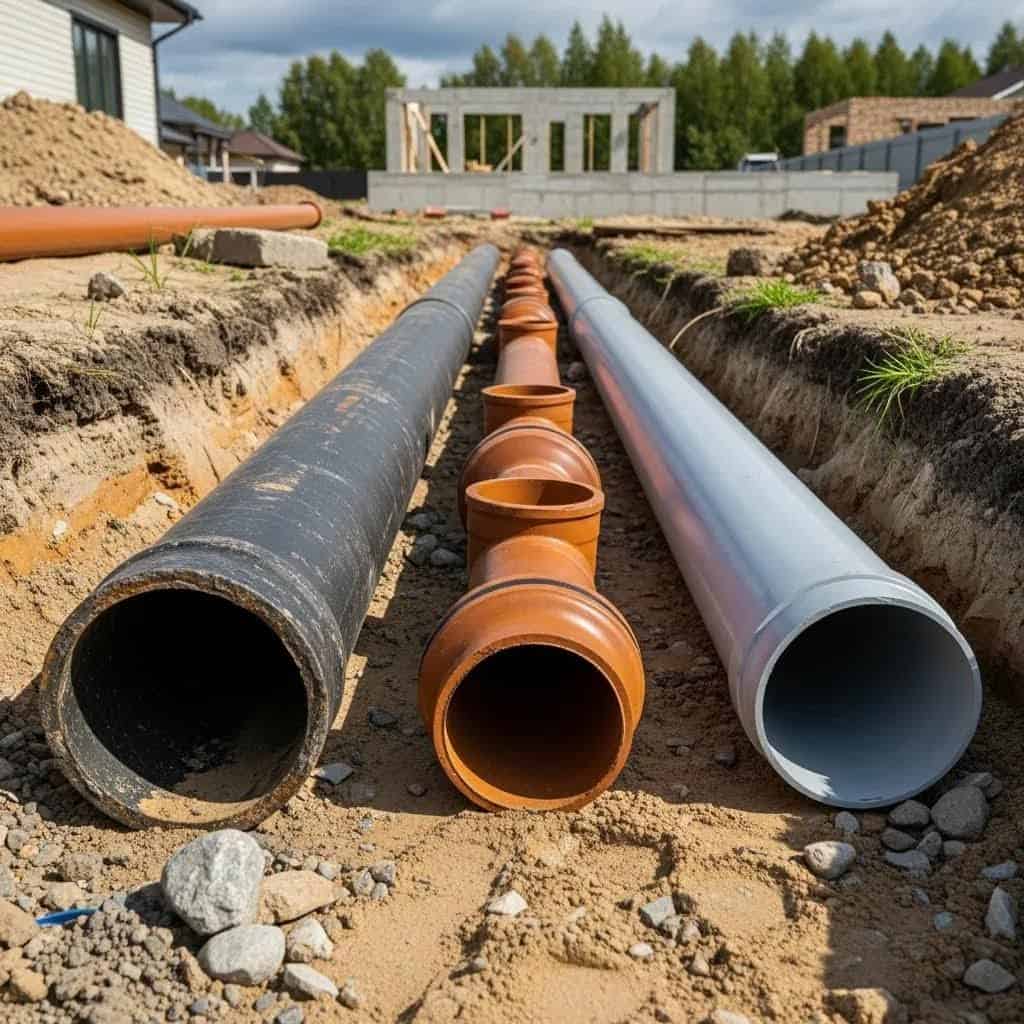
Lifespan depends on material and installation. Cast iron, clay, and PVC each offer different service ranges and vulnerabilities; knowing which your home has helps schedule inspections and plan replacements before failures occur.
| Material | Lifespan | Maintenance Tips |
|---|---|---|
| Cast Iron | 50–100 years | Regular inspections to check for corrosion. |
| Clay | 60–100 years | Avoid heavy landscaping near pipes to prevent damage. |
| PVC | 100 years or more | Ensure proper installation to prevent joint issues. |
Bison Plumbing provides maintenance, inspection, repair, and replacement services to help homeowners extend sewer pipe lifespan.
How Long Do Cast Iron, PVC, and Clay Sewer Pipes Last in Michigan’s Climate?
Michigan’s freeze-thaw cycles and soil conditions affect material performance: cast iron commonly lasts 50–100 years but corrodes in wet soils; clay often lasts 60–100 years but is prone to root intrusion and ground movement; PVC can exceed 100 years when joints are installed correctly. Consider these conditions when assessing any existing sewer line.
What Local Factors Affect Sewer Pipe Durability in Michigan?
Local conditions in Michigan—aging materials, frequent freeze-thaw, aggressive soils, and tree roots—drive premature failure. Awareness of these factors supports targeted maintenance and timely repairs. Local municipal guidelines confirm homeowner lateral responsibilities and common Michigan pipe materials like clay.
Empirical studies show that moisture, corrosive soils, biological activity, and temperature swings accelerate material degradation in sewer infrastructure. Research confirms PVC pipes can last 100+ year service life under proper installation conditions.
What Are the Key Signs of Sewer Line Failure Homeowners Should Watch For?
Watch for recurring backups, multiple slow drains, and persistent sewer gas odors. Read our guide on how to prevent sewer backups for proactive steps.
- Recurring Sewage Backups: Indicate a blockage or line failure.
- Multiple Slow Drains: Several slow drains suggest a main sewer issue.
- Persistent Sewer Gas Odor: Foul smells may mean a leak or break.
Early detection reduces damage and lowers repair costs. Learn more about signs you need sewer line replacement.
How Can Early Detection Prevent Costly Sewer Repairs?
Early detection limits repair scope and expense. Regular inspections reveal developing issues before they escalate. Check for unusual plumbing sounds, wet spots in the yard, or changes in water pressure. Prompt action at first signs typically leads to simpler, less costly repairs.
How Often Should Michigan Homeowners Schedule Sewer Line Inspections and Maintenance?
Schedule inspections at least every two years. Homes with older pipes, frequent backups, or large trees near sewer lines should inspect more often. Signs that warrant an immediate inspection include persistent slow drains, odd noises, or recent heavy rainfall affecting the yard.
Familiarity with available inspection techniques helps homeowners and professionals select the most effective diagnostic approach for a given situation.
What Maintenance Tips Help Extend Sewer Line Lifespan?
Practical maintenance steps extend service life and reduce emergency repairs. Key actions include regular inspections, targeted cleaning, and prompt response to early warning signs.
- Regular Inspections: Schedule inspections to catch issues early.
- Hydro Jetting: Clear buildup to prevent blockages. See hydrojetting vs snaking to choose the right method.
- Address Early Signs of Issues: Respond quickly to avoid larger problems.
Applying these measures consistently helps preserve pipe integrity and lowers the chance of expensive replacements.