

Complete Trenchless Sewer Repair Guide for Michigan Homeowners: Costs, Methods, and Benefits Explained
Trenchless sewer repair is a group of methods that fix or replace damaged sewer lines with minimal excavation. The two primary techniques used in Michigan are CIPP pipe lining — which forms a new seamless pipe inside the old one — and pipe bursting, which replaces the pipe entirely by fracturing it outward. Most Michigan homeowners can expect to pay $4,000–$15,000 depending on pipe length, condition, and access, with trenchless methods typically costing less than traditional open-cut excavation once restoration expenses are included.
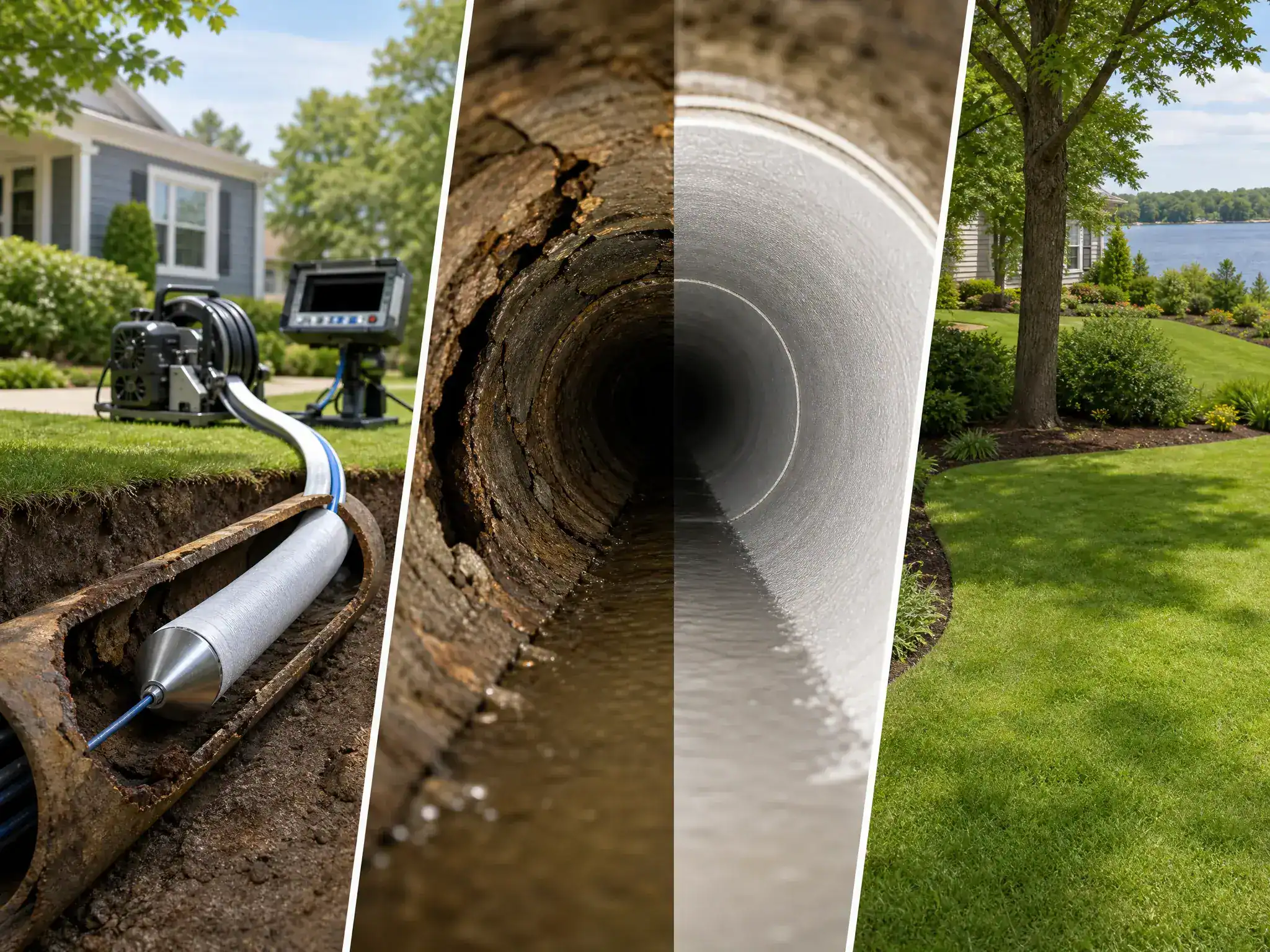
Key Takeaways
- Less invasive alternative to traditional sewer excavation
- Cured-in-place pipe lining (CIPP) and pipe bursting are the primary methods
- Typical Michigan costs range roughly $4,000–$15,000
- Minimizes landscaping and driveway disruption
- Lower restoration costs and long-term durability
- Sewer camera inspections are essential before repairs
- Choose licensed, experienced contractors with good reviews
Trenchless Sewer Repair for Michigan Homeowners: Costs, Methods, and Benefits
Trenchless repair lets technicians fix or replace sewer lines with little surface excavation. The two main options—cured-in-place pipe lining (CIPP) and pipe bursting—address most leaks, cracks, and failing pipes while saving time and reducing landscape restoration. Bison Plumbing’s trenchless sewer repair services in Michigan cover both methods with upfront estimates and no hidden fees.
How Much Does Trenchless Sewer Repair Cost in Michigan?
Costs depend on method, damage extent, pipe length and access. Michigan homeowners should budget roughly $4,000 to $15,000 for typical trenchless jobs, though site-specific factors change final pricing. For a detailed Michigan-specific cost breakdown, see our guide to trenchless sewer repair costs in Michigan.
| Method | Cost Range | Factors Influencing Cost |
|---|---|---|
| CIPP Pipe Lining | $80 – $300 per foot | Length of the pipe, accessibility |
| Pipe Bursting | $100 – $300 per foot | Diameter of the pipe, soil conditions |
| Sewer Camera Inspection | $200 – $500 | Complexity of the inspection, location |
Those price ranges reflect specialized equipment and materials. By reducing excavation and restoration needs, trenchless techniques can lower total project costs compared with full-open excavation.
What Are the Main Trenchless Repair Methods Available?
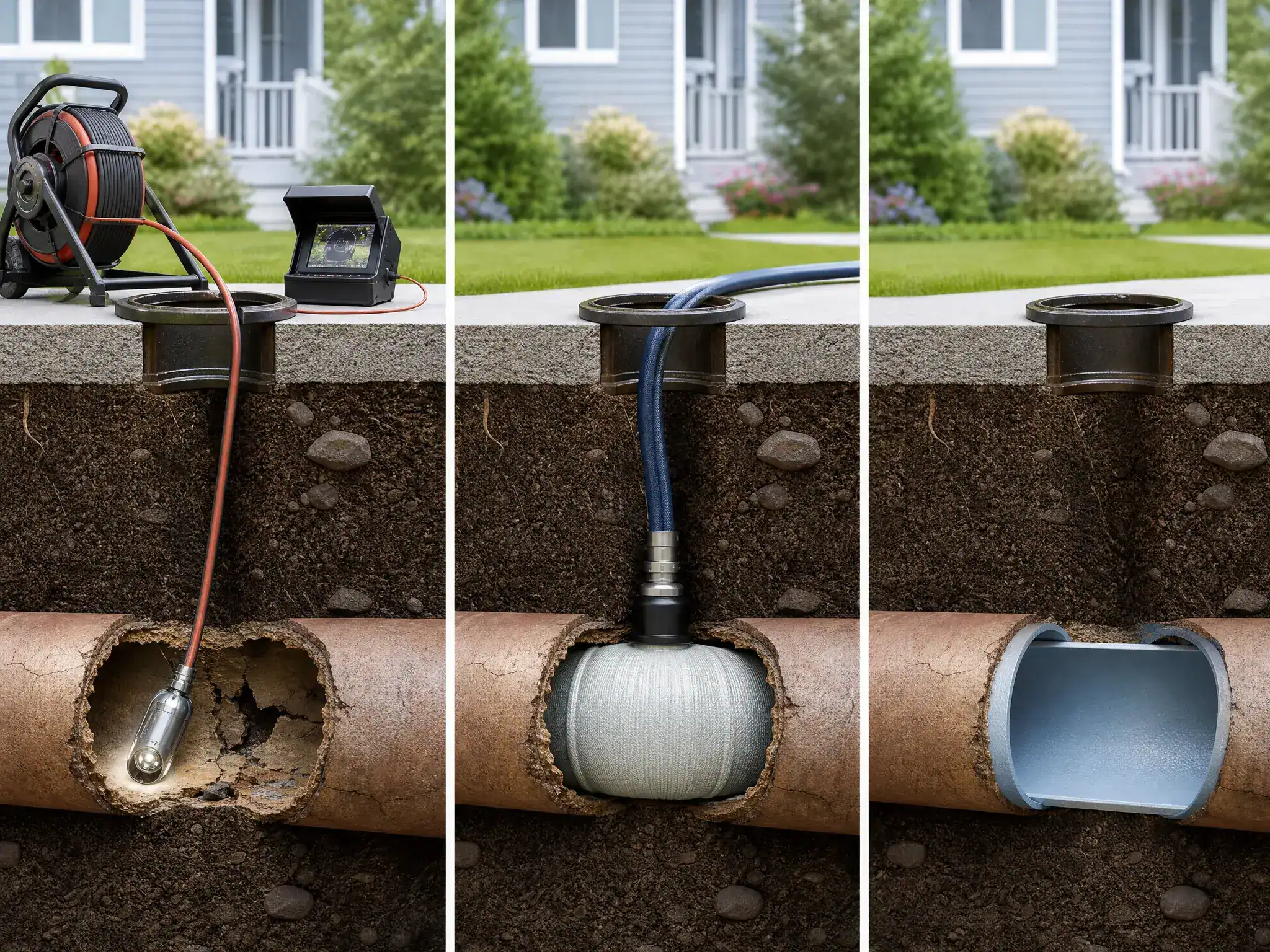
The two most common trenchless techniques are CIPP and pipe bursting. A sewer camera inspection determines which is appropriate.
CIPP inserts a resin-impregnated liner into the existing pipe, inflates and cures it in place, creating a new seamless pipe that repairs cracks and leaks without excavation.
Pipe bursting fractures the old pipe while pulling a new pipe into place and is used when full replacement is needed rather than lining.
What Are the Key Benefits of Trenchless Sewer Repair Over Traditional Excavation?
Key advantages of trenchless sewer repair include:
- Minimal disruption: Limits digging and preserves landscaping and driveways.
- Cost-effectiveness: Lowers restoration labor and material expenses over time.
- Longevity: Modern liners and replacement pipes resist corrosion and can last decades.
Bison Plumbing offers trenchless services including CIPP and pipe bursting and can provide inspections and transparent estimates. A peer-reviewed environmental analysis of trenchless CIPP versus open-cut excavation (MDPI Applied Sciences) found that trenchless methods produce significantly lower environmental emissions and surface disruption. Before any repair, a sewer camera diagnostic inspection confirms exactly which method is appropriate for your pipe’s condition.
What Is Trenchless Sewer Repair and How Does It Work?
Trenchless repair begins with a sewer camera inspection to assess condition, then proceeds with either lining the existing pipe (CIPP) or replacing it via pipe bursting—both avoid major surface excavation and shorten project timeframes.
How Do Cured-in-Place Pipe Lining and Pipe Bursting Methods Differ?
CIPP forms a new pipe inside the old one and is ideal for cracks and leaks. Pipe bursting replaces the pipe entirely and is chosen when the original line is too damaged to line. If you’re unsure which situation applies to your home, our overview of signs that indicate sewer line replacement can help you understand when lining is no longer viable. For pipelines that need structural reinforcement short of full replacement, sewer line rehabilitation is another option worth exploring.
Why Is Trenchless Repair Preferred Over Traditional Excavation?
Trenchless methods limit property damage, typically finish faster, and reduce restoration costs, so homeowners return to normal use sooner and often face fewer follow-up repairs.
What Are the Typical Costs of Trenchless Sewer Repair in Michigan?
Expect variations by method, length, access, and pipe condition. Typical total project costs usually fall in the $4,000–$15,000 range, with per-foot pricing shown in the table above.
Key cost drivers include:
- Length of the pipe: More footage increases materials and labor.
- Accessibility: Hard-to-reach lines add time and cost.
- Pipe condition: Severely damaged lines can increase scope and price.
Which Factors Influence Trenchless Sewer Repair Pricing in Michigan?
Michigan pricing follows the same principles: pipe length and diameter, material and condition, and access difficulty are the main influencers. Michigan’s diverse soil types, including clay and sandy soils, can affect excavation difficulty and equipment choice.
- Pipe length and diameter: Larger or longer runs cost more.
- Material and condition: Aging or brittle pipes may need different solutions.
- Access difficulty: Confined or obstructed sites require extra equipment or time.
How Does Trenchless Repair Save Money Compared to Traditional Methods?
Trenchless work reduces excavation and the associated restoration labor and materials, often shortens project duration, and uses durable materials that lower the chance of near-term repeat repairs.
What Are the Key Benefits of Choosing Trenchless Sewer Repair?
Choosing trenchless repair provides:
- Reduced disruption: to yards and driveways.
- Potential long-term cost savings: from reduced restoration and fewer repeats.
- Durability: from corrosion-resistant liners and replacement pipes.
How Does Trenchless Repair Minimize Property Disruption and Downtime?
Avoiding open trenches preserves landscaping and reduces the project footprint; many jobs finish in a day or two, minimizing homeowner disruption.
What Is the Expected Longevity and Maintenance of Trenchless Repairs?
Materials used in CIPP and modern replacement pipes resist corrosion and can last for decades with reasonable maintenance. Periodic camera inspections help catch issues early.
How to Choose the Best Trenchless Sewer Repair Company in Michigan?
Look for firms with documented trenchless experience, clear pricing, transparent warranties, and positive customer feedback; obtain multiple estimates to compare scope and cost. You can also review what a professional sewer line repair assessment typically involves before contacting contractors.
What Should Michigan Homeowners Look for in a Trenchless Repair Contractor?
Verify licensing and insurance, confirm relevant trenchless experience, and request detailed written estimates that list inspections, materials, labor, and warranties.
Need Trenchless Sewer Repair in Michigan?
For effective and thorough trenchless sewer repair, trust Bison Plumbing’s experienced Michigan team. Not sure whether pipe lining or pipe bursting is the right fit? Read our detailed pipe lining vs. pipe bursting comparison before deciding. Ready to get started? Contact Bison Plumbing today for an inspection and transparent estimate.
Frequently Asked Questions
What are the environmental benefits of trenchless sewer repair?
Trenchless methods reduce soil disturbance, preserve vegetation, and typically require less heavy equipment, which lowers restoration impact and can reduce overall emissions compared with full excavation.
How long does a trenchless sewer repair typically take?
Most trenchless repairs are completed within a day or two; duration depends on pipe length, access, and the chosen method.
Are there any warranties or guarantees for trenchless sewer repairs?
Many reputable companies offer warranties on materials and workmanship; warranty lengths vary by method and provider—request full details before authorizing work.
What should homeowners do to prepare for a trenchless sewer repair?
Clear access points, inform neighbors if needed, and discuss any site-specific concerns with the contractor so technicians have unobstructed entry and the work proceeds smoothly.
Can trenchless sewer repair be used for all types of sewer line issues?
Trenchless repair suits many problems—cracks, leaks, and minor blockages—but severely collapsed pipes or extensive root intrusion may still require traditional excavation. A camera inspection determines suitability.
How can homeowners maintain their trenchless sewer repairs?
Schedule periodic sewer camera inspections, avoid flushing non‑biodegradable items or pouring harsh chemicals, and follow maintenance guidance provided by your contractor to extend the repair’s lifespan.