
Trenchless sewer repair in Michigan typically costs $4,000–$20,000 for most residential projects, with per-foot pricing ranging from $60–$300 depending on the method. CIPP pipe lining averages $80–$250 per foot; pipe bursting runs $100–$250 per foot. The final price depends on pipe length, diameter, depth, access difficulty, pipe material, and method. A professional sewer camera inspection is always the essential first step — it confirms which method fits your pipe and produces an accurate estimate.
If you've just been told you need sewer line work, the first question is almost always the same: how much is this going to cost me? And if a plumber mentioned "trenchless repair," you're probably wondering whether the no-dig premium is worth it — or just a convenience charge.
This guide gives Michigan homeowners a detailed, honest cost breakdown — not national averages that miss local market realities, but real pricing relevant to Southeast Michigan, Oakland County, Macomb County, and the Southeast Michigan area, where homes commonly run on aging cast iron, clay, and Orangeburg pipe systems.
We'll walk through every factor that drives cost, compare CIPP pipe lining against pipe bursting, and tell you exactly what to ask before signing any estimate.
What Is Trenchless Sewer Repair?
Trenchless sewer repair covers any method that rehabilitates or replaces a damaged underground sewer line without digging a full trench along its length. Instead of excavating your yard from one end of the damage to the other, trenchless techniques work through one or two small access points — typically an existing cleanout, a small entry pit, and/or an exit pit.
The two primary methods used in Michigan residential projects are CIPP pipe lining (cured-in-place pipe lining) and pipe bursting. Each works differently, applies to different damage types, and carries a different cost profile. Understanding both is essential before comparing any estimates.
Both methods have been in commercial and municipal use since the early 1980s and are now well-established for residential work across Southeast Michigan. Licensed Michigan plumbers specializing in no-dig sewer repair use both techniques regularly on the clay, cast iron, and Orangeburg pipes common throughout Oakland, Macomb, and Wayne County neighborhoods.
Michigan Trenchless Sewer Repair: Cost Overview
Here's a summary of the most common trenchless repair scenarios Michigan homeowners encounter, with realistic price ranges for this market:
| Repair Type | Per-Foot Range | Typical Residential Total | Best For |
|---|---|---|---|
| CIPP Lining (sectional/spot) | $80–$200/ft | $2,500–$8,000 | Cracks, root intrusion, isolated damage in structurally sound pipe |
| CIPP Lining (full line) | $100–$250/ft | $6,000–$15,000 | Aging lines with widespread hairline cracks, joint deterioration |
| Pipe Bursting (residential) | $100–$250/ft | $5,000–$15,000 | Severely deteriorated or collapsed pipe requiring full replacement |
| Pipe Patching (point repair) | N/A — flat rate | $1,500–$4,000 | Single isolated crack or joint failure in otherwise sound pipe |
| Traditional Excavation (comparison) | $50–$250/ft base | $7,500–$30,000+ | Full collapse, pipe under structure, no cleanout access |
Want a number for your own property? You can estimate your own sewer repair cost in about a minute — five questions, no phone call.
These ranges reflect Southeast Michigan market conditions including Oakland County and Macomb County labor rates. Prices vary by contractor, pipe condition, access difficulty, and whether permits, inspection fees, or pre-repair cleaning (hydro jetting) are included. Always request itemized quotes.
1 CIPP Pipe Lining Costs in Michigan
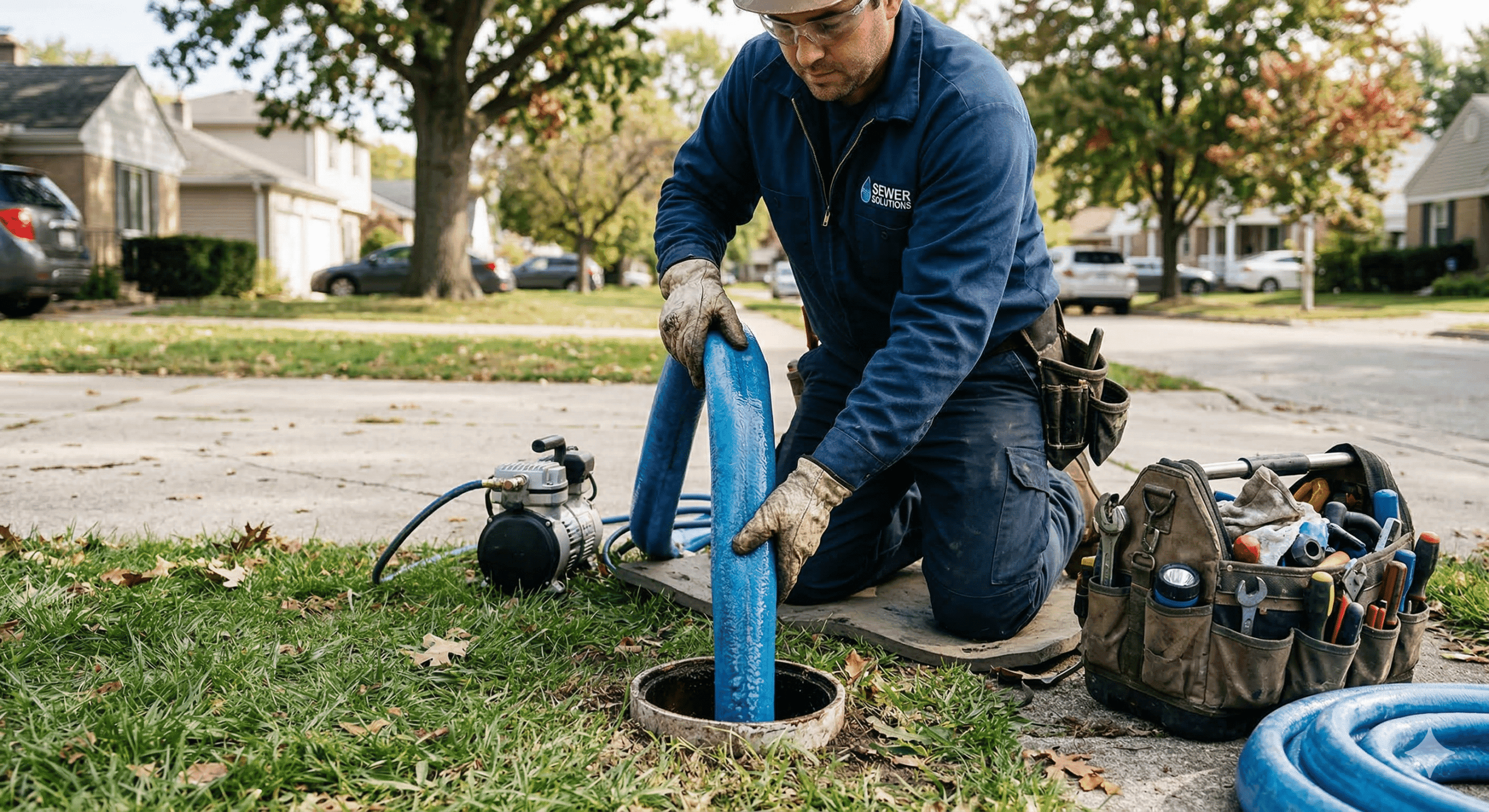
CIPP — cured-in-place pipe lining — is the most widely used trenchless repair method for Michigan residential sewer lines. A flexible liner saturated with epoxy resin is inserted through an existing cleanout or a single small access point. Once positioned, the liner is inflated with compressed air, pressing the resin against the interior pipe walls. It cures in place using hot water, steam, or UV light and hardens into a smooth, seamless new pipe within the old one.
The result is a jointless, root-resistant, corrosion-proof liner that seals cracks, closes open joints, and eliminates the entry points tree roots exploit. Most epoxy liner systems used in Michigan carry 50-year design lifespans, and many installers offer 10-year workmanship warranties.
For a typical Southeast Michigan residential sewer line running 40–60 feet from foundation to street connection, full-line CIPP lining generally falls in the $5,000–$12,000 range. Shorter sectional repairs start as low as $2,500. Learn more in our guide to how CIPP pipe lining works.
CIPP lining requires the host pipe to retain its basic round shape. Collapsed sections, severely displaced joints, or crushed pipe areas may make lining impractical — pipe bursting or spot excavation would be needed instead.
2 Pipe Bursting Costs in Michigan
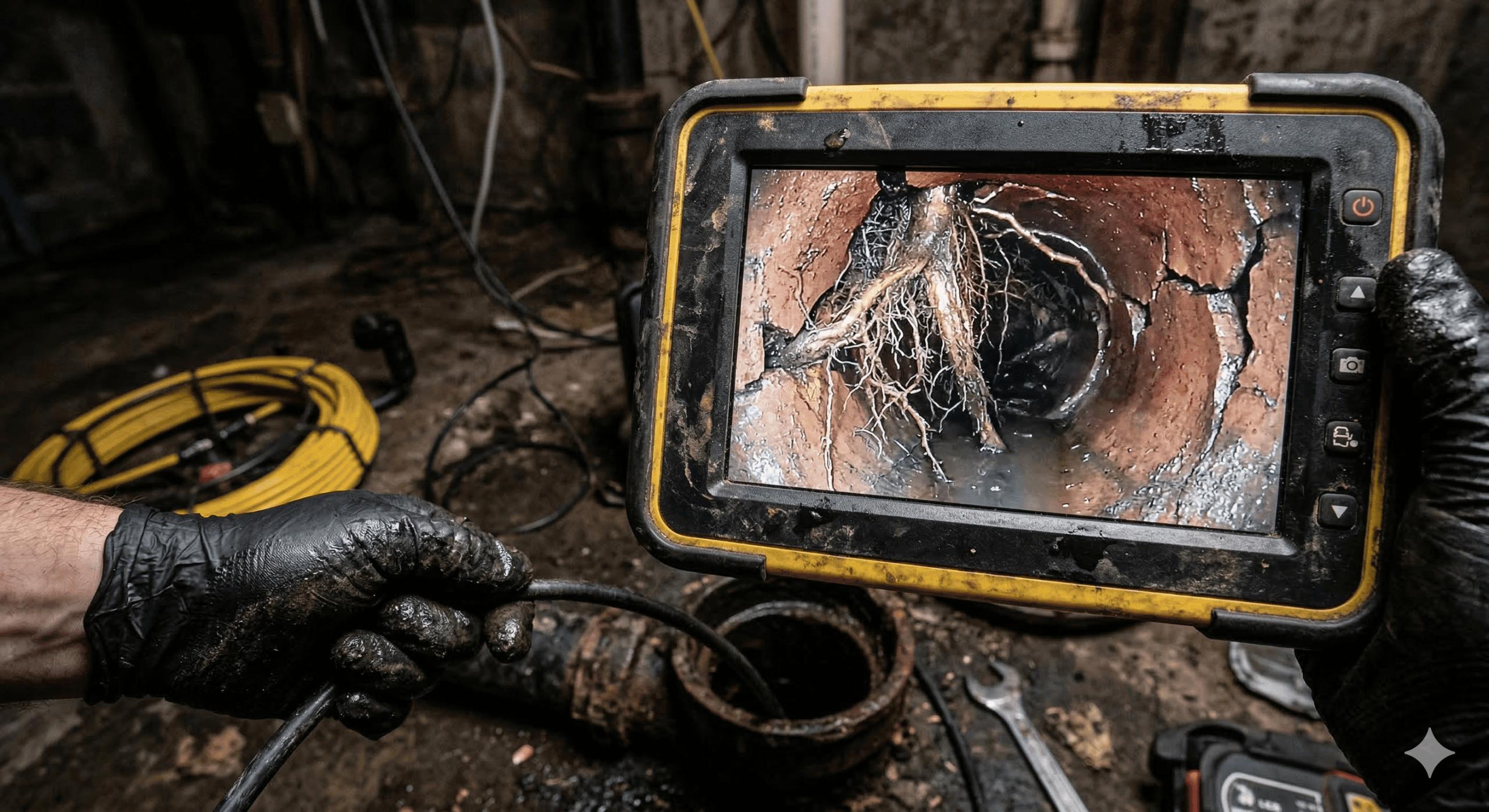
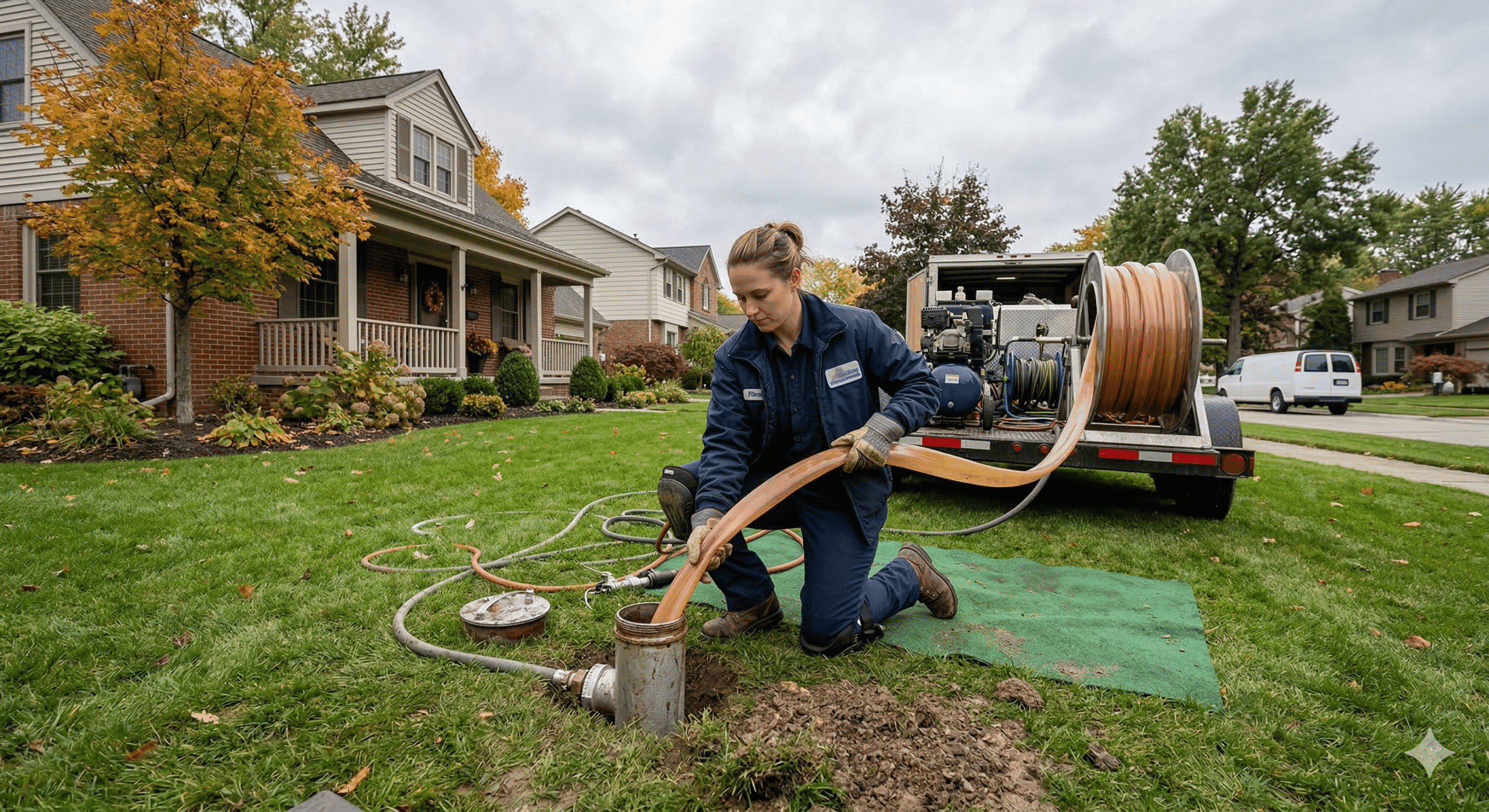
Pipe bursting is the trenchless method of choice when a sewer line is too deteriorated to be lined — collapsed sections, severely corroded cast iron, failing Orangeburg, or clay pipe with separated joints that prevent a liner from laying flat. It requires two small excavation pits (typically 2x2 feet each): one at entry, one at exit. A hydraulic bursting head feeds through the damaged pipe, fracturing it outward into surrounding soil while simultaneously pulling a new HDPE (high-density polyethylene) pipe into place behind it.
HDPE is impervious to corrosion, root penetration, and Michigan's freeze-thaw stress on buried infrastructure. Pipe bursting can also upsize the pipe diameter — useful for older Michigan homes where 4-inch sewer laterals struggle under modern flow loads.
For a 50-foot residential sewer lateral, pipe bursting in Michigan typically costs $6,000–$12,000. The two access pits add modest excavation and restoration costs not present in a cleanout-only CIPP job. Explore your options in our overview of trenchless sewer replacement methods.
Pipe bursting is not viable when the pipe runs beneath a structure without sufficient soil displacement room, or when surrounding soil is extremely rocky. A camera inspection will confirm whether bursting is feasible at your property.
7 Factors That Determine Your Trenchless Repair Cost
Two trenchless sewer jobs on the same street can carry very different price tags. Here's why — and what each factor means for your project:
1. Linear Footage of Pipe Being Repaired
The single biggest driver of cost is the length of pipe being treated. Most Michigan residential sewer laterals run 30–80 feet from foundation to city connection. Longer runs mean more liner material, more labor, and higher equipment costs. Per-foot pricing often decreases slightly on longer runs due to economies of scale, but total project cost always rises with length.
2. Pipe Diameter
Standard residential sewer laterals in Michigan are typically 4 or 6 inches in diameter. Larger diameters require more liner material for CIPP and heavier equipment for bursting — both increase per-foot pricing. Commercial or combined sewer lines running 8 inches or larger carry significantly higher costs.
3. Pipe Depth
Michigan's frost line sits at approximately 42 inches (3.5 feet) below grade, and most residential sewer lines are buried 4–10 feet deep to stay below it. Deeper pipes require more complex access pit excavation for pipe bursting entry and exit points. For CIPP work through cleanout access, depth has less cost impact — but deep cleanouts may require specialized equipment extensions.
4. Pipe Material and Condition
Cast iron pipe with heavy calcification or corrosion scaling often requires hydro jetting and mechanical descaling before a CIPP liner can bond properly — adding $300–$800 to the job. Severely corroded or scaled cast iron may not be a suitable liner host, necessitating pipe bursting. Orangeburg pipe (common in Southeast Michigan homes built 1940–1970) almost always requires bursting rather than lining due to its tendency to deform and collapse.
5. Access Difficulty
If your sewer line runs under a concrete driveway, deck, or established landscaping, access becomes more complex. Even trenchless methods require at least one point of access. Difficult access increases labor time, may require concrete cutting and patching, and adds to total project cost.
6. Required Pre-Repair Cleaning
CIPP lining requires a clean, debris-free pipe interior for the liner to bond properly. Most trenchless jobs include hydro jetting as part of the scope — but if your pipe has severe grease buildup, heavy root mass, or extensive debris, additional cleaning passes will be necessary. Always confirm whether hydro jetting is included in a lining quote or priced separately.
7. Permit and Inspection Fees
Major sewer line repairs in Michigan require a plumbing permit from the local enforcing agency. Permit fees vary by municipality but typically range $75–$300 for residential sewer work. In Oakland and Macomb Counties, many cities require a trench inspection before backfilling even the small access pits used in pipe bursting. A reputable contractor will pull all required permits and coordinate inspections as part of their service.
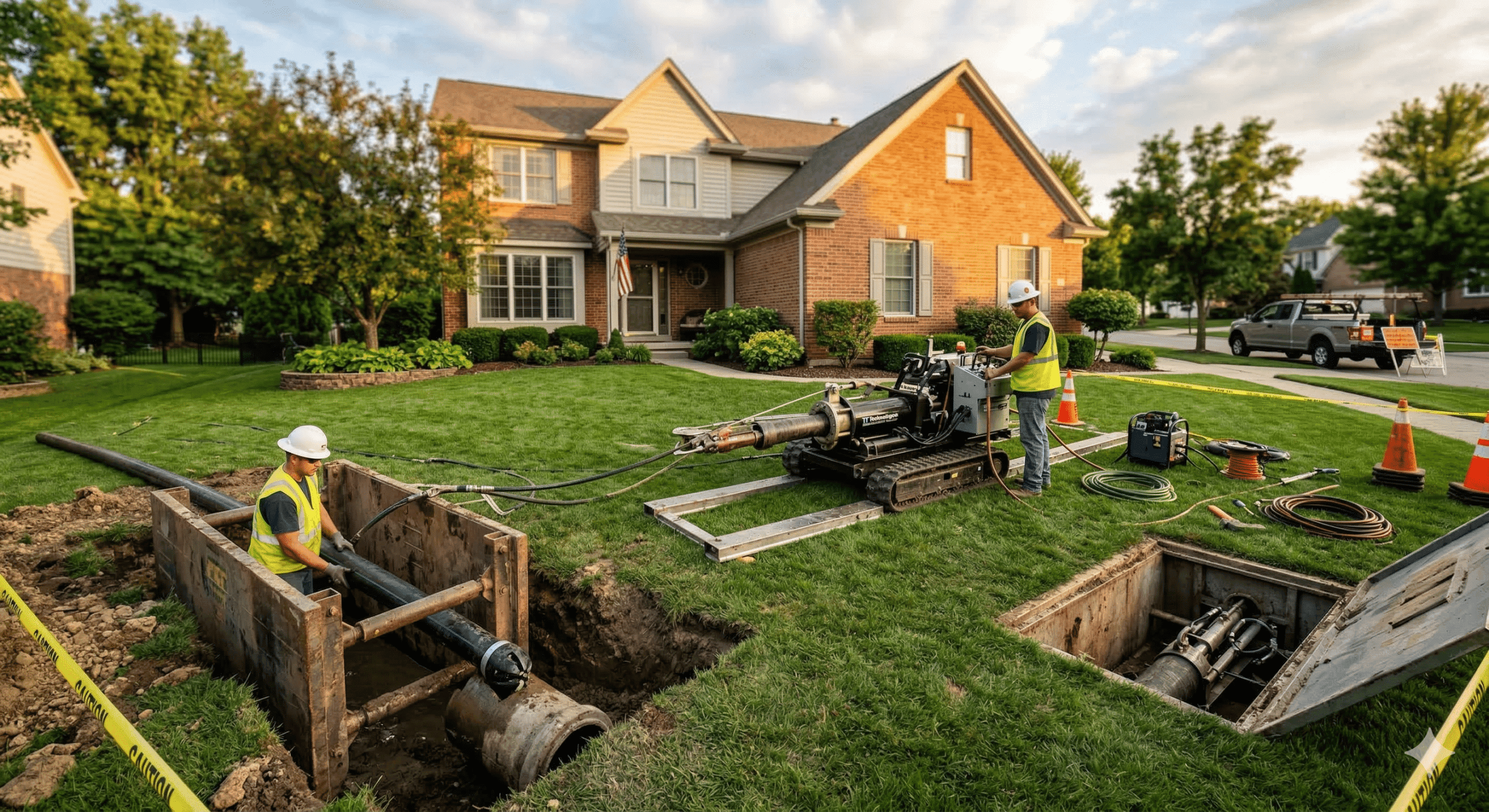
Sewer camera footage revealing root intrusion and joint separation in an aging clay sewer pipe.
Why Michigan's Older Housing Stock Changes the Cost Equation
Many residential neighborhoods across Oakland, Macomb, and Wayne Counties were developed between the 1940s and 1970s — an era when clay, cast iron, and Orangeburg were the standard pipe materials. These systems are now 50–80 years old, well past their design life, and deteriorating in ways that directly affect which repair method is viable and how much prep work is needed.
Michigan's freeze-thaw cycles are particularly harsh on underground pipe. Soil that heaves and contracts several inches each winter causes pipe joints to shift and separate — the bell-shaped clay pipe separations and offset joints frequently seen on camera footage throughout older Michigan neighborhoods.
Understanding your pipe material — confirmed during a camera sewer inspection — is the foundation of an accurate trenchless repair estimate.
Trenchless vs. Traditional Excavation: The True Cost Comparison
A common misconception is that traditional dig-and-replace sewer repair is simply cheaper than trenchless. That's often true on a per-foot basis — but only when comparing base repair costs in isolation. The full picture changes when you account for restoration costs.
Traditional excavation of a sewer line running under a typical Michigan front yard requires trenching from home to street — often crossing landscaping, a tree lawn, a sidewalk, and part of the driveway. Once the pipe is replaced, all of that must be restored:
| Cost Category | Trenchless Repair | Traditional Excavation |
|---|---|---|
| Base repair cost (50 ft line) | $5,000–$12,000 | $4,000–$10,000 |
| Driveway/concrete restoration | Minimal (small access pit only) | $1,000–$4,000 |
| Landscaping restoration | $0–$500 | $1,000–$3,500 |
| Sidewalk repair (city requirement) | Usually none | $500–$2,000 |
| Time to complete | 1–2 days | 2–5+ days |
| Total realistic project cost | $5,000–$12,500 | $7,500–$19,500+ |
The bottom line: trenchless methods are generally 30–40% less expensive than traditional excavation when total project costs are compared. The gap widens further when your sewer line runs under expensive hardscaping, a driveway, mature trees, or an established garden. For a deeper dive, see our guide on trenchless vs. traditional sewer repair.
Always ask your plumber for a quote that separates base repair costs from restoration costs. Some contractors quote the repair low and then bill heavily for concrete and landscaping restoration. An honest estimate accounts for the full scope upfront.
Michigan-Specific Cost Factors
Orangeburg Pipe — The Hidden Variable
Orangeburg pipe (bituminous fiber pipe) was widely used in Michigan residential construction from the 1940s through the early 1970s. It absorbs moisture over decades, losing structural integrity and deforming from round to oval or egg-shaped. Once deformed, it cannot accept a CIPP liner properly. Pipe bursting is the only viable trenchless solution for Orangeburg — and it typically costs more than a comparable clay or cast iron job because Orangeburg's soft structure requires careful equipment calibration.
Freeze-Thaw Joint Damage
Michigan winters produce significant ground movement that affects buried sewer infrastructure differently than more temperate climates. Bell-and-spigot clay pipe joints — common throughout older Oakland and Macomb County neighborhoods — are particularly vulnerable to separation from freeze-thaw cycling. When a camera inspection reveals a series of offset or separated joints, it complicates CIPP lining and affects per-foot cost estimates for the preparation work involved.
Tree Root Season
Michigan's abundant tree canopy — especially in Birmingham, Troy, Royal Oak, and Rochester Hills — means tree root intrusion is among the most common causes of sewer damage in the region. Root mass removal via mechanical cutting or hydro jetting is often required before any trenchless repair, adding to the scope. If root intrusion is your primary issue, see our resource on tree root removal from sewer lines.
Municipal vs. Private Line Responsibility
In Michigan, the sewer lateral from your home to the city main is typically the homeowner's financial responsibility — from the building's cleanout to the point it connects with the municipal main at or near the property line. The city is responsible for the main sewer line in the street. Before getting quotes, confirm with your municipality exactly where private responsibility ends. Some Oakland and Macomb County municipalities offer lateral repair cost-sharing programs worth asking about.
Trenchless Repair Options Bison Plumbing Offers Michigan Homeowners
After a camera inspection confirms the problem, our licensed team recommends the most cost-effective trenchless solution for your specific pipe and situation.
CIPP Pipe Lining
Resin-impregnated liner cured inside your existing pipe — no digging for most residential laterals. Learn about pipe lining.
Pipe Bursting
Fractures the old pipe outward while pulling new HDPE pipe into place — right for severely deteriorated or Orangeburg lines. See trenchless replacement.
Pipe Patching
For isolated cracks or damaged joints — a spot repair liner installs in hours and avoids full-line treatment costs. Learn about pipe patching.
Sewer Camera Inspection
The mandatory first step — waterproof camera confirms pipe condition and tells us which method and cost applies to your property. Schedule an inspection.
Hydro Jetting
High-pressure cleaning that clears root mass, grease, and scale before lining — essential pre-repair prep for many Michigan sewer lines. View hydro jetting services.
Sewer Line Rehabilitation
For lines with widespread deterioration — full rehabilitation combining inspection, cleaning, and trenchless repair. View rehabilitation services.
Permits & Inspections in Michigan
Michigan's Skilled Trades Regulation Act (Act 407 of 2016) requires plumbing permits for sewer line repairs involving pipe replacement or rehabilitation. Under state law, permits can be obtained by licensed plumbing contractors or homeowners installing work in their own single-family dwelling, provided inspections are completed.
For trenchless sewer work, always use a licensed Michigan plumbing contractor who pulls the required permits. Working without a permit on sewer repairs can result in:
- Fines from the local building department
- Required removal and re-inspection of completed work
- Issues at resale — unpermitted sewer work is a common red flag in home inspections
- Voided manufacturer warranties on liner systems
Permit costs in Macomb and Oakland County typically run $75–$250 for residential sewer lateral work. A licensed contractor includes permit fees in their project estimate and coordinates required inspections without additional homeowner effort.
When Trenchless Repair Won't Work
Trenchless methods are appropriate for the majority of Michigan residential sewer problems — but not all. A camera inspection may reveal conditions that make trenchless impractical:
- Complete pipe collapse with no remaining structure — both CIPP and pipe bursting require some remnant pipe to work through. A fully collapsed section may require localized excavation.
- Severely offset or misaligned joints — joints shifted so far out of alignment that a liner can't span the offset or a bursting head can't pass through may require spot excavation at the problem location.
- Pipe running beneath a building foundation — trenchless techniques can navigate beneath structures but require clear access at both ends of the treatment section.
- Active sewer backup with no cleanout access — if there's no accessible cleanout and pipe configuration prevents equipment insertion, emergency partial excavation may be needed before trenchless work can proceed.
Where trenchless methods aren't viable for the entire line, a hybrid approach is often most cost-effective: localized excavation at the problem area combined with trenchless work on accessible sections. See our overview of sewer line repair options for the full range of approaches.
How to Get an Accurate Trenchless Repair Quote
The most important thing to understand about trenchless sewer repair pricing: no honest contractor can give you a firm price without first inspecting your pipe. Any quote given over the phone based on descriptions alone is either a rough ballpark or an estimate that will change once work begins.
Step 1 — Schedule a Sewer Camera Inspection First
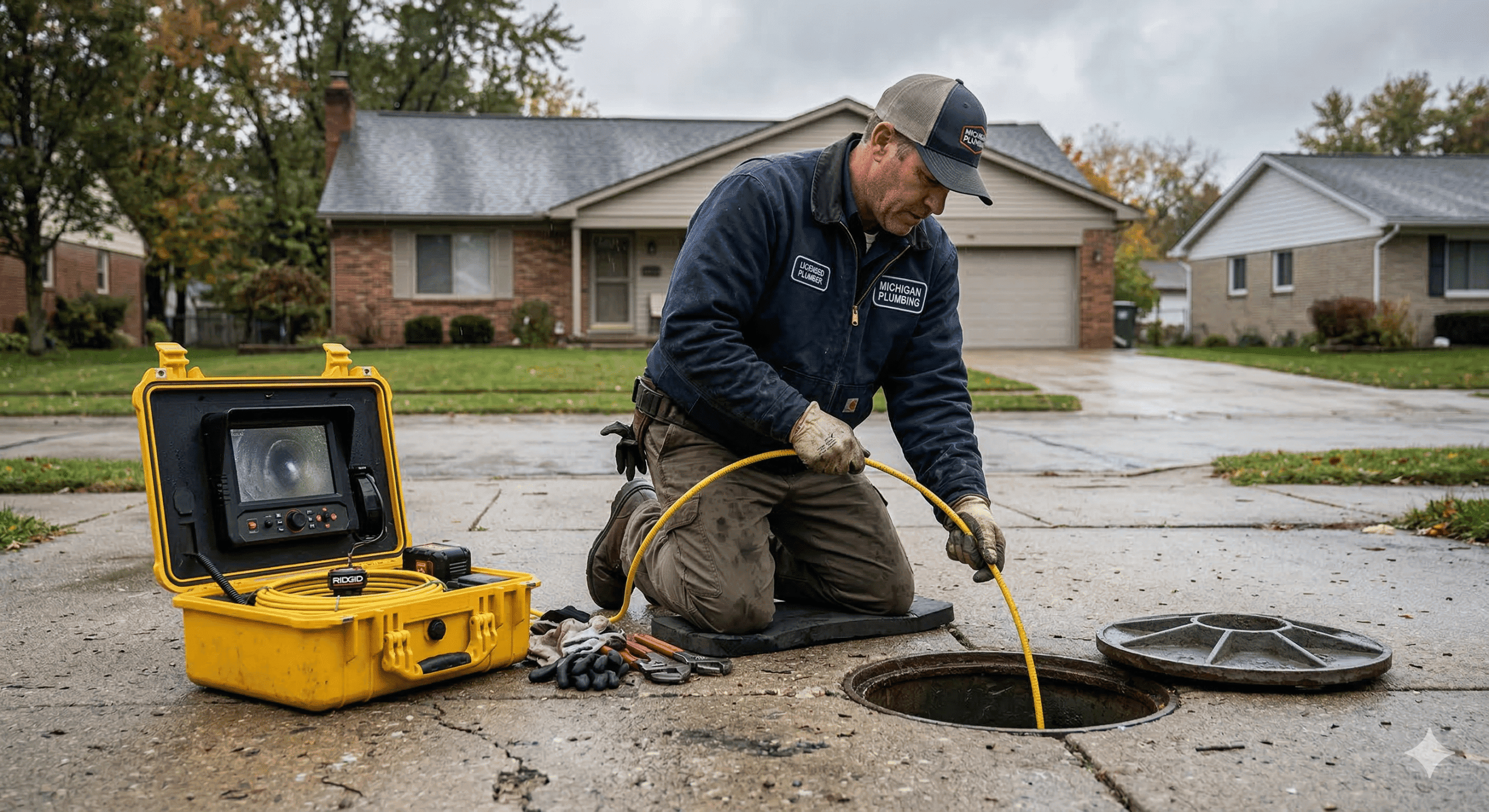
A professional sewer camera inspection typically costs $200–$400 in Southeast Michigan gives you and the contractor an exact view of pipe condition, damage type and location, diameter, and any obstacles. It determines which repair method is viable. In many cases, the inspection cost is credited toward the project if you proceed with the repair. Learn what a sewer camera inspection diagnostic reveals.
Step 2 — Request an Itemized Written Estimate
Ask for a written estimate that separately breaks out: inspection cost, cleaning/prep cost, repair method and per-foot cost, access pit excavation and restoration (if applicable), permit fees, and warranty terms. Comparing three quotes for the same scope of work protects you from pricing disparities.
Step 3 — Verify Licensing and Insurance
Michigan sewer line repair must be overseen by a licensed plumbing contractor with a certified master plumber on staff. Verify the contractor holds a current Michigan plumbing contractor license before signing anything. Ask for proof of general liability and workers' compensation insurance.
Step 4 — Ask About Financing
Trenchless sewer repair is a significant investment. Many Michigan plumbing contractors offer financing options to spread cost over time. Ask about financing terms before committing. Bison Plumbing offers financing — see our financing page for details.
Get a Clear, Itemized Trenchless Repair Quote for Your Michigan Home
Bison Plumbing serves Oakland, Macomb, and Wayne County homeowners with honest pricing, licensed master plumbers, and full-service trenchless repair — from camera inspection through final backfill. No surprises, no unanswered questions.
Schedule a Camera Inspection Today Or call us directly — we answer fastTrenchless Sewer Repair Cost in Michigan: A Quick Summary
- Total project cost: $4,000–$20,000 for most Michigan residential repairs, with per-foot rates of $60–$300 depending on method and conditions.
- CIPP pipe lining ($80–$250/ft) is the most common no-dig option — ideal for cracked or root-invaded pipe that is still structurally sound.
- Pipe bursting ($100–$250/ft) replaces the old pipe entirely — the right solution for severely deteriorated, collapsed, or Orangeburg pipe.
- Trenchless is 30–40% less expensive than traditional excavation once driveway, sidewalk, and landscaping restoration costs are included.
- Michigan-specific factors — Orangeburg pipe, freeze-thaw damage, tree root intrusion, and frost-line depth requirements — directly affect cost and method selection.
- A sewer camera inspection is always the first step — no reputable contractor can give a firm trenchless repair quote without one.
- All sewer line work in Michigan requires a plumbing permit — always use a licensed Michigan plumbing contractor who pulls permits and coordinates inspections.
- Not sure where your home lands in these ranges? Get a range for your specific home before you call anyone out.
Frequently Asked Questions About Trenchless Sewer Repair Cost in Michigan
For most residential properties in Southeast Michigan, trenchless sewer repair runs between $4,000 and $15,000 for a typical 40–60 foot sewer lateral. CIPP pipe lining typically costs $80–$250 per foot; pipe bursting runs $100–$250 per foot. The final total depends on pipe length, diameter, depth, material, access difficulty, and whether pre-repair cleaning is needed. A camera inspection is necessary to produce an accurate estimate for your specific property.
In most cases, yes — especially when your sewer line runs under hardscape, a driveway, established landscaping, or a tree lawn that would need full excavation and restoration. When restoration costs are included, traditional excavation typically costs 30–40% more than trenchless methods for the same repair scope. Trenchless also takes less time (usually 1–2 days vs. multiple days for excavation) and causes far less disruption to your property. Read our full comparison: trenchless vs. traditional sewer repair.
Standard homeowner's insurance policies in Michigan typically do not cover sewer line repair or replacement unless you've added a sewer line or service line endorsement rider to your policy. Some utilities offer optional sewer line protection programs. Review your policy documents or call your insurer to confirm coverage before a repair becomes necessary. Early detection through a camera inspection can mean catching a problem before it becomes an emergency — which saves repair costs regardless of insurance coverage.
Both major trenchless methods have excellent longevity. CIPP epoxy liners are rated for 50-year lifespans by most manufacturers, and many installers back their work with 10-year warranties. HDPE pipe installed through pipe bursting is corrosion-resistant, root-resistant, and rated for 100 years. Both significantly outlast the clay and cast iron pipes they rehabilitate or replace. Learn more in our guide on whether pipe lining is worth it.
Yes, in many cases — but it depends on the condition of the cast iron. Cast iron that is cracked or experiencing root intrusion while retaining its round shape is an excellent candidate for CIPP pipe lining. However, cast iron with heavy internal scaling or severe corrosion often requires mechanical descaling and hydro jetting before a liner can be installed, adding to cost. Severely corroded cast iron that has lost structural integrity may require pipe bursting instead of lining. A camera inspection will confirm which applies to your pipe. See our guide on cast iron pipe repair and replacement in Michigan.
Yes. Michigan's Skilled Trades Regulation Act requires plumbing permits for sewer line repairs involving pipe replacement or rehabilitation. Your licensed plumbing contractor will obtain the required permits from your local municipality and coordinate any required inspections. Working without permits on sewer line work can result in fines, required re-inspection of finished work, and complications at resale. Always confirm your contractor is pulling permits before work begins.
CIPP pipe lining creates a new epoxy liner inside the existing damaged pipe — it rehabilitates the old pipe from within. Pipe bursting fractures the old pipe outward and pulls a brand-new HDPE pipe into place. Lining is generally slightly less expensive on a per-foot basis because it requires minimal excavation (often just a cleanout), while bursting needs two small access pits. But if your pipe is too deteriorated for lining, the question becomes irrelevant — pipe condition dictates the method. For a detailed breakdown, see our comparison of pipe patching vs. pipe lining.
Research sources: 1 Day Trenchless — Michigan Trenchless Cost Data · Angi — Sewer Line Repair & Replacement Cost Guide · Michigan LARA — Plumbing Permit Requirements · NuFlow — Pipe Lining Cost Reference