

What Is CIPP Pipe Lining? A Michigan Plumber’s Plain-English Explanation

Quick answer: CIPP pipe lining (short for cured-in-place pipe) is a trenchless way to fix a damaged sewer line without digging up your yard. A plumber slides a flexible, resin-coated liner into your existing pipe, then hardens — or cures — it in place to form a smooth, jointless new pipe inside the old one. In Michigan, where many sewer laterals are aging clay pipe cracked by freeze-thaw and tree roots, it’s a popular repair because most jobs are finished in a single day.
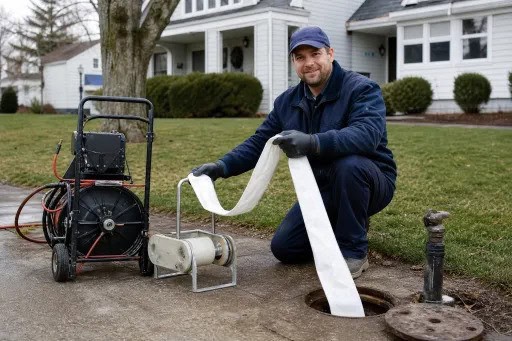
A worker in blue uniform and gloves kneels by an open manhole, holding a long white strip from a reel, with equipment on the ground and a residential house in the background.

If a plumber has told you that you need “CIPP” or “pipe lining,” and you nodded along while quietly wondering what on earth that means — you’re in the right place. This is the plain-English version, no jargon required. Pipe lining sounds technical, but the idea is simple, and once you understand it, the choice between lining and digging up your yard usually makes itself.

Below, we’ll explain what CIPP actually means, how the process works step by step, why Michigan pipes fail in the first place, how it compares to traditional digging, how long it lasts, what it costs, and when it is (and isn’t) the right fix.

Key Takeaways

  • CIPP stands for cured-in-place pipe — a new pipe formed inside your old one, with no digging.
  • A resin-soaked liner is inserted, inflated, and cured hard to create a seamless pipe.
  • It’s ideal for Michigan’s aging clay sewer laterals cracked by freeze-thaw and tree roots.
  • Most jobs finish in a single day, and the liner is built to last 50+ years.
  • A camera inspection comes first to confirm lining is the right fix for your pipe.

What Does “CIPP” Actually Mean?

CIPP stands for cured-in-place pipe. Break that name down and it tells you exactly what happens: a new pipe is created (cured) right inside (in place) your existing pipe. There’s no need to remove the old pipe at all — the new one forms within it.

The easiest way to picture it is like a cast on a broken arm, or a new sleeve slid inside an old one. A soft, flexible liner goes in, then hardens into a rigid, jointless pipe that lines the inside of the old one. It’s not a patch or a coating — it’s a full structural pipe. CIPP has been used to rehabilitate sewers since the early 1970s, and as the industry overview of cured-in-place pipe notes, it’s now one of the most widely used pipe-repair methods in the world.

How Does CIPP Pipe Lining Work? (Step by Step)
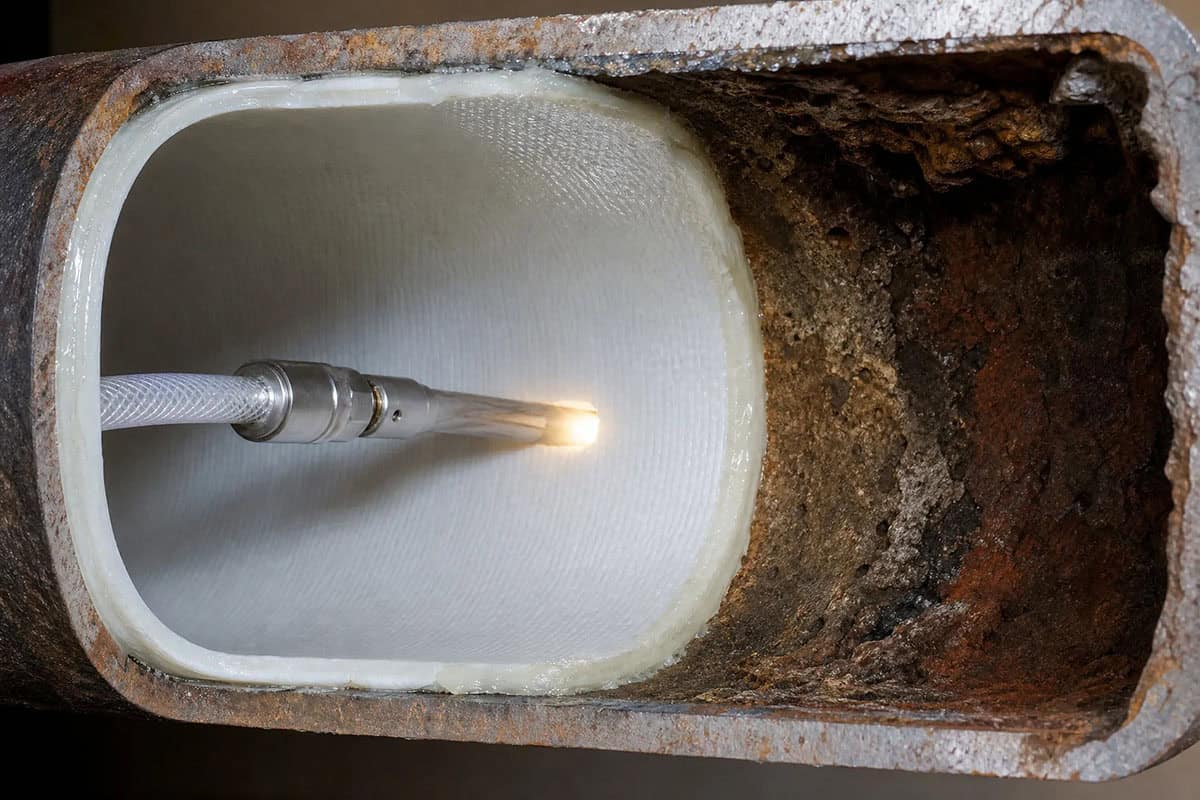
A close-up of a corroded metal pipe with a section lined with a smooth, white material. A hose-like device with a light is inserted into the newly lined inner surface.

The process is straightforward, and a typical residential job is done in a single day. Here’s what actually happens:

  1. Camera inspection: a small HD sewer camera goes down the line to find the damage and confirm the pipe can be lined. You see exactly what the plumber sees.
  2. Cleaning: the pipe is thoroughly cleaned — often with high-pressure water — to clear roots, grease, and debris so the liner can bond.
  3. Liner insertion: a felt or fiberglass liner saturated with resin is pulled or inverted into the existing pipe through an existing access point.
  4. Curing: the liner is inflated against the pipe walls and cured — hardened — using hot water, steam, or UV light, forming a new solid pipe.
  5. Final inspection: a second camera pass confirms the new pipe is smooth, seamless, and sealed end to end.

That curing step is the heart of it. As the trenchless-industry authority NASSCO explains in its pipe rehabilitation overview, the cured liner becomes a structural pipe that seals out roots and groundwater. At Bison, our technicians are certified through the American Pipelining Solutions Training Academy and install to ASTM F1216 and F1743 standards — the same specs municipalities require.

Why Would I Need It? Why Michigan Pipes Fail
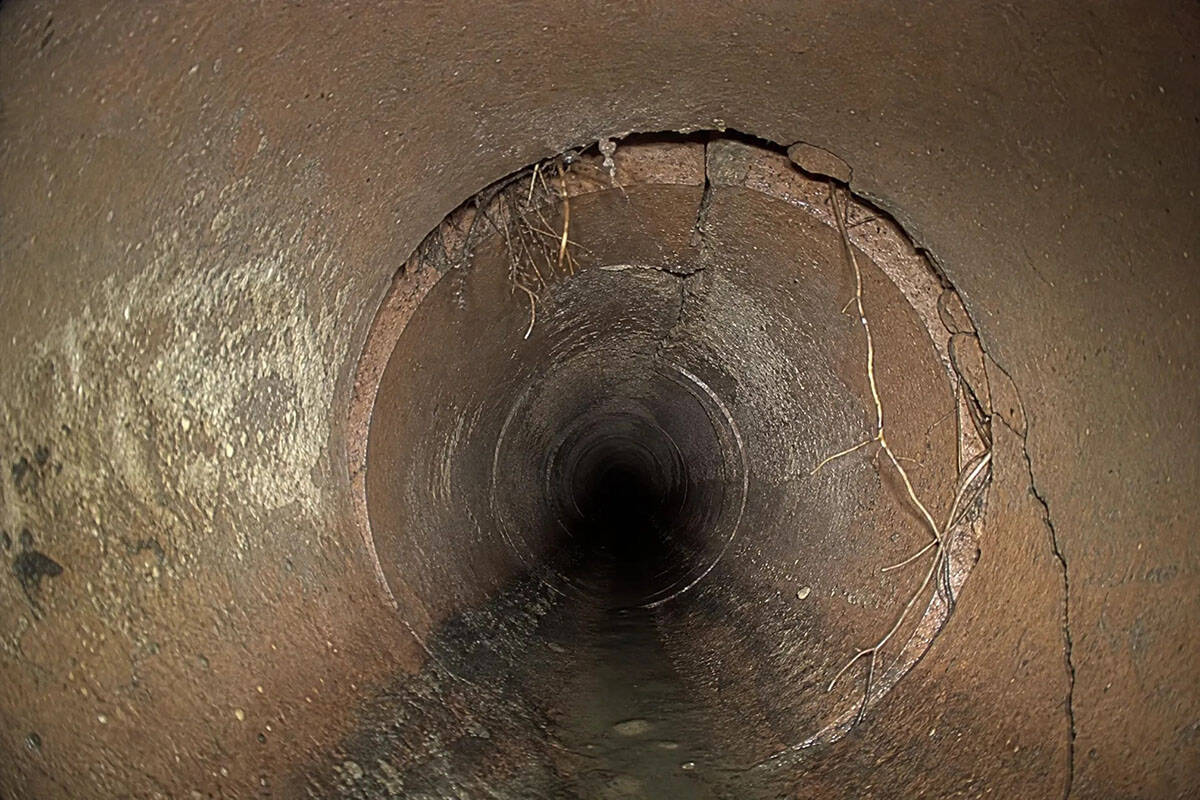
A view inside an old, cracked, and rusty metal pipe with roots protruding through the cracks and a small stream of water running along the bottom. The tunnel fades into darkness in the distance.

CIPP exists because old pipes wear out, and Metro Detroit has a lot of old pipe. If you live in Macomb or Oakland County, your sewer lateral — the line running from your house to the city connection — is often 50 to 80 years old. The usual culprits:

  • Aging clay pipe: in older communities like Warren, Royal Oak, Ferndale, and Birmingham, that lateral is frequently clay tile that has simply reached the end of its design life.
  • Freeze-thaw cracking: Michigan’s hard freeze-thaw cycles shift the soil and crack brittle old pipe over time.
  • Tree-root intrusion: roots find the tiny cracks and joints in old lines, work their way in, and cause repeat backups.
  • General wear: decades of use leave pipes corroded, scaled, and prone to leaks and collapses.

If you’re dealing with repeated backups, slow drains across the house, sewage smells, or wet patches in the yard, those are classic signs of a failing lateral — exactly the situation CIPP was made to fix.

CIPP vs. Digging Up Your Yard

The old way to fix a sewer line was to excavate — dig a trench across your yard (and sometimes your driveway) to reach and replace the pipe. Trenchless sewer repair with CIPP avoids almost all of that. Here’s the difference that matters to a homeowner:

Factor Traditional Digging CIPP Lining
Your yard Trenched and torn up Left intact
Driveway / landscaping Often damaged Untouched
Time Days to weeks Usually one day
Restoration cost High (re-sod, repave) None
Mess and disruption Significant Minimal

For most homeowners, the appeal is obvious: the same pipe gets fixed, but the lawn, trees, and driveway stay exactly where they are — and you’re not waiting a week with the yard dug open.

How Long Does It Last — and Is It Really as Good?

This is the question most homeowners ask, and it’s a fair one. A cured CIPP liner isn’t a temporary fix; it’s a structural pipe with a design life of at least 50 years, and often more. Because it’s jointless and smooth on the inside, it actually resists root intrusion and flows better than the cracked clay pipe it replaced.

In other words, you’re not getting a patch — you’re getting a new pipe that happens to have been built inside the old one. That’s why CIPP is trusted for everything from home laterals to municipal sewer mains.

How Much Does CIPP Cost in Michigan?

Cost depends on how long the pipe is, what condition it’s in, and which method fits. As a general guide, trenchless sewer repair in the Metro Detroit area runs from about $1,500 to $20,000. A short, simple lining job sits at the low end; a long or complex line runs higher. These are typical ranges, not a quote — a camera inspection is what produces an exact figure.

It’s also worth weighing the hidden costs of digging: tearing up and rebuilding a yard, driveway, or landscaping adds up fast, and lining avoids those entirely. Financing options are available to make the repair easier to manage.

Is CIPP Right for Every Pipe?

Honestly, no — and any plumber who says otherwise isn’t leveling with you. CIPP is ideal for pipes that are cracked, leaking, or root-damaged but still largely intact. A pipe that has fully collapsed or lost too much of its wall may need a different trenchless method, like pipe bursting, or in some cases traditional replacement.

That’s exactly why the camera inspection comes first. It shows the true condition of your pipe and tells us — and you — whether lining is the right call. No guessing, no upselling: the camera decides.

CIPP Pipe Lining, at a Glance

  • CIPP = cured-in-place pipe: a new, seamless pipe formed inside your old one, no digging.
  • Steps: inspect, clean, insert the resin liner, cure it hard, re-inspect — usually one day.
  • Perfect for Michigan’s aging clay laterals cracked by freeze-thaw and tree roots.
  • Lasts 50+ years; not for fully collapsed pipe — a camera inspection confirms the fit.
  • Questions about your line? Call Bison Plumbing at (586) 754-4281 to schedule a camera inspection.

Frequently Asked Questions

What does CIPP stand for?

CIPP stands for cured-in-place pipe. It creates a new, seamless pipe inside your existing damaged pipe by inserting a resin-saturated liner and curing it hard in place — no digging required.

How long does CIPP pipe lining last?

A properly installed liner has a design life of at least 50 years, and many last longer. It’s a structural, corrosion-resistant pipe that also seals out the roots and groundwater that damaged the original line.

Is CIPP lining as good as a brand-new pipe?

For most sewer lines, yes. A cured liner is a structural pipe in its own right, built to standards like ASTM F1216 and F1743. It’s jointless and smooth, so it resists roots and improves flow versus old cracked clay.

How much does CIPP pipe lining cost in Michigan?

In Metro Detroit, trenchless sewer repair typically ranges from about $1,500 to $20,000 depending on pipe length, condition, and method. A camera inspection gives an exact quote, and financing is available.

Can any pipe be lined with CIPP?

Most cracked, leaking, or root-damaged pipes can — but not all. A fully collapsed pipe may need pipe bursting or replacement instead, which is why a camera inspection always comes first to confirm the right fix.

Related Guides

The Bottom Line

CIPP pipe lining is one of those repairs that sounds complicated and turns out to be refreshingly simple: a new pipe, formed inside your old one, with your yard left untouched and the whole thing usually done in a day. For Michigan homes fighting aging clay laterals, freeze-thaw cracks, and tree roots, it’s often the smartest, least disruptive fix available.

Not sure whether your pipe is a candidate? Contact Bison Plumbing for a camera inspection and a straight answer — we’ll show you what’s going on inside your line and walk you through your options in plain English.

About Bison Plumbing: Bison Plumbing is a family-owned, licensed plumbing company based in Warren, MI, serving Rochester Hills, Rochester, and communities across Macomb and Oakland County since 1998. Our technicians are certified through the American Pipelining Solutions Training Academy (APSTA) and use Picote Solutions HD camera inspection before and after every trenchless job, installing CIPP to ASTM F1216 and F1743 standards. Call (586) 754-4281 to schedule a camera inspection — financing available.

Table of Contents
American Flag Banner Detail

Request A Quote

When Bison Plumbing is on the job, you can rest assured that your job will be done right, on time, and for a fair price. Contact us today for a Free Quote! 

Apply Now

Financing Plans Available

Bison Plumbing has partnered with Green Sky to offer simple financing plans for every family and every budget. The financing process takes just minutes and can be completed in three easy steps.

Step 1

Visit our financing partner Green Sky to begin the application process (see below). Bison Plumbing Reference Number: 81085618

Step 2

Submit the application. Approval is often granted within minutes.

Step 3

Get low monthly payments for $0 down on repairs, comfort systems, plumbing services, and more.

No Interest if Paid in 6 Months

Subject to credit approval. Interest is billed during the promotion period but all interest is waived if the purchase amount is paid in full within 6 months. 

Reduced APR of 9.99% for 96 Months!

Subject to credit approval. Fixed APR of 9.99% for 96 months. Payment example for $10,000 purchase on approval date. 96 payments of $151.68. 

No Interest if Paid in 12 Months

Subject to credit approval. Interest is billed during the promotion period but all interest is waived if the purchase amount is paid in full within 12 months. 

Reduced APR of 0% for 6 Months!

Subject to credit approval. 6-month purchase window.  0.00% interest rate during a 6-month promotional period followed by a fixed interest rate of 9.99% for 120 months. Payment example assumes one time $10,000 purchase on approval date (8.94% APR) with 6 months of $0.00 payments followed by 120 amortized of $132.10