

Quick answer: A CCTV sewer inspection sends a small, waterproof, high-definition camera on a flexible cable through your sewer line while a technician watches a live monitor. It lets a plumber see the real condition inside the pipe — roots, cracks, blockages, bellies, and more — without digging or guessing. In Michigan, where many homes have aging clay and cast iron lines, it’s the single most important diagnostic step, and it should always come before any sewer repair. You can’t fix what you can’t see.

When something’s wrong with a sewer line, the hardest part used to be figuring out what, exactly, and where. The pipe is buried underground, out of sight, so for decades the only way to find a problem was to dig and hope you guessed right. CCTV sewer inspection changed that completely.
Today, a sewer camera inspection lets a plumber see inside your pipe in real time, diagnose the exact problem, and pinpoint its precise location — all without lifting a shovel. This guide explains how the technology works, everything it can reveal, and why, especially for Michigan’s older sewer lines, it should be the first step in any sewer service.
Key Takeaways
- A CCTV inspection runs a live HD camera through your sewer line — no digging.
- It reveals roots, cracks, holes, bellies, blockages, joint problems, and pipe condition.
- It pinpoints the exact location and depth of a problem for a targeted repair.
- It’s essential for Michigan’s aging clay and cast iron lines — and before buying a home.
- Always inspect before repairing: you can’t fix what you can’t see.
How CCTV Sewer Inspection Works
CCTV stands for closed-circuit television — the same idea as a closed-circuit television security camera, scaled down and ruggedized to travel through a pipe. The equipment is purpose-built for the job, and the process is straightforward:
- Access the line: the technician enters the sewer through an existing access point, usually a cleanout, so there’s no digging.
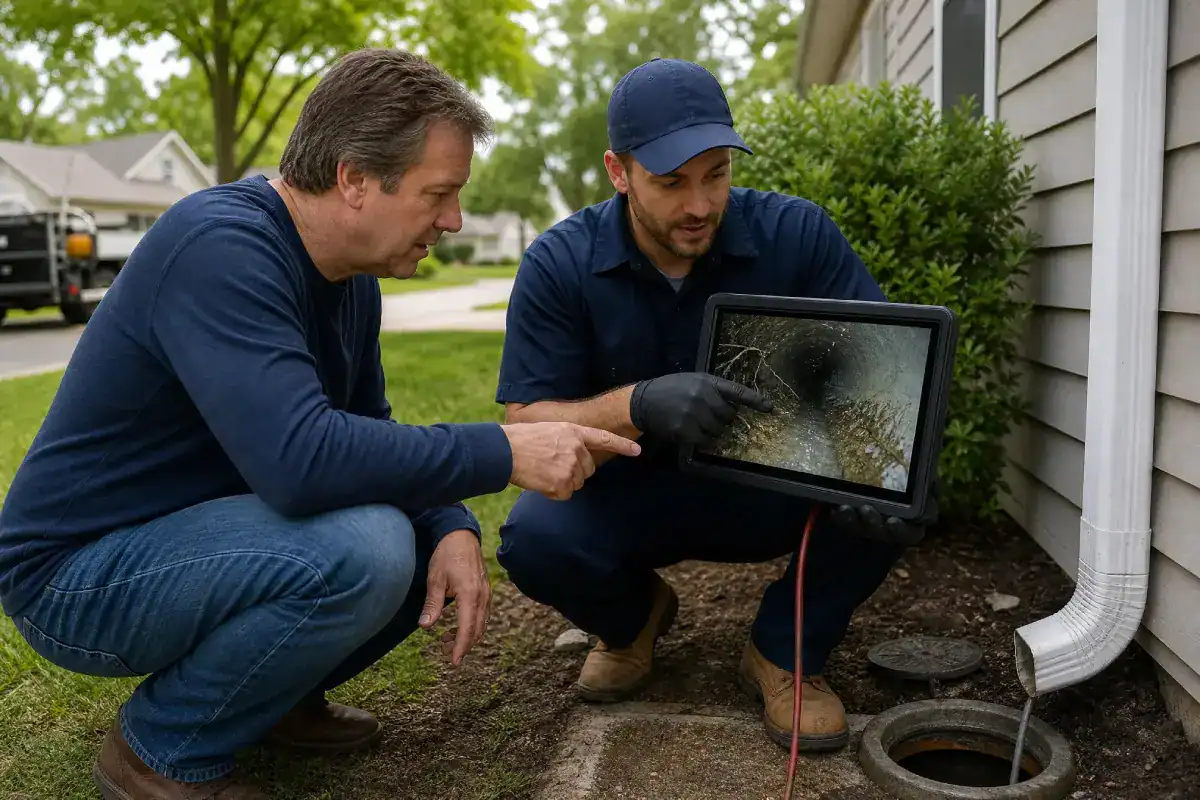
- Feed the camera: a small, waterproof, high-definition camera mounted on a flexible push-rod or cable is fed into the pipe and guided along its length.
- Watch live: the camera streams real-time, lighted video to a monitor, so the technician (and you) can see the inside of the pipe as it travels.
- Locate the problem: a transmitter in the camera head lets the tech pinpoint its exact position and depth from the surface using a locator — so any repair goes right where it’s needed.
- Record and review: the footage is recorded so the findings can be reviewed, documented, and shown to you.
At Bison Plumbing, we use a high-definition Picote camera system and show you the footage directly — you see what we see. That transparency is the whole point of the technology: it replaces guesswork with a clear picture everyone can look at together.
What a Sewer Camera Inspection Reveals

This is where the technology earns its keep. A clear look inside the pipe reveals problems that are impossible to diagnose from the surface:
| What the camera finds | Why it matters |
| Tree root intrusion | The top cause of sewer trouble in Michigan; roots invade joints and block flow |
| Cracks and fractures | Let in groundwater and soil, leading to leaks and worse over time |
| Holes and corrosion | Common in aging cast iron; a sign the pipe is failing |
| Bellies (sagging pipe) | Low spots that collect water and waste, causing repeat clogs |
| Grease, scale & buildup | Narrows the pipe and triggers recurring backups |
| Blockages & foreign objects | Pinpoints what’s clogging the line and exactly where |
| Offset or separated joints | Misaligned sections that catch debris and leak |
| Pipe material & condition | Identifies clay, cast iron, Orangeburg, or PVC and how much life is left |
Crucially, the inspection doesn’t just identify the problem — it locates it. Knowing a crack is, say, 42 feet down the line and six feet deep means a repair can be targeted to that exact spot instead of excavating blindly.
Why It Matters for Michigan Homes
Michigan’s housing stock makes camera inspection especially valuable. Many homes across Macomb and Oakland County were built decades ago and still have their original clay or cast iron sewer laterals — pipe that’s now 50 to 80 years old. Add in our mature trees hunting for water and the relentless freeze-thaw cycles that crack and shift buried pipe, and you have lines that are prime candidates for hidden damage. A trenchless sewer repair or any other fix starts with knowing exactly what those aging pipes look like inside.
Industry assessment standards reflect how central camera inspection has become to pipe evaluation. As the trenchless authority NASSCO emphasizes, a documented condition assessment is the foundation of choosing the right rehabilitation method — which is exactly what a CCTV inspection provides for your home.
Sewer Inspections Before Buying a Home
Here’s a use case every Michigan home buyer should know about: a standard home inspection does not include the underground sewer line. That buried lateral is one of the most expensive components of a house to repair — and it’s completely invisible during a normal walkthrough.
A pre-purchase CCTV sewer scope looks inside the line before you close, revealing root intrusion, cracks, bellies, or an impending collapse. On an older home, it’s inexpensive insurance against a five-figure surprise a few months after move-in. If problems turn up, you can negotiate the repair or walk away with eyes open. It’s one of the smartest small investments a buyer can make.
Why a Camera Always Comes Before a Repair
If there’s one principle that ties this all together, it’s this: you can’t fix what you can’t see. A camera inspection turns a sewer problem from a guessing game into a clear diagnosis, and that changes everything about the repair that follows.
With an accurate picture of the problem and its exact location, the right method can be chosen — a targeted spot repair, a full pipe lining, pipe bursting, or in some cases just a cleaning — and applied precisely where it’s needed. Skipping the inspection means guessing, and guessing in sewer work leads to unnecessary digging, repairs that miss the real issue, and money spent twice. A reputable plumber inspects first, every time, and shows you the footage before recommending anything.
The Bison standard: We run an HD camera before and after every trenchless job — before, to diagnose and locate the problem, and after, to prove the repair worked. You see the footage both times. No guesswork, no hidden surprises, just a clear picture of your sewer line from start to finish.
CCTV Sewer Inspection, at a Glance
- A live HD camera travels through your sewer line — no digging required.
- It reveals roots, cracks, holes, bellies, blockages, joint issues, and pipe condition.
- It pinpoints the exact location and depth so repairs are targeted, not blind.
- Essential for Michigan’s aging lines and a smart step before buying a home.
- Want to see inside your line? Call Bison Plumbing at (248) 247-7707 to schedule a camera inspection.
Frequently Asked Questions
What is a CCTV sewer inspection?
It sends a small, waterproof, high-definition camera on a flexible cable through your sewer line while a technician watches a live monitor. It lets a plumber see the real condition inside the pipe — roots, cracks, blockages, bellies — without any digging or guesswork.
What does a sewer camera inspection reveal?
Root intrusion, cracks, holes and corrosion, bellies (sagging sections), grease and scale, blockages and foreign objects, offset joints, and the pipe’s material and condition — plus the exact location and depth of any problem.
How much does a sewer camera inspection cost in Michigan?
A standalone inspection typically runs $150 to $400 in the metro Detroit area, depending on access and line length. Many plumbers include or credit the cost when it leads to a repair — a small price for an exact diagnosis.
Do I need a sewer inspection before buying a home?
It’s strongly recommended, especially for older homes. A standard home inspection doesn’t include the sewer line, which is one of the costliest things to repair. A scope reveals hidden damage before you buy, so there are no surprises after closing.
Why should a camera inspection come before sewer repair?
Because you can’t fix what you can’t see. An inspection identifies exactly what’s wrong, where, and how severe, so the right method is applied in the right spot — instead of guessing, over-digging, and missing the real problem.
Related Guides
- What Is CIPP Pipe Lining? A Plain-English Explanation
- Is Pipe Lining Worth It?
- Trenchless Sewer Repair: A Guide for Michigan Homeowners
- Sewer Camera Inspection & Diagnostic Services
- Trenchless Sewer Repair Services
The Bottom Line
CCTV sewer inspection took the guesswork out of sewer service. Instead of digging to find a problem, a plumber can now send a camera down the line, see the issue in high definition, and pinpoint exactly where it is — in minutes, without disturbing your yard. For Michigan’s aging clay and cast iron lines, that clarity is invaluable, whether you’re chasing a recurring clog, planning a repair, or buying a home.
If your drains are acting up or you just want to know the real condition of your sewer line, the answer starts with a look inside. Contact Bison Plumbing to schedule a CCTV sewer inspection across Macomb and Oakland County — we’ll show you exactly what’s in your pipe and recommend the right next step, if any.
About Bison Plumbing: Bison Plumbing is a family-owned, licensed plumbing company based in Warren, MI, serving Rochester Hills, Rochester, and communities across Macomb and Oakland County since 1998. Our technicians use Picote Solutions HD camera inspection before and after every trenchless job, so every diagnosis and repair is backed by clear, recorded footage — you see what we see. Call (248) 247-7707 to schedule a CCTV sewer inspection.