

The signs you need sewer line replacement — rather than just a repair — include recurring sewage backups that return after cleaning, multiple slow drains throughout the home, persistent sewer gas odors, soggy or sunken yard patches above the pipe, chronic tree root invasions, and a sewer line over 50 years old made of cast iron, clay, or Orangeburg. A professional sewer camera inspection is the only reliable way to confirm whether your pipe needs repair, lining, or full replacement — and it should always be your first step.
Most sewer line failures don't arrive without warning. They announce themselves — first quietly, through a slow drain or an occasional gurgle, then louder, through a backup or a foul smell that won't go away. The problem is that homeowners often treat each symptom in isolation, calling for drain cleaning or snaking when the pipe itself has reached the point where no amount of cleaning is going to fix the underlying problem.
Understanding the difference between a pipe that needs to be cleaned, a pipe that needs to be repaired, and a pipe that needs to be replaced can save you thousands of dollars in repeated service calls — and protect your home from the kind of catastrophic sewage backup that causes serious structural and health damage.
This guide covers the 9 clearest signs that your sewer line needs replacement, explains what's happening underground when each symptom appears, and walks you through your replacement options — including no-dig trenchless methods that protect your yard and landscaping.
Repair vs. Replacement: How to Tell the Difference
Before diving into the warning signs, it helps to understand the basic decision framework. Not every sewer problem requires full replacement — and a good plumber will always start with a camera inspection before recommending either path.
| Situation | Likely Decision | Why |
|---|---|---|
| Isolated crack in otherwise sound pipe | Repair / Spot Lining | Damage is contained; rest of pipe is structurally intact |
| Single root intrusion at one joint | Root Clearing + Lining | Localized entry point; pipe structure still viable |
| Widespread corrosion along full line | Full Replacement | Structural integrity compromised throughout; repair won't hold |
| Pipe belly causing recurring pooling | Replacement | Gravity cannot be restored by lining; pipe section must be replaced |
| Orangeburg pipe (any age) | Replacement | Material is beyond end of life; deformed shape prevents lining |
| Cast iron or clay over 60 years old with multiple symptoms | Replacement | Cost of repeated repairs exceeds replacement; failure is inevitable |
| Collapsed section with intact sections elsewhere | Hybrid approach | Excavation at collapse + trenchless for remaining pipe |
A repair addresses a specific, identifiable problem in an otherwise healthy pipe. Replacement is warranted when the pipe itself — its material, age, or overall structural condition — has become the problem. The camera inspection is what tells you which situation you're in.
1 Recurring Sewage Backups That Return After Cleaning
If your sewer line has been professionally snaked or hydro-jetted and the backup or slow-drain problem returns within weeks or a few months, you are not dealing with a blockage problem. You are dealing with a structural problem. Cleaning removes whatever is obstructing the pipe — grease, roots, debris — but if the pipe itself has a belly (a sag where water pools), a collapsed section, or is so corroded and scale-encrusted that its interior diameter has shrunk, the obstruction will reform quickly no matter how many times the line is cleaned.
This is one of the most common ways Michigan homeowners end up spending $600–$1,200 per year on repeated drain cleaning calls, when a single sewer line replacement would have resolved the issue permanently at a fraction of the long-term cost.
Rule of thumb: if your sewer line has needed professional cleaning more than twice in 12 months, it's time for a camera inspection to find out what's actually driving the recurrence — not another cleaning.
2 Multiple Slow Drains Throughout the Home Simultaneously
A single slow drain — a bathroom sink that drains sluggishly — is almost always a localized clog. Hair, soap scum, toothpaste buildup. That's a drain cleaning job. But when your kitchen sink, your upstairs shower, your basement floor drain, and your first-floor toilet are all slow or sluggish around the same time, the problem is not in any of those fixtures. It's in the main sewer line that connects all of them to the municipal system.
This system-wide slowdown means the main line is significantly compromised — either partially collapsed, heavily scaled, bellied, or blocked by root mass that has grown across a wide span of the pipe. A camera inspection through the main sewer line cleanout will reveal exactly what's happening and where, and whether the condition of the pipe is one that can be rehabilitated or requires replacement.
Pay attention to the order in which fixtures slow down. Basement floor drains and first-floor toilets slow first — they're closest to the main line. When upper-floor fixtures also slow, the obstruction is typically significant.
3 Persistent Sewer Gas Odor Inside or Outside Your Home
A properly functioning sewer line is a completely sealed system. Wastewater and sewer gas travel in one direction — away from your home. If you're regularly detecting a rotten egg or sulfur smell inside the home — especially in the basement, near floor drains, or along exterior walls — or if you can smell sewage outside in the yard near where your sewer lateral runs, the seal has been broken somewhere along the line.
The primary culprit is hydrogen sulfide (H₂S), a gas released as organic waste decomposes in your sewer line. Cracks, open joints, separated pipe sections, or a corroded pipe wall allow this gas to escape into the surrounding soil and migrate back into your living spaces. Unlike a localized repair situation, a pervasive or recurring sewer odor — one that returns even after plumbing traps are checked and floor drains are filled — typically indicates structural pipe failure along a section of the line that needs replacement. Learn more about what causes sewer smell in your home and when it signals a serious problem.
Sewer gas is not just unpleasant — hydrogen sulfide poses genuine health risks at elevated concentrations. Never ignore a persistent sewer odor inside your home. Ventilate and call a licensed plumber for an inspection the same day.
4 Soggy, Wet, or Sunken Ground in Your Yard
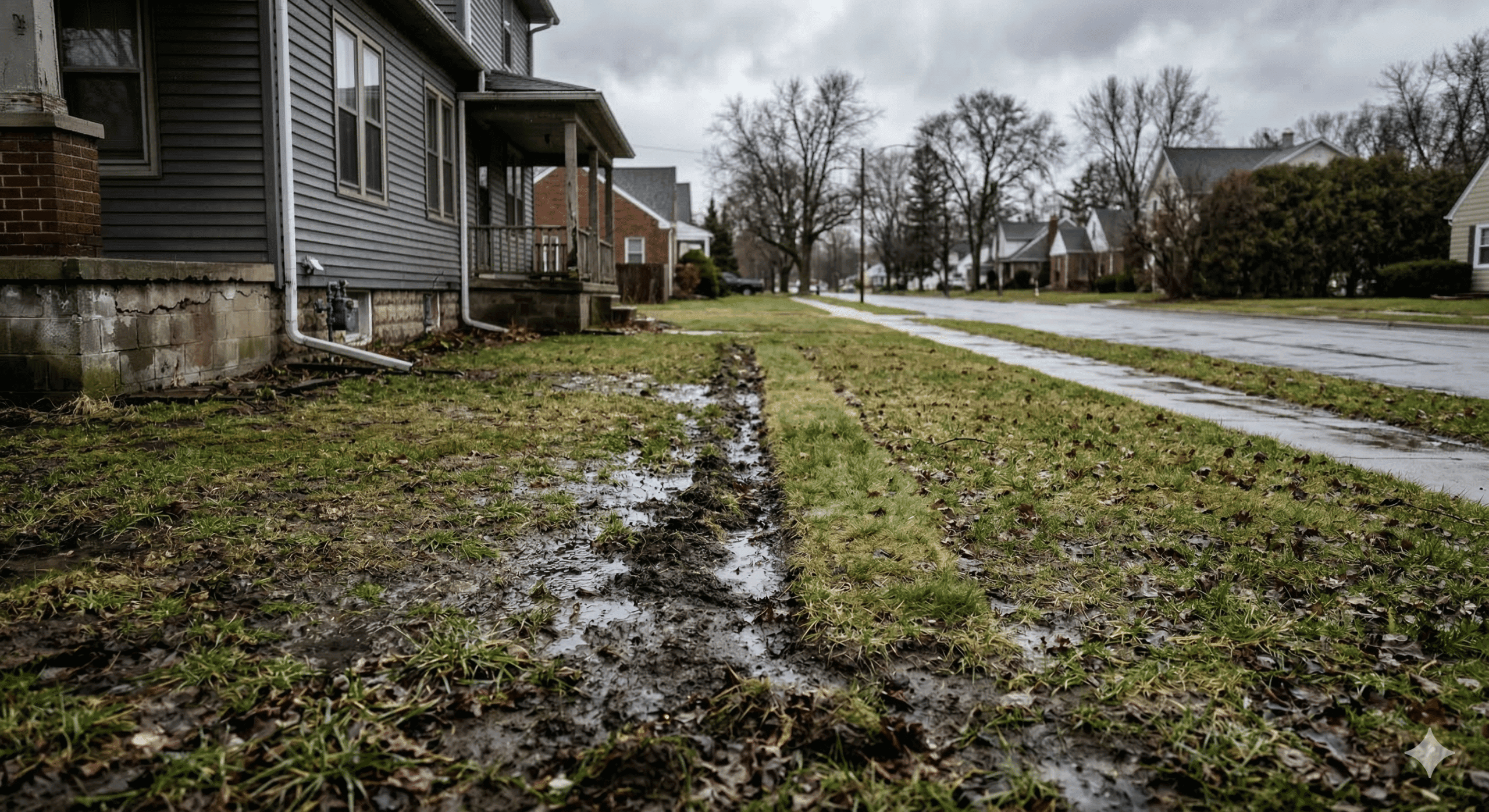
A concentrated soggy or perpetually wet patch in your yard — one that doesn't correlate with rainfall or irrigation and is present even during dry weather — is a strong indicator that a sewer pipe below is actively leaking. When a pipe cracks or a joint separates underground, wastewater saturates the surrounding soil. Over time, this moisture wicks upward and pools at the surface.
If the wet area is accompanied by a soft or spongy feel underfoot, a sunken depression, or a faint sewage odor, the leak is almost certainly from your sewer lateral. The path to confirm it is a camera inspection followed by a dye test if needed. And the solution is nearly always replacement — not repair — because the soil saturation indicates the pipe has been leaking long enough to create significant structural compromise in the surrounding ground.
Actively leaking raw sewage is a public health hazard. Keep children and pets away from soggy yard areas until a professional has assessed the source. Contact a licensed plumber the same day you identify this symptom.
5 A Strip of Unusually Green or Fast-Growing Grass
Raw sewage is, chemically speaking, a nutrient-rich fertilizer. When a sewer pipe leaks underground, the surrounding soil absorbs those nutrients, and the grass and vegetation directly above the pipe route takes them up — producing a noticeably greener, thicker, faster-growing strip of lawn that follows the buried pipe in a straight line from your foundation toward the street.
This is one of the subtler signs of sewer line failure, and one that Michigan homeowners frequently dismiss as a lawn care quirk. But if you notice a lush patch that consistently outperforms the surrounding lawn — especially if it also feels soft underfoot or carries a faint odor — you are likely looking at a slow leak in your sewer lateral that has been ongoing long enough to measurably affect soil chemistry. The advantage of catching this sign early is that the pipe may still be in a condition where trenchless CIPP lining is viable — before the leak worsens to the point of requiring full replacement.
Check whether the lush strip runs in a straight line from your foundation toward the street or property line — this follows the typical sewer lateral path. A curved or scattered pattern is less likely to be sewer-related.

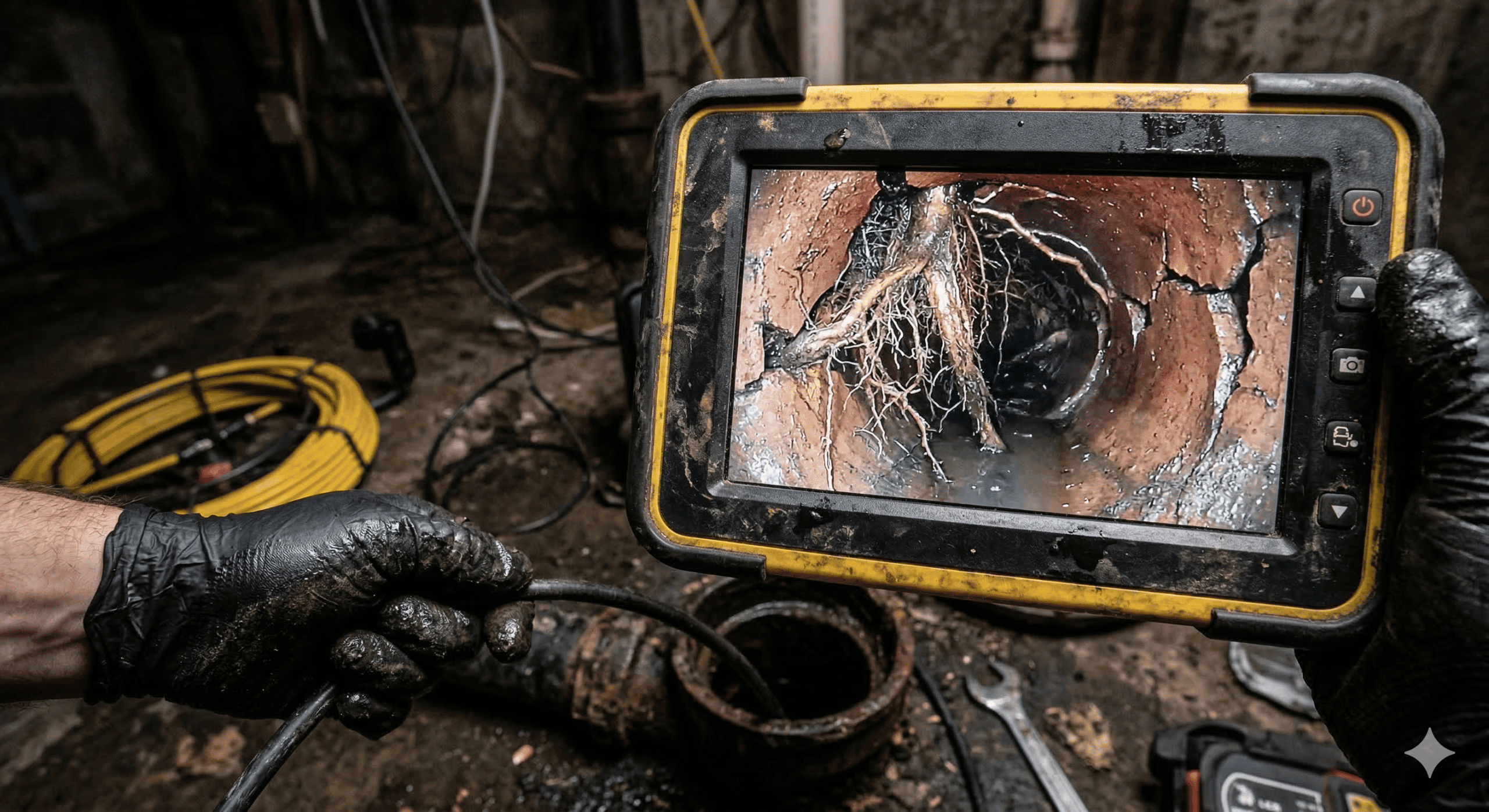
Camera inspection footage revealing tree root intrusion at a clay pipe joint — a common finding in Metro Detroit homes built before 1975.
Why Michigan Homes Face Elevated Sewer Replacement Risk
Tens of thousands of homes across Oakland, Macomb, and Wayne Counties were built between the 1940s and 1970s using pipe materials that are now well past their designed service life. Cast iron, clay, and Orangeburg were the residential sewer standards of that era — all three are now aging into failure across Southeast Michigan simultaneously.
Michigan's harsh freeze-thaw cycles compound the problem. Soil that contracts and expands several inches each winter exerts constant lateral stress on buried pipe joints, accelerating the bell-and-spigot separation that creates root entry points and outward leaks.
If your home was built before 1975 and you haven't had a sewer line inspection in the last five years, your pipe may already be showing failure signs that simply haven't surfaced indoors yet.
6 New Cracks in Your Foundation or Walls Near the Sewer Line
This is one of the most serious consequences of a long-term, ignored sewer line leak. When a sewer pipe fails beneath or near a home's foundation and saturates the surrounding soil continuously, that soil loses its load-bearing stability. The ground subsides unevenly, and the foundation — which depends on consistent soil support — begins to crack, shift, or settle. New, widening cracks in basement walls, floor slabs, or exterior foundation concrete that appear without other explanation (no recent seismic activity, no construction nearby) warrant immediate investigation of the sewer line below.
Once foundation cracking begins, the sequence of repairs required is costly and complex — foundation stabilization cannot happen until the sewer leak driving the soil erosion is identified and stopped. A licensed plumber must address the sewer line before a foundation contractor can assess the structural damage. Do not delay a sewer inspection if you are seeing new foundation movement.
Horizontal cracks in basement block walls and stair-step cracks in brick or block are particularly concerning when they appear alongside any drainage symptoms. Call a licensed plumber and a structural engineer simultaneously.
7 Chronic Tree Root Invasion That Keeps Coming Back
Tree roots don't penetrate healthy, fully sealed sewer pipes. They exploit entry points — cracks, open joints, corroded sections — that already exist in the pipe. Root clearing via mechanical cutting or hydro jetting removes the root mass that has grown inside the pipe, but it does not repair the crack or open joint that the roots entered through. Within months — sometimes weeks, depending on tree species and proximity — new root growth re-enters through the same compromised point.
If you have had your sewer line root-cleared and the roots have returned more than once, clearing is treating the symptom. The crack or joint failure that allowed root entry is the underlying problem, and it will continue to get worse. Depending on what the camera inspection reveals, the solution may be CIPP pipe lining (which seals the entry points permanently) or full replacement if the pipe has been so extensively damaged by root penetration that its structural integrity cannot support a liner. Learn more about how tree roots damage sewer lines and what your options are.
Willows, silver maples, cottonwoods, and large oaks are the most aggressive root-growth trees in Michigan. If your sewer lateral runs near any of these species and you are experiencing repeated root intrusion, the entry points are almost certainly expanding with each growing season.

8 Your Pipe Is Over 50 Years Old and Made of Clay, Cast Iron, or Orangeburg
Pipe age and material are among the most reliable predictors of imminent sewer line failure — and they apply to a significant portion of the Metro Detroit housing stock. Here's what each legacy material means for your sewer line today:
Cast Iron Pipe
Cast iron was the dominant residential sewer pipe material from the early 1900s through the late 1970s. Its typical service life is 50–75 years — meaning the vast majority of cast iron sewer lines installed in Michigan homes before 1975 are at or past their design lifespan. Internal corrosion is the primary failure mode: scale builds up over decades, progressively narrowing the interior diameter and creating rough, scale-encrusted walls that snag debris and accelerate blockage formation. Eventually, the pipe wall corrodes through entirely, creating leaks and collapse risk.
Clay (Vitrified Clay) Pipe
Clay pipe was the predecessor to cast iron in older neighborhoods, commonly installed in homes built from the early 1900s through the mid-1960s. Clay pipe resists corrosion well — but it is extremely brittle. Michigan's freeze-thaw soil movement is particularly destructive to clay pipe, causing the bell-and-spigot joints to separate and the pipe sections themselves to crack under lateral soil pressure. Once clay pipe begins to fail at the joints, root intrusion accelerates rapidly. Clay pipe over 60 years old with any joint separation visible on camera is a strong replacement candidate.
Orangeburg Pipe
Orangeburg — a bituminous fiber pipe made from wood pulp and coal tar — was widely installed in Metro Detroit homes built between the mid-1940s and early 1970s as a low-cost cast iron alternative during the post-WWII housing boom. Its design life was 30–50 years. That window has closed. Orangeburg absorbs moisture over time and loses structural integrity, deforming from round to oval or egg-shaped — which prevents CIPP lining from being installed properly and causes chronic partial blockages as wastewater pools in the deformed sections. Any property still running on Orangeburg sewer pipe is effectively operating on borrowed time, and replacement is not a question of if but when.
Not sure what material your sewer line is made of? A camera inspection will identify the pipe material immediately. If your home was built before 1980 and you've never had the sewer line inspected, this alone is sufficient reason to schedule one — especially before purchasing a property. See our guide to pre-purchase sewer inspections.
9 Camera Inspection Reveals Collapse, Severe Bellying, or Widespread Corrosion
Sometimes there are no dramatic surface symptoms — the drains still work, the yard looks fine — but a camera inspection ordered as part of a home purchase or a routine preventive check reveals internal pipe conditions that make failure imminent. The three camera findings that most definitively indicate replacement rather than repair are:
Pipe belly (negative grade): A section of pipe that has sagged or settled below the correct slope, creating a low point where wastewater cannot drain by gravity and instead pools, accumulating solids that eventually cause total blockage. Pipe bellies cannot be corrected by lining — they require that the bellied section be replaced and re-graded.
Multiple collapsed sections: Any section where the pipe has partially or fully collapsed, creating an obstruction that no amount of cleaning can address. Each collapsed section requires either localized excavation or — for multiple collapses along a line — full replacement.
Widespread internal corrosion or scale: Cast iron that shows heavy graphitization (the pipe wall has converted to a graphite shell that crumbles under pressure) or corrosion breaches across multiple sections cannot reliably host a CIPP liner. Full replacement is the only durable solution. For a full breakdown of what to look for, read our guide on how to read a sewer camera inspection report.
A reputable plumber will walk you through the camera footage and explain exactly what each finding means for your repair or replacement decision. If a contractor recommends replacement without showing you camera footage, ask to see it before agreeing to any work.
Your Sewer Line Replacement Options in Michigan
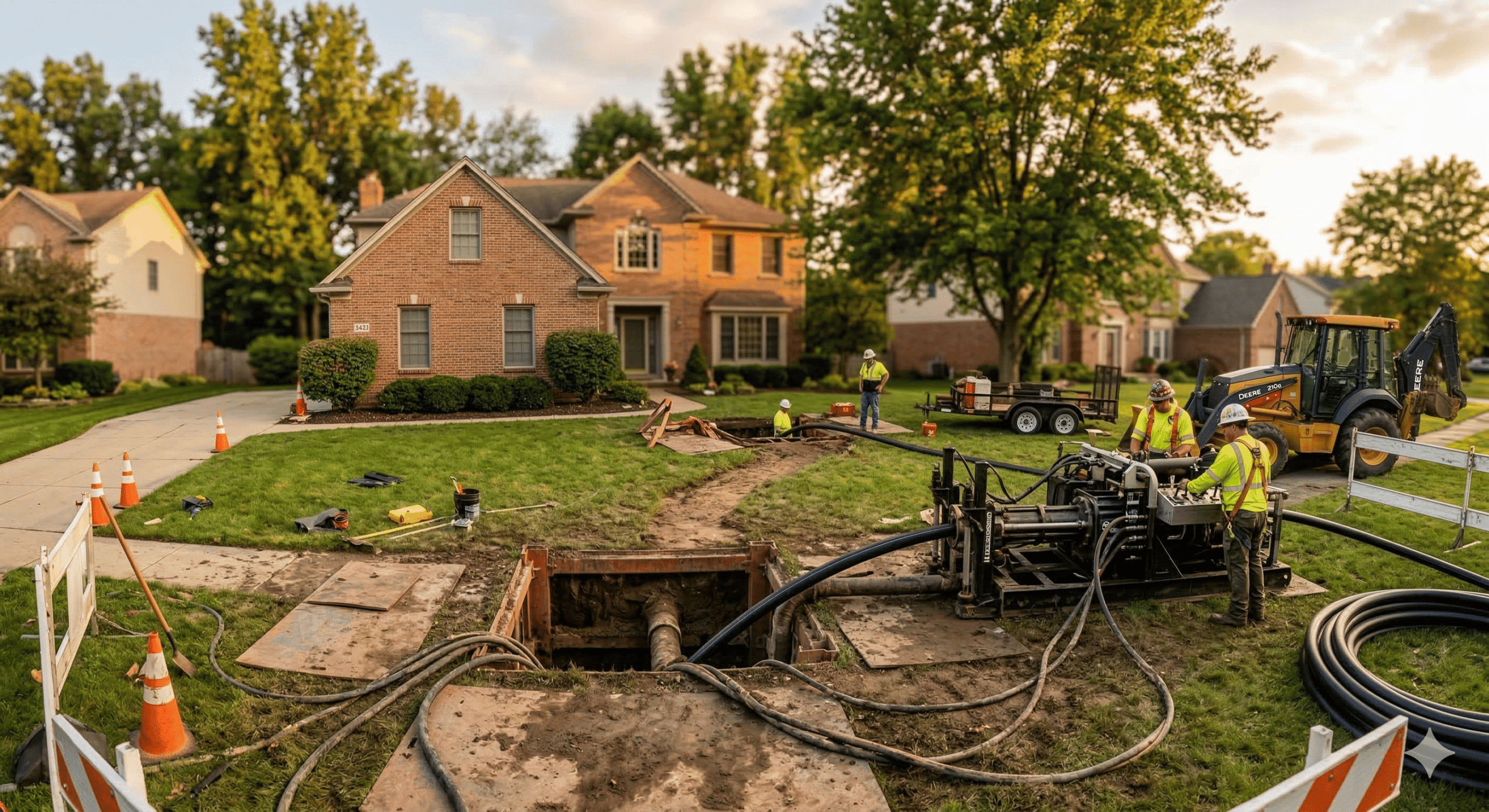
If your sewer line needs replacement, you're not automatically facing a backhoe and a torn-up yard. Bison Plumbing offers the full range of replacement methods — starting with the least invasive and working to the most appropriate for your specific pipe condition.
CIPP Pipe Lining
A resin-saturated liner cures inside the existing pipe, creating a seamless new pipe within the old one. Requires no excavation for most residential laterals — ideal when the host pipe retains its round shape. Learn about CIPP pipe lining.
Pipe Bursting
Fractures the old pipe outward while simultaneously pulling new HDPE pipe into place — the right solution for Orangeburg, collapsed, or structurally failed pipe that cannot host a liner. See pipe bursting options.
Pipe Patching
A spot liner for one isolated damaged section in an otherwise sound pipe — installs in hours and avoids the cost of full-line treatment when the rest of the pipe is in good condition. Learn about pipe patching.
Sewer Camera Inspection
Always the mandatory first step — the camera tells us exactly what's happening inside your pipe, where damage is located, and which replacement method is right for your specific situation. Schedule a camera inspection.
Hydro Jetting
High-pressure water cleaning to clear root mass and scale before lining — required pre-repair prep for many Michigan sewer lines before a CIPP liner can be installed properly. View hydro jetting services.
Full Sewer Line Rehabilitation
For lines with widespread deterioration — a complete rehabilitation scope combining inspection, cleaning, trenchless repair, and post-repair inspection for verified results. View sewer rehabilitation.
What About Traditional Excavation?
Trenchless methods are viable for the majority of Michigan residential sewer lines — but not all. Fully collapsed sections with no remaining pipe structure, severe vertical joint offsets that prevent equipment passage, and pipe runs beneath certain structures may require traditional open-cut excavation at the problem area. In many projects, a hybrid approach is most cost-effective: localized excavation at one or two specific problem points combined with trenchless methods for the rest of the line. See our guide to trenchless vs. traditional sewer repair for a full comparison including real cost data.
For older Metro Detroit homes with aging cast iron pipe systems, understanding what's viable for your specific pipe is the entire purpose of the camera inspection. The method recommendation comes from what the camera reveals — not from assumptions about your home's age or neighborhood.
Planned sewer line replacement, scheduled at your convenience after a camera inspection confirms the need, typically costs $3,000–$8,000 less than emergency repair after a complete failure that backs sewage up into your home. Emergency calls also carry after-hours premiums of 50–100% above standard rates. The signs above give you the information you need to act proactively — use it.
Seeing Any of These Signs in Your Michigan Home?
Don't wait for a complete failure. Bison Plumbing provides sewer camera inspections, hydro jetting, CIPP pipe lining, pipe bursting, and full sewer line replacement across Oakland, Macomb, and Wayne Counties — with honest, upfront pricing and no surprises.
Schedule a Sewer Inspection Today Or call us directly — (586) 754-42819 Signs You Need Sewer Line Replacement: A Quick Summary
- Recurring backups after cleaning mean the pipe structure itself is the problem — not just debris or root mass.
- Multiple slow drains simultaneously point to a main sewer line issue, not a localized fixture clog.
- Persistent sewer gas odor indoors or in the yard signals a cracked or open pipe allowing hydrogen sulfide to escape.
- Soggy or sunken yard patches above the sewer line route mean active sewage leakage underground — a health hazard requiring immediate attention.
- Unusually lush grass strips following the pipe route are an early, subtle sign of a slow underground sewer leak.
- New foundation cracks or shifting near the sewer line indicate soil erosion from long-term sewage leakage undermining structural support.
- Chronic tree root invasion that returns after clearing means the root entry point — a crack or open joint — has never been addressed.
- Pipe age over 50 years in cast iron, clay, or Orangeburg is a proactive replacement indicator regardless of current symptom severity.
- Camera findings of collapse, bellying, or widespread corrosion confirm replacement is necessary — the only question is which method.
Frequently Asked Questions About Sewer Line Replacement
The key signs include recurring sewage backups that return after professional cleaning, multiple slow drains throughout the home at once, persistent sewer gas odors indoors or in the yard, soggy or sunken spots in your yard above the sewer line, unusually lush grass patches following the pipe route, foundation cracks or shifting soil near the line, chronic tree root invasion despite regular clearing, a sewer line over 50 years old made of cast iron, clay, or Orangeburg, and camera inspection results showing collapsed sections, pipe bellying, or severe widespread corrosion. A sewer camera inspection is the only reliable way to confirm whether replacement or repair is right for your specific pipe.
Repair is appropriate for isolated damage — a single crack, a localized root intrusion, or one failing joint in an otherwise structurally sound pipe. Replacement is the better long-term decision when the pipe is over 50 years old in legacy materials; when camera inspection reveals widespread corrosion, multiple collapsed sections, or pipe bellying; when the same section requires repeated repairs; or when structural integrity is so compromised that a liner cannot bond properly. A camera inspection gives you the definitive answer. For more detail, see our full guide on trenchless sewer repair options.
Sewer line lifespan varies significantly by pipe material. Cast iron typically lasts 50–75 years; clay pipe 50–60 years; Orangeburg (bituminous fiber) only 30–50 years and most are well past that in Michigan. Modern PVC pipes can last 100 years or more. Many Michigan homes built before 1980 still have original cast iron, clay, or Orangeburg sewer lines at or beyond their service life. Michigan's freeze-thaw cycles also accelerate pipe deterioration compared to more temperate climates. Read our full breakdown of sewer line lifespan by pipe material.
It depends on the extent and location of the collapse. A partially collapsed section that retains some pipe structure may be addressable with pipe bursting — a trenchless method that fractures the old pipe outward while pulling new HDPE pipe into place. A fully collapsed section with no remaining pipe structure typically requires localized excavation. In many cases, a hybrid approach works best: excavation at the collapsed point combined with trenchless no-dig methods for the rest of the line. A camera inspection determines which approach is viable.
Recurring backups after professional cleaning are one of the clearest signs that cleaning is treating the symptom rather than the cause. Common underlying causes include a pipe belly where wastewater pools and debris accumulates regardless of cleaning; collapsed or cracked pipe sections that restrict flow structurally; chronic tree root re-intrusion through a damaged joint that was never sealed; or a pipe so corroded or scale-encrusted that its effective interior diameter has narrowed permanently. A camera inspection will reveal exactly what's driving the recurrence.
Yes. Bison Plumbing offers trenchless sewer replacement options including CIPP pipe lining and pipe bursting for qualifying Michigan residential sewer lines. Trenchless replacement avoids full excavation of your yard, driveway, and landscaping by working through one or two small access points. Whether trenchless replacement is viable depends on your pipe's condition, diameter, and configuration — confirmed during a camera inspection. Not all damaged lines qualify, particularly fully collapsed sections or pipes with severe offset joints that prevent equipment passage. See our overview of trenchless sewer replacement methods.
Ignoring sewer line replacement warning signs leads to escalating consequences: a minor recurring backup becomes a full sewage backup into your basement; a slow underground leak becomes a saturated yard and structural soil erosion; a deteriorating pipe eventually collapses entirely, requiring emergency excavation at significantly higher cost and disruption than planned replacement. Raw sewage exposure in your home creates serious health hazards from bacteria and pathogens. Addressing sewer line issues early — on your timeline — is always less expensive and disruptive than emergency repair after complete failure. Learn what to watch for in our guide to sewer drain problem symptoms.
Research sources: Mother Plumbing — Sewer Line Lifespan by Material · Balkan Plumbing — Cast Iron Pipe Life Expectancy · Angi — Sewer Line Repair & Replacement Cost Guide