

Quick Answer: Tree roots invade Michigan sewer lines through tiny cracks and loose pipe joints, drawn in by the warm, moist vapor that leaks out of aging clay and cast iron pipes. Warning signs include multiple drains backing up at once, gurgling toilets, sewage odors, and soggy lawn patches. Root growth continues year-round, even through winter, so a video camera inspection is the fastest way to confirm intrusion and choose the right fix — root cutting, hydro jetting, or trenchless CIPP lining.
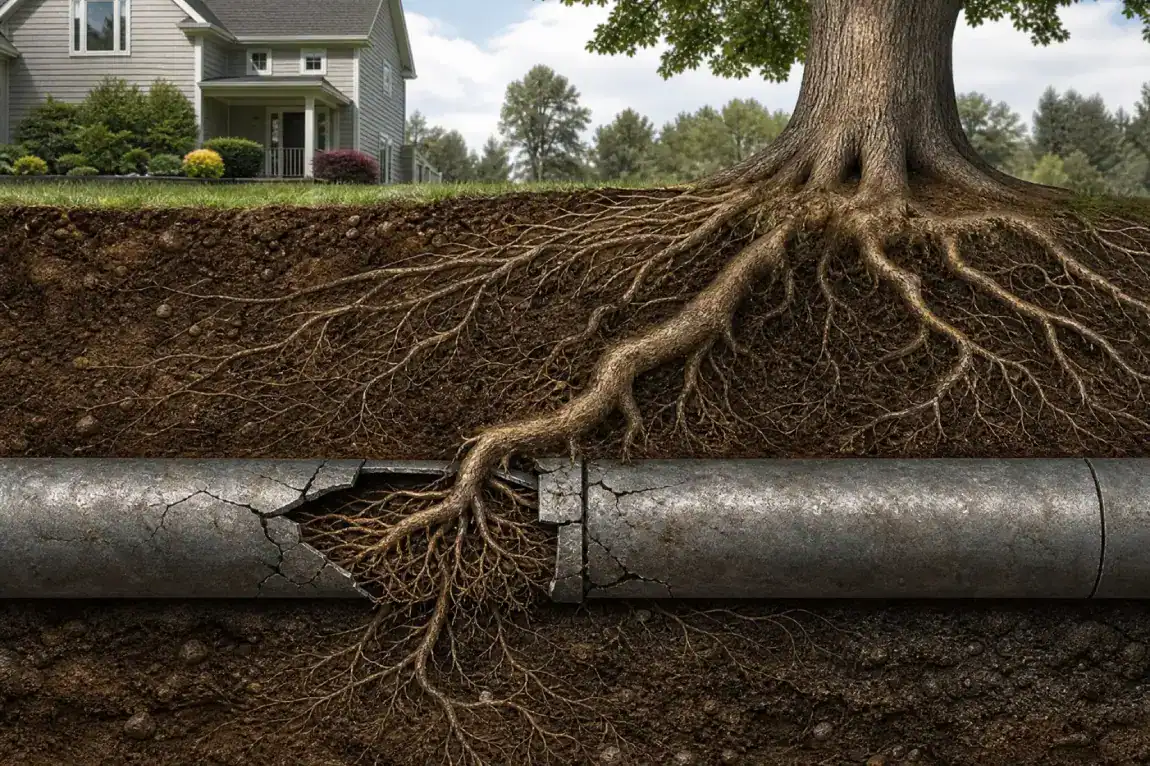
For tree roots in sewer line Michigan, Michigan homeowners facing tree root intrusion typically notice multiple drains backing up simultaneously, sewage odors rising from the basement, and toilets gurgling when other fixtures run. Slow drainage across the entire house is common too. Roots follow moisture vapor into cracked pipes, eventually blocking wastewater flow completely. A Picote HD camera inspection confirms root intrusion before any repair begins.
What Are the Key Takeaways About Tree Roots in Sewer Lines?
- Multiple drains backing up simultaneously indicates a main sewer line blockage requiring professional inspection.
- Tree roots enter sewer pipes through tiny cracks and loose joints in the system.
- Roots thrive in the warm, moist, nutrient-rich atmosphere above the water surface inside sanitary sewers.
- Bison Plumbing, Inc. in Warren, MI diagnoses and repairs tree root sewer damage.
Why Do Tree Roots Target Michigan Sewer Lines?
Tree roots in sewer line Michigan situations share a common cause: sewer pipes offer roots exactly what they need to thrive — water, nutrients, and oxygen. Aging underground pipes release warm water vapor through any crack or loose joint, and roots follow that vapor trail directly to the source.
What Makes Sewer Pipes So Attractive to Roots?
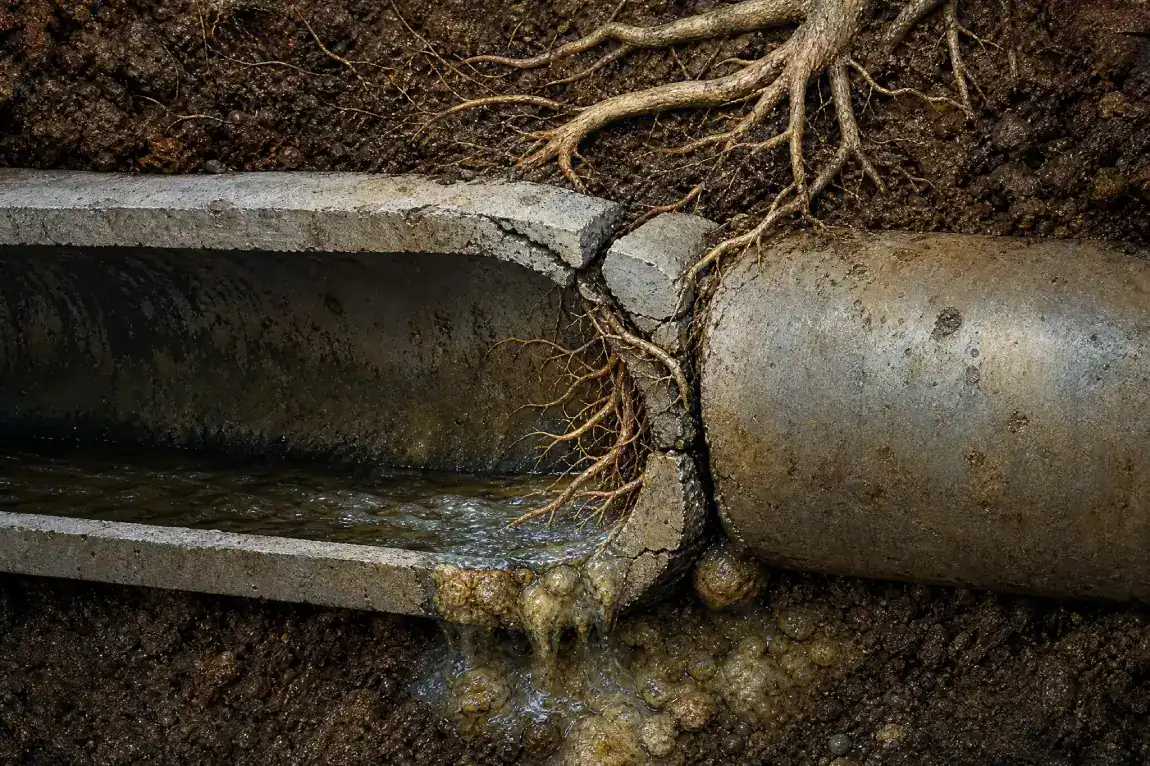
Roots are opportunistic. A sewer line creates a warm, moist, nutrient-rich environment that acts as a beacon underground. Once roots detect vapor escaping from a pipe, they track it to the nearest opening and push through.
Common entry points include:
- Tiny cracks in aging pipes caused by ground shifting or settling
- Loose joints where seals between pipe sections have deteriorated
- Corroded areas in older clay or cast iron pipes
Does Michigan’s Cold Weather Stop Root Growth in Pipes?
Many Michigan homeowners assume winter dormancy protects their sewer lines. Root infiltration inside pipes continues through winter months, even when trees appear completely dormant above ground. The warm interior of an active sewer line keeps conditions favorable for root growth regardless of outdoor temperatures.
Bison Plumbing, a Warren, MI-based plumbing company serving Michigan homeowners, uses HD camera inspections to identify exactly where roots have breached a line, before any repair work begins.
What Are the Key Warning Signs in Michigan Homes?
Tree roots in sewer line Michigan situations produce a recognizable cluster of symptoms that homeowners should never dismiss as minor inconveniences. Catching these warning signs early prevents a manageable repair from becoming a full sewer line replacement.
What Does a Root-Blocked Sewer Line Feel Like Inside the House?
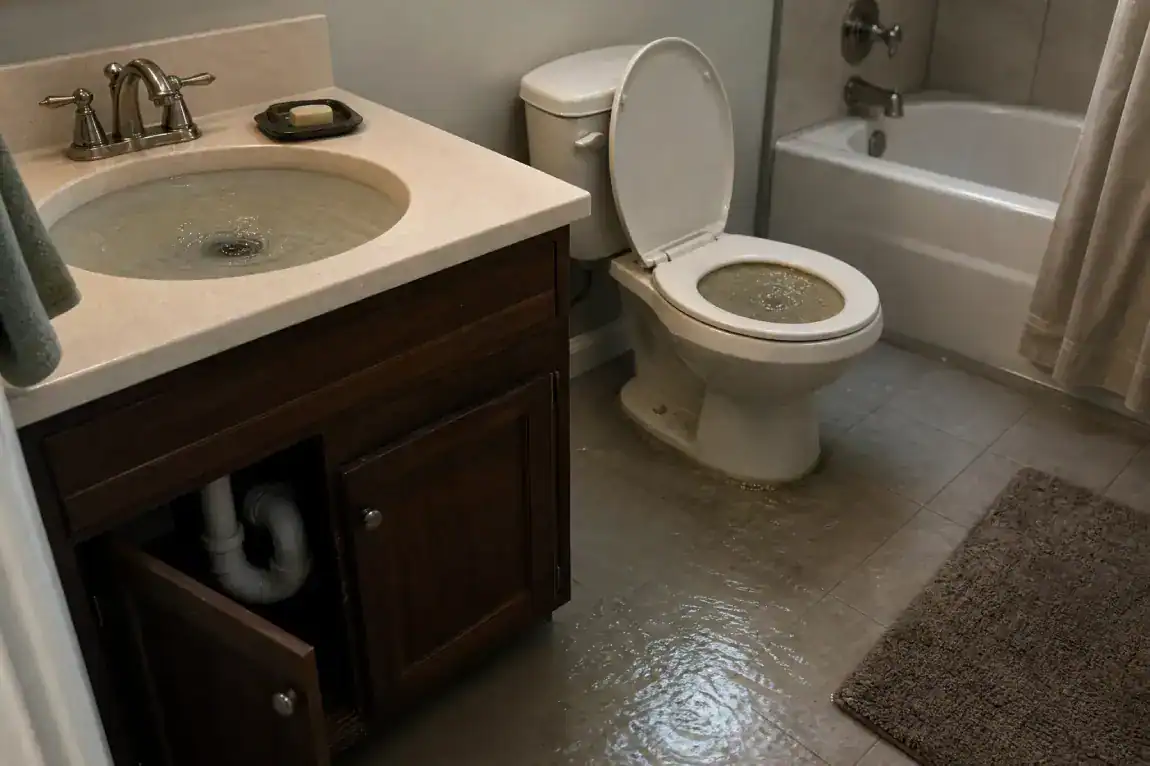
The most telling indoor signal is multiple drains backing up at the same time. A basement floor drain that gurgles the moment a toilet is flushed points directly to a main sewer line blockage, not an isolated clog. Slow drains throughout the house and persistent gurgling sounds in fixtures are equally common indicators of root infiltration working its way through the pipe.
Sewage odors are another red flag. A rotten-egg smell inside or outside the home is more than unpleasant — sewer gases escaping through a cracked, root-damaged pipe represent a genuine health hazard that demands prompt attention.
What Do Root-Related Sewer Problems Look Like Outside?
Outdoor symptoms are just as serious. Soggy patches on the lawn — especially when rainfall hasn’t been heavy — often signal a sewer leak caused by root damage beneath the surface. Visible sewage pooling on the property confirms the line has already been compromised.
Key warning signs at a glance:
- Multiple fixtures draining slowly or backing up simultaneously
- Gurgling sounds from drains or toilets
- Persistent sewage or rotten-egg odors indoors or outdoors
- Unexplained soggy spots or wet patches on the lawn
- Visible sewage on the property
Roots invade tiny cracks in aging pipes and grow steadily larger until wastewater flow is completely blocked. Bison Plumbing, serving Michigan homeowners across Macomb and Oakland counties, uses HD camera inspections to confirm root intrusion before recommending any tree root removal method.
📞 Ready to Get Started? Don’t wait until a blockage forces an emergency call. Contact Bison Plumbing today for a fast, free quote on tree root removal and sewer line repair in Michigan.
How Can Michigan Homeowners Diagnose and Fix Root Damage?
Michigan homeowners dealing with slow drains or sewage odors should start with a professional video camera inspection. Tree roots in sewer line Michigan situations require precise diagnosis before any repair begins — guesswork wastes time and money.
What Does a Sewer Camera Inspection Reveal?
A video camera inspection pinpoints exactly where root intrusion has occurred and how severely the pipe wall is damaged. Bison Plumbing, a Warren, MI-based provider serving Macomb and Oakland County homeowners, runs a Picote Solutions HD camera through the line and shows homeowners the live footage. That visual evidence drives every repair decision.
What Repair Options Are Available for Root-Damaged Pipes?
Three proven methods address root damage at different severity levels:
- Root cutting — mechanically removes active root masses from inside the pipe
- Hydro jetting — blasts roots and debris from pipe walls using high-pressure water
- CIPP lining — installs a resin-saturated liner inside the damaged pipe without excavation, a method detailed in NASSCO’s CIPP technology overview
- Pipe bursting — replaces the old pipe entirely while pulling a new one through, a process outlined in the EPA’s pipe bursting fact sheet
Trenchless methods like CIPP lining and pipe bursting reduce excavation and protect landscaping — a significant advantage for property owners with mature trees near their sewer lateral.
Tree roots in your sewer line demand prompt attention — ignoring early warning signs leads to costly damage and system failure. If you notice slow drains, sewage backups, or unusually lush patches in your yard, contact a licensed plumber right away. Bison Plumbing’s experienced technicians diagnose root intrusion accurately and restore your lines with advanced trenchless solutions that minimize disruption to your property. Protecting your sewer system protects your home and your peace of mind.
TL;DR — Tree Roots in Sewer Line Michigan at a Glance
- Multiple simultaneous drain backups, gurgling toilets, sewage odors, and soggy lawn patches together point to a root-compromised sewer pipe.
- Aging clay and cast iron lines with cracks and loose joints attract root growth year-round, even through Michigan’s coldest months.
- A Picote HD camera inspection is the most reliable way to confirm root intrusion and match it to the right fix.
- Repair options range from root cutting and hydro jetting to trenchless CIPP lining and pipe bursting, depending on severity.
- Catching warning signs early keeps a manageable clog from turning into a full sewer line replacement.
- Next step: schedule a professional sewer camera inspection with Bison Plumbing before symptoms worsen.
Frequently Asked Questions
Does Chemical Root Killer Actually Solve Tree Roots in a Sewer Line?
Foaming or liquid root killer products can knock back the visible root mass inside a pipe for a short time, but they don’t address the tiny cracks or loose joints that let roots in to begin with. Because sewer lines keep releasing warm, moist vapor year-round, roots regrow toward that same opening once the chemical treatment wears off. Lasting correction of sewer line root intrusion in Michigan homes comes from identifying the entry point with a camera inspection, then treating it with root cutting, hydro jetting, or a trenchless repair like CIPP lining rather than relying on root killer alone.
How Quickly Can Tree Roots Grow Back After a Sewer Line Repair?
Regrowth speed depends on the repair method. If a crack or joint is simply cleared with root cutting or hydro jetting, roots can find that same weak point again within months because the moisture and warmth that attracted them in the first place haven’t changed. Trenchless CIPP lining creates a seamless new interior surface with no exposed seams, so it resists re-entry far longer. This is why trenchless sewer repair is often recommended for Michigan properties with mature trees positioned close to the sewer lateral.
How Often Should Homeowners With Mature Trees Schedule a Sewer Camera Inspection?
Homeowners in older Michigan neighborhoods with large, established trees near their sewer lateral benefit from a proactive camera inspection rather than waiting for symptoms like gurgling toilets or slow drains to appear. Because root intrusion progresses gradually as cracks widen and roots thicken inside the pipe, catching it early keeps repair options open, including less invasive methods like root cutting or hydro jetting. Once multiple drains back up simultaneously or sewage odors appear, the damage has usually advanced further, narrowing the choices toward more involved trenchless repair or replacement.
What’s the Difference Between Hydro Jetting and CIPP Lining for Root-Damaged Pipes?
Hydro jetting uses high-pressure water to blast root masses and debris off the interior pipe walls, clearing the blockage without altering the pipe itself, which makes it effective for maintenance and moderate intrusion. CIPP lining goes a step further by installing a resin-saturated liner inside the damaged pipe, essentially creating a new pipe within the old one without excavation. Hydro jetting restores flow quickly, while CIPP lining also seals the cracks and joints that let roots in, making it the better choice when the pipe wall itself is compromised.
Can Untreated Tree Root Intrusion Lead to a Full Sewer Line Replacement?
Yes. Roots that enter through small cracks or loose joints keep thickening inside the pipe, and left alone they progress from minor slow drains to complete blockages, sewage backups, and structural damage to the pipe wall. What starts as an isolated gurgle or a soggy patch on the lawn can eventually require pipe bursting or full replacement if the line has degraded too far for trenchless repair. Addressing the warning signs early, with a Picote HD camera inspection, is what keeps a manageable clog from turning into a costly replacement project.
Related Resources
- Sewer Line Rehabilitation
- Royal Oak, MI Service Area
- Tree Roots in Sewer Lines
- Pipe Lining vs. Pipe Bursting
- CIPP Lining in Michigan
- Trenchless Sewer Repair Guide
Get a Free Tree Root Removal Quote
Tree roots don’t stop working just because the symptoms haven’t shown up yet — the earlier you catch intrusion with a camera inspection, the more repair options you keep on the table. Contact Bison Plumbing today for a free, no-obligation quote.
About Bison Plumbing: Bison Plumbing, Inc. has served Warren, MI and surrounding Macomb and Oakland County communities, specializing in sewer line repair, tree root removal, hydro jetting, and trenchless CIPP lining. Contact us today for a free, no-obligation quote.