

Quick Answer: Pipe bursting cost Michigan homeowners pay typically runs $100 to $250 per linear foot for residential sewer line replacement. The final price depends on pipe length, diameter, depth, and how difficult the site is to access. Because trenchless pipe bursting avoids the excavation and property restoration costs of traditional dig-and-replace, it often delivers a comparable or lower total project cost. A sewer camera inspection is the essential first step toward an accurate, job-specific estimate.
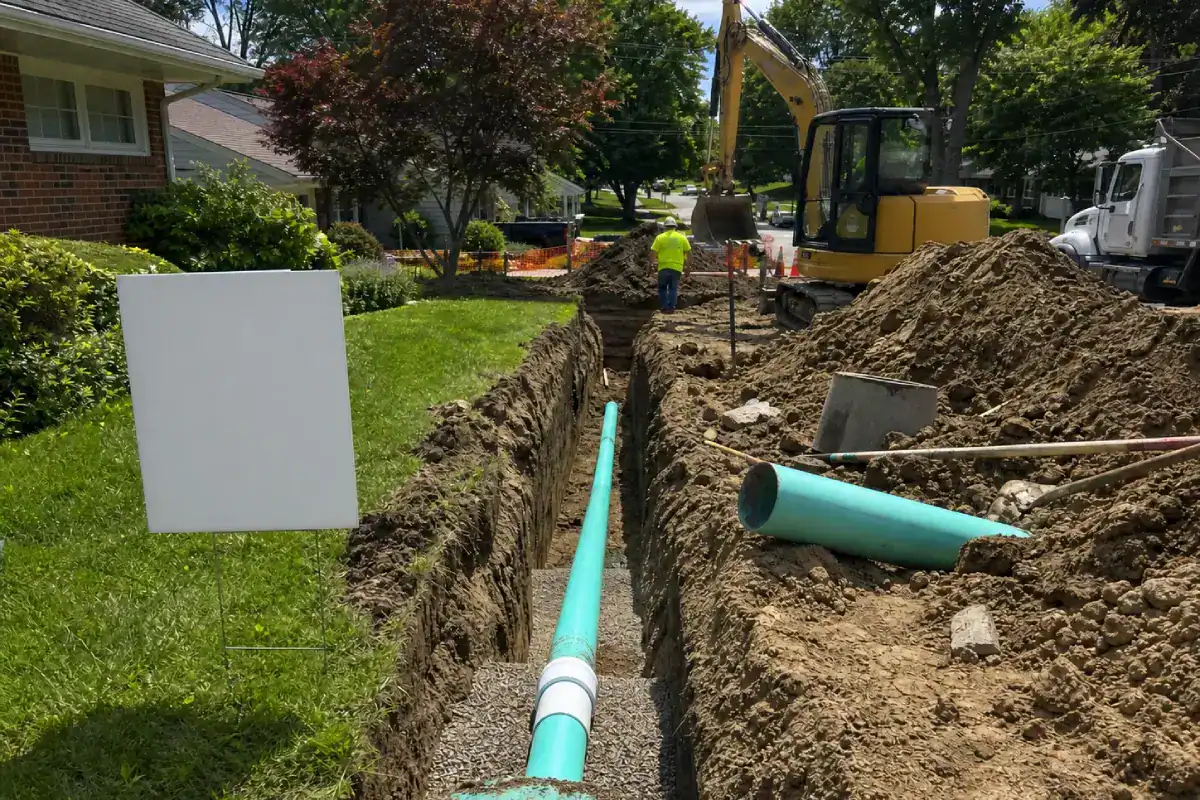
Pipe bursting cost in Michigan runs $100–$250 per linear foot for most residential projects. Total project costs vary depending on pipe length, diameter, depth, and access difficulty. A sewer camera inspection is the essential first step, confirming whether pipe bursting fits the line and producing an accurate estimate.
What Are the Key Takeaways on Pipe Bursting Cost in Michigan?
- Pipe bursting in Michigan costs $100–$250 per foot for most residential sewer replacements.
- Trenchless sewer repair project totals vary widely for Michigan homeowners based on pipe length, depth, and site conditions.
- Bison Plumbing, Inc. in Warren, MI serves local homeowners needing trenchless pipe replacement services.
- Traditional dig-and-replace adds thousands in property restoration costs that trenchless methods eliminate entirely.
What Does Pipe Bursting Cost in Michigan?
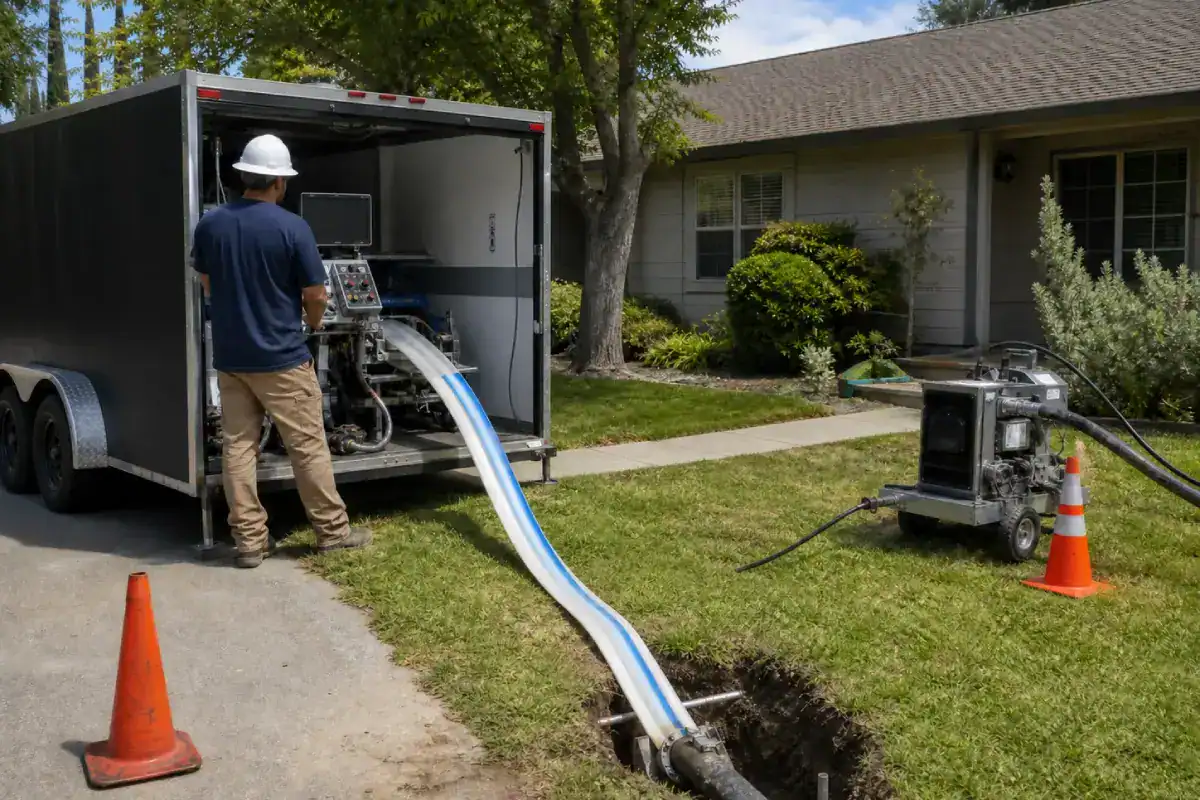
Pipe bursting cost Michigan homeowners face typically falls between $100 and $250 per linear foot for residential sewer line replacement. Most complete residential projects vary considerably depending on pipe length, depth, and site conditions.
Here is a quick breakdown of what drives the final number:
- Pipe length: Longer runs mean more footage — and more cost
- Pipe depth: Deeper lines require more labor and equipment time
- Access difficulty: Tight yards, driveways, or landscaping add complexity
- Pipe material and diameter: Larger or older pipes can complicate the burst process
How Much Does a Complicated Pipe Bursting Job Cost?
When conditions are straightforward, projects often come in at the lower end of the range. When complications arise — deep lines, difficult access, or severely deteriorated pipe — total project costs can climb significantly higher. Michigan homeowners should treat worst-case scenarios as realistic possibilities, not typical outcomes.
Is Pipe Bursting More Expensive Than Traditional Sewer Replacement?
The per-foot price of trenchless pipe bursting looks higher on paper than a basic dig-and-replace quote. However, traditional excavation adds thousands in landscape, hardscape, and surface restoration costs that rarely appear in the initial estimate. When Michigan homeowners factor in those restoration expenses, trenchless pipe bursting frequently delivers comparable or lower total project costs. Bison Plumbing, a Warren, MI-based provider serving Michigan homeowners, recommends a camera inspection first. It confirms whether pipe bursting is the right fit before any pricing commitment is made.
What Factors Drive the Final Price Up?
Pipe bursting cost Michigan homeowners pay varies based on six core variables: pipe length, diameter, depth, access difficulty, pipe material, and the specific repair method selected. Each variable compounds the others — a long, deep pipe in dense clay soil costs significantly more than a short, shallow run with easy access. For a closer look at how the method works, see the EPA’s technical overview of pipe bursting.
The six primary cost drivers are:
- Pipe length — longer runs require more new pipe and more labor hours
- Pipe diameter — wider pipes demand heavier equipment and more material
- Depth — deeper lines increase excavation complexity at entry and exit points
- Access difficulty — obstacles like driveways, mature trees, or utility crossings raise labor costs
- Pipe material — older clay or cast-iron lines may require additional prep work
- Method chosen — pipe bursting and CIPP lining carry different per-foot pricing structures
Does Pipe Bursting Actually Save Money Compared to Traditional Replacement?
Traditional dig-and-replace estimates leave out thousands of dollars in landscaping and hardscaping restoration that homeowners must pay after the crew leaves. Pipe bursting installs new, durable pipes without extensive digging, eliminating most of that post-project restoration expense entirely.
Why Does Access Difficulty Matter So Much?
When a sewer line runs beneath a concrete driveway or established landscaping, crews need additional time and equipment just to reach entry and exit points. That added complexity translates directly into higher labor costs, regardless of the pipe’s condition.
How Do You Get an Accurate Michigan Estimate?
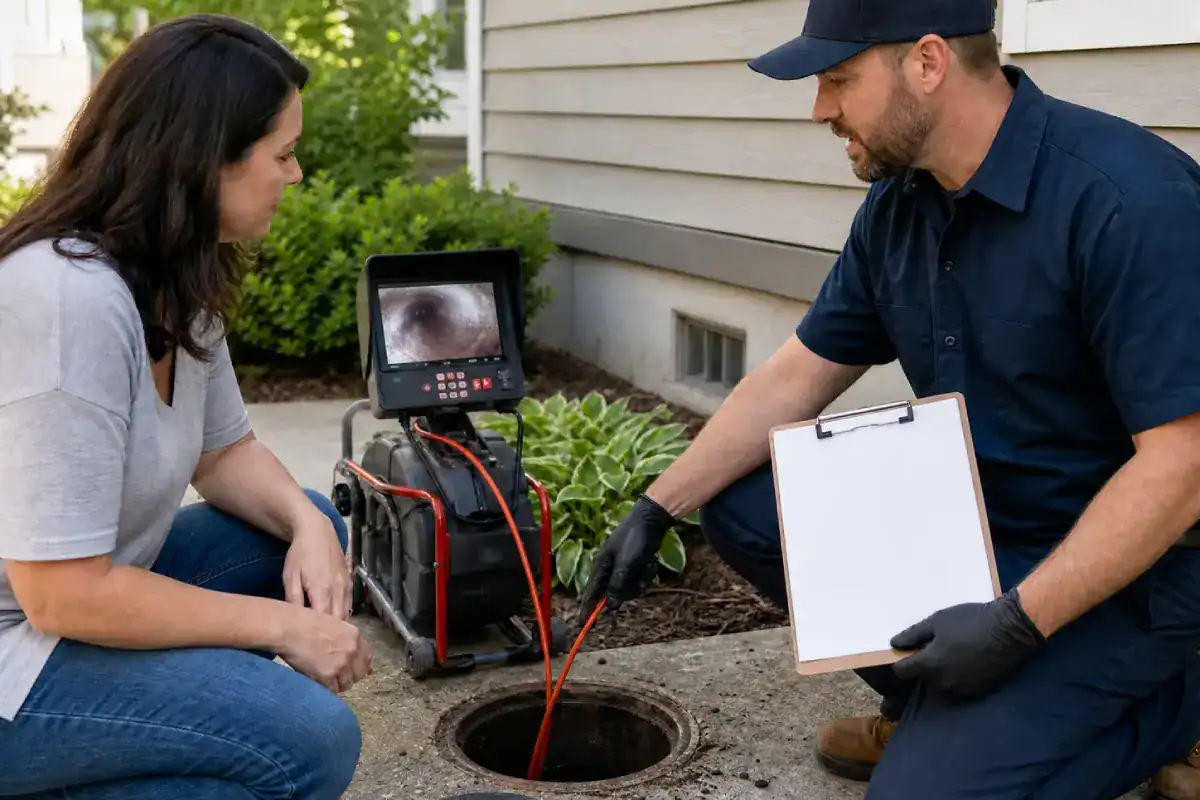
A professional sewer camera inspection is the essential first step toward understanding pipe bursting cost Michigan homeowners will actually pay. Camera inspection confirms which repair method fits the pipe’s condition and produces a reliable, job-specific estimate, not a ballpark guess.
What Happens During a Sewer Camera Inspection?
A licensed technician feeds a high-definition camera through the sewer line to document cracks, root intrusion, pipe collapse, or corrosion. The footage reveals pipe diameter, depth, and material — every variable that drives the final price. Without this step, any estimate is speculation.
Does Financing Help Michigan Homeowners Manage the Cost?
Trenchless sewer projects represent a significant investment. Bison Plumbing, a Warren, MI-based provider serving Macomb and Oakland county homeowners across Michigan, offers GreenSky financing. Customers can move forward without delaying necessary repairs.
To get started, Michigan homeowners should:
- Schedule a camera inspection before accepting any quote
- Request an itemized estimate that separates labor, materials, and access costs
- Ask about financing options to spread payments over time
- Confirm permit requirements with the local municipality, since rules vary by city and county across Metro Michigan
Pipe bursting gives Michigan homeowners a proven path to a fully restored sewer line without the cost and disruption of open excavation. Understanding the factors that drive pricing puts you in control of that decision. Soil conditions, pipe depth, line length, and local permitting all shape the final investment. The long-term durability of a new seamless pipe consistently delivers value well beyond the upfront expense. Choosing a licensed, experienced contractor who communicates transparently at every stage is the clearest way to protect both your property and your budget.
📞 Ready to Get Started? Don’t wait for a small crack to become an expensive emergency. Contact Bison Plumbing today for a free camera inspection and a job-specific pipe bursting quote.
Frequently Asked Questions
How Long Does a Pipe Bursting Project Take in Michigan?
Most residential pipe bursting projects in Michigan are completed in a single day, which is one of the method’s key advantages over traditional dig-and-replace sewer work. The actual bursting phase is relatively quick; the bulk of the time involves setting up entry and exit pits, positioning equipment, and pulling the new pipe into place. More complex jobs — deep lines, difficult access, or longer runs — may extend into a second day. A licensed contractor can give a realistic timeline after reviewing the camera inspection footage.
What Type of Pipe Is Used in Pipe Bursting, and How Long Does It Last?
During a pipe bursting replacement, the old sewer line is fractured outward while a new high-density polyethylene (HDPE) pipe is simultaneously pulled into position. HDPE is the standard material for trenchless pipe replacement in Michigan, and its use follows established engineering standards for polyethylene pipe. It’s seamless, highly resistant to root intrusion, and rated for a service life of 50 years or more. Because HDPE has no joints — the same joints that let roots and ground movement damage older clay or cast-iron lines — it consistently outlasts traditional pipe materials; engineering research on ground displacement during pipe bursting further confirms the method’s structural reliability.
Is Pipe Bursting Suitable for All Types of Existing Sewer Pipe?
Pipe bursting works well on most common sewer pipe materials, including clay, cast iron, concrete, and PVC. However, it is not always suitable for every situation. Lines that have completely collapsed, shifted significantly out of alignment, or have major bends can make pipe bursting difficult or impossible. Pipes that are partially intact but heavily corroded or root-infiltrated are often ideal candidates. A sewer camera inspection is the definitive way to determine whether pipe bursting is the right method or whether an alternative like CIPP lining or open excavation is necessary.
Can Pipe Bursting Replace a Sewer Line That Runs Under a Driveway or Landscaping?
Yes — replacing a sewer line under a driveway or established landscaping is precisely where pipe bursting delivers its greatest value over traditional open excavation. Rather than breaking up and removing a concrete driveway or destroying mature trees and garden beds, pipe bursting requires only small entry and exit pits at each end of the affected line. The new pipe is pulled through without disturbing the surface in between. This dramatically reduces the property restoration costs that can easily add thousands of dollars to a conventional dig-and-replace project.
What Is the Difference Between Pipe Bursting and CIPP Pipe Lining?
Pipe bursting and cured-in-place pipe (CIPP lining) are both trenchless sewer repair methods, but they work differently and suit different conditions. CIPP lining installs a resin-coated liner inside the existing pipe, which cures in place to form a new interior surface — no pipe is removed. Pipe bursting, by contrast, completely fractures and replaces the old pipe with a new HDPE line. Pipe bursting is typically chosen when the existing pipe is too deteriorated for lining to adhere properly, making it the recommended solution when pipe lining is not an option.
TL;DR — Pipe Bursting Cost in Michigan at a Glance
- Pipe bursting costs $100–$250 per linear foot for most Michigan residential projects.
- Pipe length, depth, diameter, access difficulty, and pipe material all affect the final price.
- Traditional dig-and-replace often costs more overall once landscape and hardscape restoration is included.
- A sewer camera inspection is required to confirm pipe bursting is the right method and to get an accurate estimate.
- Pipe bursting is frequently the recommended solution when a pipe is too deteriorated for CIPP lining to work.
- Next step: Schedule a camera inspection with Bison Plumbing to get your job-specific quote.
Related Resources
- Trenchless Sewer Replacement
- Royal Oak, MI Service Area
- Pipe Lining vs. Pipe Bursting
- Trenchless Sewer Repair Cost in Michigan
- CIPP Lining in Michigan
- Sewer Line Lifespan
Ready to Get Your Pipe Bursting Quote?
Pipe bursting cost in Michigan — typically $100–$250 per linear foot — reflects a combination of pipe length, depth, diameter, access difficulty, and material that no ballpark figure can fully capture without a camera inspection first. For Michigan homeowners who have already been told pipe lining is not an option, pipe bursting delivers a complete sewer line replacement using durable HDPE pipe without the landscape, hardscape, and surface restoration costs that traditional open excavation adds. Contact Bison Plumbing today for a free, no-obligation quote.
About Bison Plumbing: Bison Plumbing has served Warren, MI and the greater Macomb and Oakland County area for over 25 years, specializing in trenchless sewer replacement, pipe bursting, and CIPP lining. Contact us today for a free, no-obligation quote.
Pricing swings a lot with pipe length and access. To skip the math, get a price range for your pipe based on your home’s age and setback.